



Pureleven journal
Cooking & Spices
From Kerala soil to your kitchen.
Pureleven spice journal
Spice Grades You'll See Online, Explained Simply
Answer-first guidance with a faster path to farm-origin Kerala products you can buy today.
Quick Summary
What AGEB, 8mm, TGEB, MG-1 and garbled actually mean. Cardamom and pepper grades explained simply, and how to use them when buying spices online.
Jump through the guide
Go straight to the sections that answer the buying, comparison, or sourcing question you came for.
Spice grades mostly describe size, weight and how carefully the spice has been cleaned. For cardamom, grades are based on pod size in millimetres and weight per litre, and for black pepper they're based on berry size and whether the lot has been "garbled" (cleaned and sorted). Here are spice grades explained in plain terms, so the labels on online listings actually mean something to you.
One thing first. A grade tells you about size and sorting. It doesn't tell you how fresh the spice is, or how it was stored. You still need to check that yourself.
Cheat sheet: grade words you'll see online
| Term | Spice | What it roughly means |
|---|---|---|
| AGEB | Cardamom | Alleppey Green Extra Bold, pods about 7mm and above |
| AGB | Cardamom | Alleppey Green Bold, pods about 6mm and above |
| AGS | Cardamom | Alleppey Green Superior, pods about 5mm and above |
| AGS-1, AGS-2 | Cardamom | Smaller, lighter shipment grades, around 4mm |
| "8mm", "7 to 8mm" | Cardamom | Trade shorthand for pod size after sieving |
| TGSEB | Black pepper | Tellicherry Garbled Special Extra Bold, about 4.75mm berries |
| TGEB | Black pepper | Tellicherry Garbled Extra Bold, about 4.25mm berries |
| MG-1 | Black pepper | Malabar Garbled grade 1, cleaned and sorted, not size-selected like Tellicherry |
| Ungarbled | Black pepper | Not fully cleaned, may contain stalks and light berries |
| Light berries / light pepper | Black pepper | Immature, hollow berries, sold cheaply |
Exact figures vary a little between sources and trade contracts, so treat the mm numbers as a guide rather than a rule.
How are cardamom grades decided?
Cardamom is sorted mainly by size and weight per litre (how much a litre of pods weighs). Bigger pods are sieved out first. Heavier pods per litre usually mean well-filled pods with plenty of seeds.
The official AGMARK grades use names like AGEB, AGB and AGS. The "Alleppey" in the name comes from the old port that cardamom was traded through, not from where it grew. Much of India's small cardamom is actually grown in the Idukki hills.
Online sellers often skip the AGMARK names and just say "8mm" or "7 to 8mm". That's fine, as long as they're honest about it.
Is bigger cardamom always better?
Not really. Bigger pods look better and cost more, but aroma depends more on freshness, colour and how the pods were dried. A well-dried 7mm pod can smell stronger than an old 8mm one. For chai and everyday cooking, a mid-size grade is perfectly good.
We've gone deeper on this in cardamom grades explained, including the Malayalam trade names.
What do black pepper grades mean?
Pepper grading has two parts: whether the lot is garbled, and the size of the berries.
- Garbled means the pepper has been cleaned: stalks, pinheads, light berries and dust removed.
- Tellicherry grades (TGEB, TGSEB) are the largest berries, sieved out from garbled pepper.
- Malabar grades (MG-1 and so on) are garbled pepper of normal size.
Large berries were left on the vine longer and tend to have a fuller, rounder flavour. Normal-size, well-cleaned pepper is still excellent for everyday cooking. If you want the full story, read our Malabar vs Tellicherry pepper guide.
What about cloves, cinnamon and turmeric?
Clove grading is less standardised in online listings. Look for whole, unbroken buds with heads intact, a reddish-brown colour, and a little oil when pressed. "Headless" or broken cloves are a lower grade.
Cinnamon grading depends on the type. Ceylon cinnamon is graded by quill thickness, with thinner quills costing more. Cassia is usually sold by thickness and oil content rather than formal grades.
Turmeric has its own grading system based on finger, bulb and split. Good turmeric listings should also say the variety or origin. (We plan to add turmeric later.)
How to use grades when buying spices online
- Decide what you need. Grade matters more for gifting or display than for masalas you'll grind.
- Check the listing states a size or grade instead of only "premium".
- Compare price per 100g within the same grade, not across grades.
- When the parcel arrives, check the size roughly matches. A ruler is enough for cardamom.
- Smell and crush a sample. Grade won't save stale stock.
It's also worth doing a quick check for fillers. Our post on spice adulteration home checks shows how, and the guide to buying spices online in India covers the rest.
How we sell ours
Our Kerala cardamom comes from Idukki farms and is dried in a cardamom dryer, a heated drying chamber, which helps keep the green colour. It's packed whole with nothing added. If you want to know the size of the current lot before ordering, just message us.
Frequently asked questions
What is the best grade of cardamom?
The largest AGMARK grade is AGEB, roughly 7mm and above, and online sellers often call large pods "8mm". But the best cardamom for you is the freshest one you can get in a size that suits your budget. Aroma depends more on freshness and drying than on size.
What does garbled pepper mean?
Garbled pepper has been cleaned and sorted to remove stalks, pinheads, light berries and dust. Ungarbled pepper hasn't, so it's cheaper but less consistent. Tellicherry grades are the largest berries taken from garbled pepper.
Do grades tell me how fresh a spice is?
No. Grades describe size, weight and cleaning, not age. A top-grade spice that has sat in a warehouse for a long time can smell flat. Always smell and crush a sample when it arrives.
Sources
Next time you see a string of letters on a listing, you'll know what you're paying for.
Ready to buy?
Related products for this article
Move from reading intent to shopping intent with product cards tied to this topic and a direct route into the wider catalog.
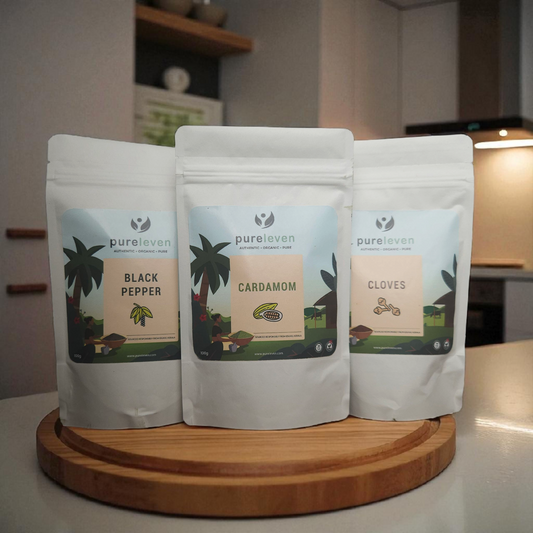 Primary pick3-in-1 Kerala Spice ComboStart with a best-selling Pureleven product picked to match the buying intent behind this article.₹909₹559
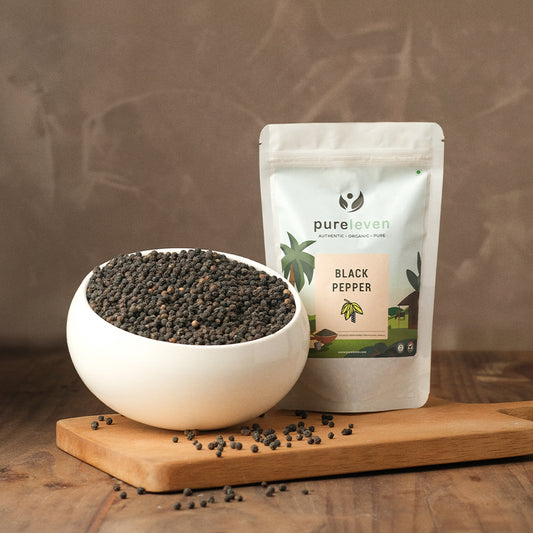 Also considerKerala Black Pepper (Kali Mirch) – Bold Whole Peppercorns from Idukki₹100
 Kitchen add-onExtra Bold Kerala Cardamom (Elaichi) – 8mm Whole Pods from Idukki₹309₹270


