Kerala cardamom guide
Kerala Cardamom Grades Explained: AGEB, Sizes and Which to Buy
Compare pod size, aroma strength, and practical pack sizes before you buy.
Quick Summary
The complete cardamom (elaichi) grading hierarchy: Pinchu, Muthath, Karinkka, AGEB, and Fruit-Seed explained. Why 8.5mm fruit-seed costs more and which grade to buy.
Jump through the guide
Go straight to the sections that answer the buying, comparison, or sourcing question you came for.
Two packs can both say "Kerala cardamom" and be completely different. One fills the kitchen with smell when you crack a pod; the other tastes flat. Much of that difference comes down to grade: how big the pods are, how full, and how carefully they were sorted.
We've rewritten this guide to remove price figures and some grade names that aren't used consistently in the trade. Cardamom prices change every season, and local grade names vary from market to market.
How cardamom is graded
After harvest, cardamom is cured (dried in heated drying houses to keep its green colour), cleaned, and then sorted. The main things that decide the grade are:
- Size: pods are sieved and sold by diameter in millimetres (for example 6 mm, 7 mm, 8 mm and above).
- Weight / fullness: heavier, well-filled pods are worth more. Traders use "litre weight" (how much a litre of pods weighs) as a measure of this.
- Colour: a natural, even green is preferred.
- Defects: split, shrivelled, empty or discoloured pods lower the grade.
What "AGEB" means
You'll often see AGEB on cardamom packs. It stands for Alleppey Green Extra Bold. "Alleppey Green" is the traditional trade name for green cardamom from Kerala (Alleppey was the historic trading port), and "Extra Bold" is the top size grade. Under India's AGMARK grading standards, Alleppey Green cardamom is sorted into several grades, from Extra Bold down through Bold, Superior and lighter grades, each with minimum size and weight requirements.
"Alleppey Green Cardamom" is also a registered Geographical Indication (GI) for Kerala.
Grades by size, in plain terms
| Size | What to expect | Good for |
|---|---|---|
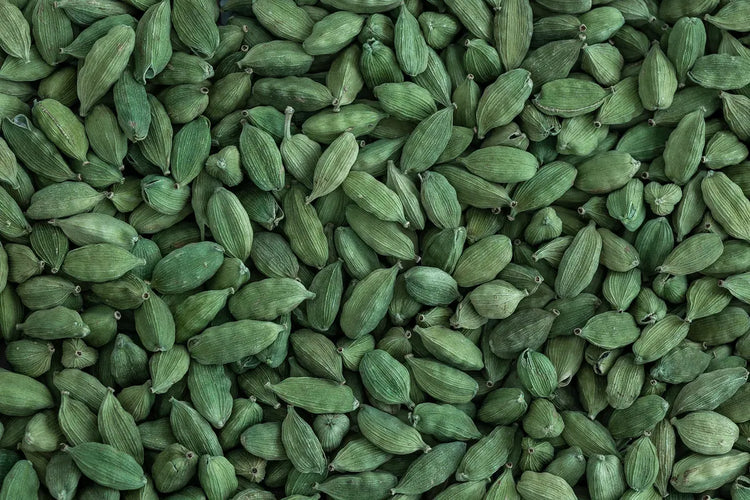
| 8 mm and above (extra bold) | Large, full pods, strong aroma, highest price | Chai, sweets, gifting, whole-pod dishes |
| 7 to 8 mm (bold) | Good size and fill, strong aroma | Everyday premium cooking and chai |
| 6 to 7 mm | Smaller pods, still good when fresh | Chai masala, garam masala, everyday use |
| Below 6 mm / light pods | Small or partly empty pods, less aroma | Grinding into blends; not ideal whole |
Size isn't everything. A fresh 7 mm pod will beat an old 8 mm pod every time. More on the size question in our 8 mm vs 7 mm guide.
Local names you might hear
In Idukki markets you'll hear Malayalam trade words for different kinds of cardamom. Pinchu, for example, is used for immature or tender pods picked too early, which are small and weak in aroma. Other local terms vary between traders and villages, so if a seller uses a name you don't know, ask them to explain the size and fullness in plain terms.
The empty-pod problem
Immature, light pods can look fine from outside but have few seeds inside. They make you use more cardamom for less flavour. To check:
- Crack a few pods. Good pods are packed with dark, sticky seeds.
- Feel the weight. Full pods feel heavier for their size.
- Smell straight away. Fresh, full pods smell strong immediately.
Which grade should you buy?
- Daily chai: 7 to 8 mm is the sweet spot for most homes.
- Sweets, payasam and gifting: 8 mm and above looks and smells the best.
- Masala blends: smaller, fresh grades are perfectly good and cost less.
Questions to ask a seller
- What size grade is this?
- Is it this season's crop?
- Where in Kerala was it grown?
- Can you describe the colour and fullness, or share a photo of the actual lot?
Our Idukki cardamom product page lists the grade we're currently packing. If you have a question about grades, message us on WhatsApp at +91 88482 65849 or email purelevenexim@gmail.com.
Read next: how to buy cardamom online and the cardamom harvest season.
Ready to buy?
Related products for this article
Move from reading intent to shopping intent with product cards tied to this topic and a direct route into the wider catalog.
 Primary pickExtra Bold Kerala Cardamom (Elaichi) – 8mm Whole Pods from IdukkiExport-grade Kerala cardamom with strong aroma for chai, desserts, and everyday cooking.Rs. 309.00Rs. 270.00
Also considerExtra Bold Kerala Cardamom (Elaichi) – 8mm Whole Pods from IdukkiRs. 309.00Rs. 270.00
Kitchen add-onExtra Bold Kerala Cardamom (Elaichi) – 8mm Whole Pods from IdukkiRs. 309.00Rs. 270.00
Primary pickExtra Bold Kerala Cardamom (Elaichi) – 8mm Whole Pods from IdukkiExport-grade Kerala cardamom with strong aroma for chai, desserts, and everyday cooking.Rs. 309.00Rs. 270.00
Also considerExtra Bold Kerala Cardamom (Elaichi) – 8mm Whole Pods from IdukkiRs. 309.00Rs. 270.00
Kitchen add-onExtra Bold Kerala Cardamom (Elaichi) – 8mm Whole Pods from IdukkiRs. 309.00Rs. 270.00