



Pureleven journal
Cooking & Spices
From Kerala soil to your kitchen.
Pureleven spice journal
Buy Spices Online in India: A Practical Guide
Answer-first guidance with a faster path to farm-origin Kerala products you can buy today.
Quick Summary
How to buy spices online in India without guessing: what makes a good spice website, how to compare prices, what to do when the parcel arrives, and how to store it.
Jump through the guide
Go straight to the sections that answer the buying, comparison, or sourcing question you came for.
You can buy spices online in India with confidence if you buy whole spices, from a seller who can tell you where they were grown, in pack sizes you'll finish in a few months. The rest is simple checking: read the label, compare price per 100g, and smell the spice the day it arrives. This guide covers each of those steps so you can order spices online without guessing.
We grow and pack spices in Rajakumari, Idukki, and we get asked the same questions every week. So here is the plain version of what we tell people.
Is it a good idea to order spices online at all?
Mostly, yes. The big advantage is access. A kitchen in Delhi or Pune can get cardamom and pepper from the hills where they grow, instead of whatever has travelled through three wholesalers to reach the local shop.
The disadvantage is that you can't smell or touch before you pay. Photos all look the same and every pouch says "premium". Online spices are only as good as the seller behind them, so you have to judge the seller, not the packet.
Start small. Order one or two spices you use daily, compare them with your dabba, then decide.
What should you check on the product before ordering?
A few things on the product page tell you most of what you need.
- Whole or powder: whole spices hold their aroma far longer and are much harder to adulterate. Grind small amounts at home.
- Pack size: 50g or 100g packs for spices you use slowly. A big pack that sits open for a year goes flat.
- Net weight and price per 100g: so you can compare fairly across sizes and sellers.
- Grade or size: pod size in mm for cardamom, "bold" or similar for pepper, so you know what you're paying for.
What makes a good spice website?
Most spices websites look alike, with nice photos and the same words on every pouch. These are the things that separate a good one:
- A real address and phone or WhatsApp: a packer address you can look up and a number that a real person answers.
- Origin for each spice: a district or town (Idukki, Wayanad, Adimali) for every product, rather than "India" across the whole site.
- Pack sizes and dates: small packs on offer, and a packing date on the label, not only an expiry date.
- Clear delivery and return terms: delivery time, shipping cost and what happens if a parcel arrives damaged, all shown before checkout.
- Real product photos: pictures of the actual spice they sell, not only stock images.
- Secure checkout: a normal payment page on a secure (https) site, with the usual UPI and card options.
- Reviews you can check: reviews on the product pages that read like real people, not a wall of identical five-star lines.
We've written a longer version of this for Kerala spices in particular, in our Kerala spices online buying guide.
Whole spices or powder: which should you buy online?
Whole, whenever you can. Grinding breaks open the cells that hold the essential oils, and those oils are what you smell and taste. A ground spice starts losing them straight away. A whole pod or peppercorn keeps them locked in for many months.
Powders are also where most adulteration happens, because it's easy to mix something cheap into a powder and very hard to see it. With whole cardamom, pepper or cloves, what you see is mostly what you get.
Many an online masala store sells mostly ready-ground blends, which is handy but means the masala may have been ground months before it reaches you. Whole spices ground at home keep their flavour much longer, and you can see what goes into your garam masala.
For daily cooking, a small mixie jar or a mortar and pestle is enough. Grind what you need for the week, not for the month.
How do you compare spice prices online?
Always bring it down to price per 100g, then add shipping. A 50g pack that looks cheap can work out dearer than a 200g pack once you do the maths. And a low price with ₹80 shipping on top may cost more than a slightly higher price with free delivery.
| What to compare | Why it matters | What to look for |
|---|---|---|
| Price per 100g | Pack sizes vary a lot between sellers | Divide price by grams, multiply by 100 |
| Shipping cost | Can add a big chunk to a small order | Free shipping threshold, flat fee |
| Grade or size | Bigger, heavier pods and corns cost more | Size in mm for cardamom, "bold" for pepper |
| Freshness | Old stock is often cheaper for a reason | Packing date, harvest season |
| Form | Powder is cheaper to fake | Whole spice where possible |
If a price looks far below everyone else's, ask why. It is usually old stock, a smaller grade, or spice that has had some of its oil removed.
Which spices are worth buying online, and which can you get locally?
Spices with a strong link to one region, and a big quality range, are the ones worth ordering from source. In our experience that means:
- Green cardamom (elakka): quality varies hugely by grade and freshness. Idukki grows much of India's cardamom.
- Black pepper (kurumulak): good, heavy, pungent corns are easy to tell from light, dusty ones once you've tried both.
- Cloves (grampoo): fresh cloves leave oil on your fingers. Old ones are dry and crumbly.
- Cinnamon: worth buying from a seller who tells you clearly whether it's cassia or Ceylon, since they're different spices.
Everyday spices like mustard, jeera and dried red chilli are easy to find in good condition at a busy local shop. There's no need to order everything online.
What should you do when the parcel arrives?
- Check the outer box and the seal on each pouch before you open anything.
- Match the label to your order: spice, weight, and packing date if shown.
- Open one pouch and smell it straight away. Fresh cardamom and cloves should hit you without any effort.
- Look for moisture, clumping, dust at the bottom, or insects.
- Move the spice into an airtight glass or steel jar, away from the stove.
If something looks wrong, take a photo and message the seller the same day. A good seller will sort it out. For quick quality checks you can do by eye and nose, see our spice quality checklist.
How should you store spices you've ordered online?
Heat, light, air and moisture are what fade a spice. So keep them in airtight jars, in a cupboard, away from the gas and away from the kitchen window. Glass or steel works better than thin plastic.
Buy in amounts you'll use in two or three months where you can. Whole cardamom, pepper and cloves keep their aroma for many months this way, while ground spices fade within weeks. We go into more detail, including monsoon tips, in how to store spices.
How we sell spices online at Pure Leven
Our family has been farming in Rajakumari for about 30 years, and we work with a small group of farming families around Idukki. Our cardamom, black pepper, white pepper and cloves come from Idukki, and everything is packed whole with nothing added. Delivery usually takes 4 to 5 working days across India, with free shipping above ₹649.
If you're setting up a spice shelf, the Kerala cardamom whole pods are where most people start, or the Kerala spice combo pack if you want cardamom, pepper and cloves together.
Frequently asked questions
Is it safe to buy spices online in India?
It's generally safe if you buy whole spices from a seller who names the origin, shows real photos, and answers questions. Check the seal and smell the spice when it arrives. If anything looks off, contact the seller the same day with a photo.
Which is the best website to buy spices online?
There's no single answer, and any seller who calls itself the best should be checked like everyone else. Judge each spice website on the same points: a real address and contact, origin for each spice, pack dates, clear delivery and return terms, real photos, secure checkout and reviews you can read. A small first order will tell you the rest.
What is the best spice to try first when ordering online?
Green cardamom is a good test, because freshness is easy to judge. Crush one pod: if the smell comes up strongly and straight away, it's fresh. Pepper is a close second, since good corns are heavy and properly hot.
If you have a question before ordering, WhatsApp us on +91 88482 65849 or email purelevenexim@gmail.com. A real person from the farm will reply.
Ready to buy?
Related products for this article
Move from reading intent to shopping intent with product cards tied to this topic and a direct route into the wider catalog.
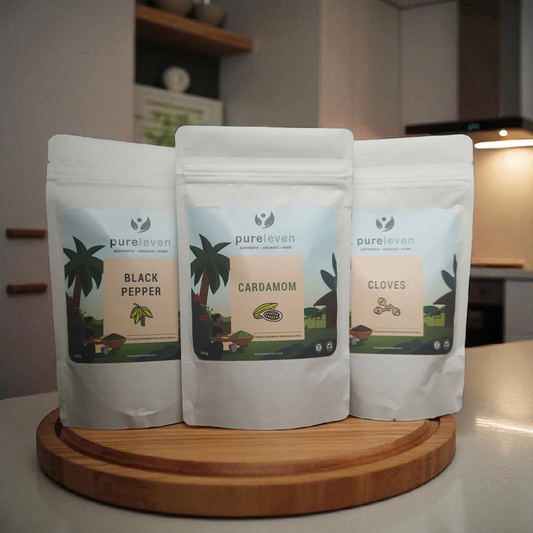 Primary pick3-in-1 Kerala Spice ComboStart with a best-selling Pureleven product picked to match the buying intent behind this article.Rs. 909.00Rs. 559.00
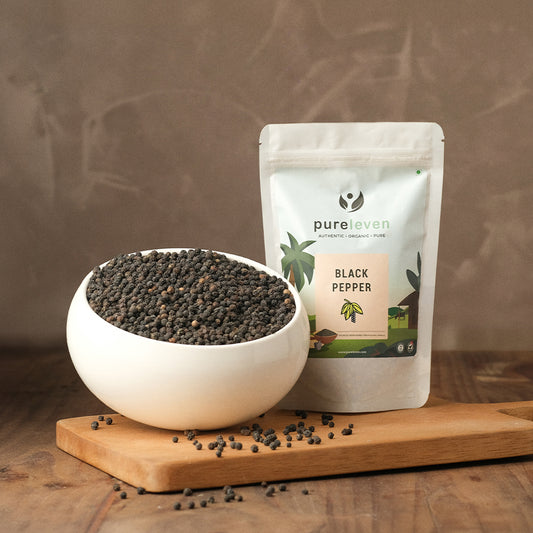 Also considerKerala Black Pepper (Kali Mirch) – Bold Whole Peppercorns from IdukkiRs. 100.00
 Kitchen add-onExtra Bold Kerala Cardamom (Elaichi) – 8mm Whole Pods from IdukkiRs. 309.00Rs. 270.00


