Pureleven journal
Cooking & Spices
From Kerala soil to your kitchen.
Kerala pepper guide
Malabar vs Tellicherry Black Pepper: What You're Actually Buying
Move from comparison content into bold, kitchen-ready Kerala pepper with a cleaner buying path.
Quick Summary
The Short AnswerTellicherry and Malabar are both names for black pepper from India's south-west coast. Malabar is the broader origin and trade name. Tellicherry is used for grades of larger, bolder berries.In practice: Tellicherry grades are selected from Malabar pepper. Not all...
Jump through the guide
Go straight to the sections that answer the buying, comparison, or sourcing question you came for.
The Short Answer
Tellicherry and Malabar are both names for black pepper from India's south-west coast. Malabar is the broader origin and trade name. Tellicherry is used for grades of larger, bolder berries.
In practice: Tellicherry grades are selected from Malabar pepper. Not all Malabar pepper makes the Tellicherry grades.
Where the Names Come From
Malabar refers to the historic Malabar Coast, the western coastal belt of Kerala and parts of Karnataka. It's one of the oldest pepper-trading regions in the world. "Malabar Pepper" is also a registered Geographical Indication (GI).
Tellicherry (now Thalassery) is a port town in Kannur district, northern Kerala. It was an important pepper-trading port, and the name stuck as an international marker for bold, high-quality Kerala pepper.
The Actual Difference: Berry Size
Indian black pepper is sold in trade grades defined by size, weight and cleanliness. In simple terms:
| Grade | Berry size (approx.) | Notes |
|---|---|---|
| Malabar Garbled (MG 1) | Standard, ungraded by size | Cleaned ("garbled") everyday grade; the most common |
| Tellicherry Garbled Extra Bold (TGEB) | About 4.25 mm and above | Bold, premium grade |
| Tellicherry Garbled Special Extra Bold (TGSEB) | About 4.75 mm and above | The boldest, rarest grade |
Exact specifications are set by India's grading standards. If you're buying for trade, ask the seller for the grade certificate.
Does Size Actually Affect Flavour?
Bold Tellicherry berries are picked more mature, and many cooks find them more aromatic and rounded. Standard Malabar pepper has plenty of heat and flavour and is excellent for everyday grinding.
Freshness beats grade every time. An old Tellicherry in a supermarket jar will lose to freshly packed Malabar pepper from a good source.
What Many Online Listings Actually Sell
Some listings use "Tellicherry" loosely. You might get:
- Standard Malabar pepper with the Tellicherry name added
- Mixed grades relabelled for marketing
- Genuine TGEB or TGSEB, at a clear premium
How to tell without a ruler:
- Uniformity: genuine Tellicherry grades look strikingly even in size.
- Density: bold, mature pepper feels heavy for its volume.
- Price: if it's cheap and called Tellicherry, be suspicious.
Which Should You Buy for Home Use?
For everyday cooking and grinding: good, fresh Kerala Malabar pepper from a source you trust.
For a table pepper mill: a bold grade is a nice upgrade if you grind pepper directly onto food.
For marinades, stocks and slow cooking: grade matters much less.
→ Shop Kerala black pepper from Idukki
Storage: The Step Most People Get Wrong
- Whole peppercorns keep their quality for a long time, often a year or two or more, in an airtight container away from heat.
- Pre-ground pepper loses much of its aroma within a few months.
- Don't store it near the stove. Heat speeds up aroma loss.
Buy whole, grind fresh. That single habit will do more for your cooking than any grade upgrade.
Related: Kerala black pepper varieties and white pepper vs black pepper.
Pure Leven packs black pepper from Idukki farms as whole peppercorns, with no pre-grinding and no blending.
Ready to buy?
Related products for this article
Move from reading intent to shopping intent with product cards tied to this topic and a direct route into the wider catalog.
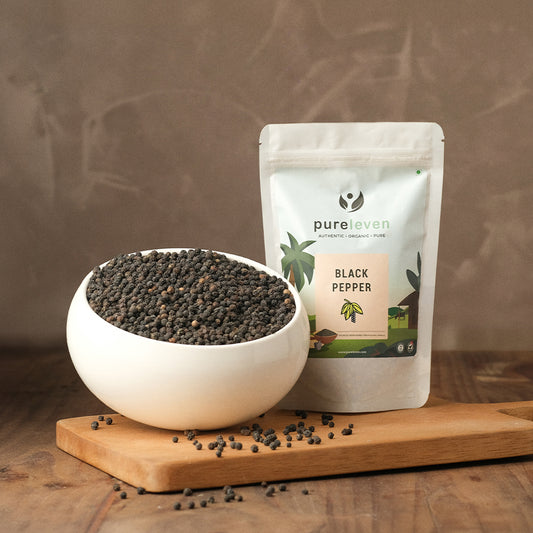 Primary pickKerala Black Pepper (Kali Mirch) – Bold Whole Peppercorns from IdukkiWhole Kerala peppercorns with high aroma and a straightforward upgrade from generic supermarket stock.Rs. 100.00
Also considerKerala Black Pepper (Kali Mirch) – Bold Whole Peppercorns from IdukkiRs. 100.00
Primary pickKerala Black Pepper (Kali Mirch) – Bold Whole Peppercorns from IdukkiWhole Kerala peppercorns with high aroma and a straightforward upgrade from generic supermarket stock.Rs. 100.00
Also considerKerala Black Pepper (Kali Mirch) – Bold Whole Peppercorns from IdukkiRs. 100.00
 Kitchen add-onKerala White Pepper Whole PeppercornsRs. 184.50Rs. 150.00