



Pureleven journal
Cooking & Spices
From Kerala soil to your kitchen.
Pureleven spice journal
Spice Packaging Explained: Pouches, Jars and What Keeps Aroma In
Answer-first guidance with a faster path to farm-origin Kerala products you can buy today.
Quick Summary
Pouches, jars, tins or plastic? How different spice packaging handles air, light and moisture, and how to keep whole spices fragrant at home.
Jump through the guide
Go straight to the sections that answer the buying, comparison, or sourcing question you came for.
The best spice packaging keeps out the four things that fade aroma: air, light, moisture and heat. For shipping and storing in the pantry, a well-sealed, opaque, foil-lined pouch with a good zip does this well. At home, an airtight glass or steel jar kept in a dark cupboard is just as good, as long as the lid seals properly.
The packaging matters because a spice's smell lives in its essential oils. Those oils slowly escape and break down. Good packaging slows that down. Poor packaging speeds it up, however good the spice was on day one.
What actually damages spices in the pack?
- Air (oxygen): oxidises the oils, so flavour goes flat and sometimes stale-smelling.
- Light: especially sunlight, breaks down colour and aroma. Green cardamom fades towards pale khaki.
- Moisture: causes clumping, softening and, in the worst cases, mould. A big risk in Indian monsoons.
- Heat: speeds up everything above. A shelf above the stove is the worst place for any spice.
Whole spices resist all four far better than powders, because the oils are sealed inside the pod, seed or bark. That's the single biggest reason to buy whole.
Common spice packaging types compared
| Packaging | Air | Light | Moisture | Good for |
|---|---|---|---|---|
| Thin clear plastic bag | Poor | Poor | Fair | Short-term only, move to a jar |
| Clear zip pouch | Fair | Poor | Fair | Shipping, then store in a dark cupboard |
| Foil-lined or metallised zip pouch | Good | Good | Good | Shipping and pantry storage |
| Kraft paper pouch with inner lining | Depends on lining | Good | Depends on lining | Looks nice, check the lining |
| Glass jar with a tight lid | Good | Poor unless kept in the dark | Good | Home storage in a cupboard |
| Steel dabba or tin | Good if the lid is tight | Good | Good | Daily-use spices near the stove (not on it) |
Are pouches or jars better for spices?
Both work. They just do different jobs.
Pouches are light and hard to break, so they're the natural choice for shipping. A pouch that blocks light and has a firm zip can also serve as pantry storage. Squeeze the air out each time you close it.
Jars are better for the spices you open every day. Glass doesn't hold smells and is easy to clean. Its weak point is light, so keep glass jars inside a cupboard, not on an open shelf by the window.
A good routine is to keep the main stock sealed in its pouch and refill a small jar every few weeks. The pouch stays mostly closed, and the jar takes the daily opening and closing.
What should you look for in spice packaging when buying online?
- A proper seal, heat-sealed or with an intact tamper strip, when it arrives.
- A resealable zip if you won't use the spice in one go.
- Opaque or foil-lined material for spices you'll keep for a while.
- A pack size that fits how fast you cook. Smaller packs mean fewer openings of the same bag.
- A clear label with the spice name, net weight and seller details.
Loose spices from open sacks skip all of this. We talk about the trade-offs in spices online vs your local kirana.
Does fancy packaging mean better spice?
No. Beautiful boxes and printed tins look lovely, but the spice inside matters more. A plain, well-sealed pouch of fresh cardamom beats a gift tin of tired pods every time.
Look past the design. Check the seal, the material, and then open it and smell.
How should you repack spices at home?
- Use clean, completely dry jars. Any water left inside is a mould risk.
- Fill close to the top to leave less air.
- Label with the spice name and the date you opened it.
- Keep jars in a closed cupboard away from the stove and sink.
- Always use a dry spoon. Wet spoons bring in moisture.
There's more on this in our guide on how to store spices.
How we pack ours
We keep it simple. Our spices are packed whole in resealable pouches, with nothing added. When your Kerala cardamom arrives, you can keep it in the pouch or move it into a jar. For more on choosing a seller, see our guide to buying spices online in India.
Frequently asked questions
What is the best packaging for spices?
The best packaging blocks air, light and moisture. Foil-lined zip pouches do this well for shipping and pantry storage. At home, airtight glass or steel jars kept in a dark cupboard work equally well.
Are glass jars good for storing spices?
Yes, as long as the lid seals tightly and the jar is kept out of direct light. Glass doesn't absorb smells and is easy to clean. Don't keep glass spice jars on a sunny windowsill or open shelf.
Is plastic packaging bad for whole spices?
Thin, clear plastic lets in light and some air, so it's not great for long storage. Thicker laminated or foil-lined pouches are much better. Either way, moving spices into a sealed jar at home is a safe habit.
Check the seal, smell the spice, then give it a proper home in your kitchen.
Ready to buy?
Related products for this article
Move from reading intent to shopping intent with product cards tied to this topic and a direct route into the wider catalog.
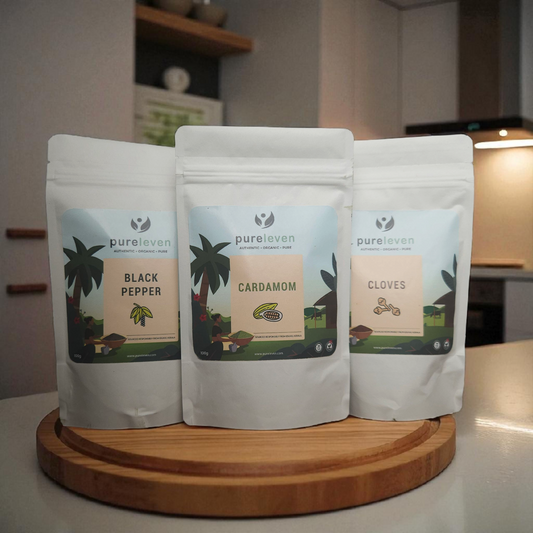 Primary pick3-in-1 Kerala Spice ComboStart with a best-selling Pureleven product picked to match the buying intent behind this article.₹909₹559
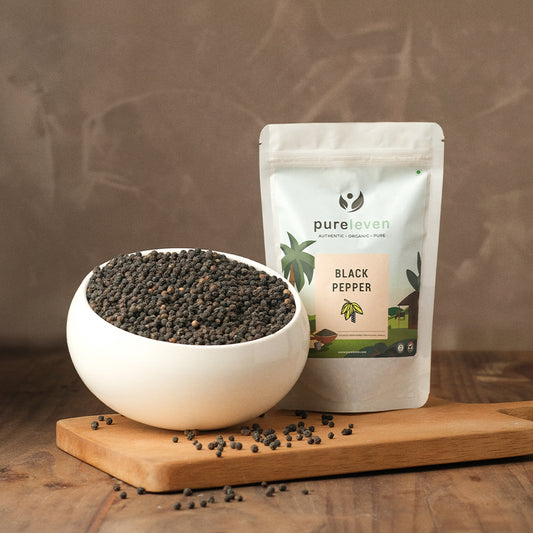 Also considerKerala Black Pepper (Kali Mirch) – Bold Whole Peppercorns from Idukki₹100
 Kitchen add-onExtra Bold Kerala Cardamom (Elaichi) – 8mm Whole Pods from Idukki₹309₹270


