Pureleven journal
Cooking & Spices
From Kerala soil to your kitchen.
Kerala pepper guide
Why Black Pepper Prices Go Up and Down
Move from comparison content into bold, kitchen-ready Kerala pepper with a cleaner buying path.
Quick Summary
Why the black pepper price rises and falls: weather, Vietnam, Brazil and Indonesia supply, boom and bust planting, stocks, demand and import rules.
Jump through the guide
Go straight to the sections that answer the buying, comparison, or sourcing question you came for.
The black pepper price moves mainly on supply: weather in the big growing countries, how many vines are bearing, and how much old stock traders hold. Vietnam, Brazil and Indonesia grow most of the world's pepper, so a drought or poor harvest there moves prices in India too. Demand, the rupee and import rules add smaller pushes.
We won't quote a price here, since it changes too often for a blog post to stay right. What we can do is explain why it moves, so the next rise or fall makes sense.
Who grows the world's black pepper?
Vietnam is by far the largest producer, with roughly a third of world output in recent years. Brazil and Indonesia come next, with India among the top few. Sri Lanka, Malaysia and China grow smaller amounts.
India grows a lot but also eats a lot. Most Indian pepper is used at home, and India also imports pepper, some of it for processing and re-export. So Indian prices follow what happens in Vietnam and Brazil fairly closely.
What makes black pepper prices change?
| Driver | How it moves the price | How fast |
|---|---|---|
| Weather | Drought, a weak monsoon or heavy untimely rain cuts the crop, and good seasons raise it | Within a season |
| Vines planted years ago | New vines take a few years to bear, so a planting boom becomes a glut later | Slow, over years |
| Disease | Wilt and other diseases kill vines and cut output in affected areas | Gradual |
| Stocks | Large stored stocks cushion a bad crop, and low stocks make prices jump | Months |
| Demand | Food industry buying, festivals and export orders lift prices | Months |
| Rupee and freight | A weaker rupee makes imports costlier, and shipping adds to landed prices | Weeks to months |
| Trade rules | Import duties and minimum import prices change how cheaply pepper can enter India | When rules change |
Why does pepper go through boom and bust?
Pepper is a perennial vine. When prices are high, farmers plant more, but a new vine usually takes three or four years to give a useful crop. The extra supply arrives years later, often just as demand has settled. Prices fall, farmers neglect or pull out vines, and supply shrinks again.
Vietnam shows the cycle well. Prices climbed through the early 2010s and peaked around 2015, and planting expanded fast. Prices then fell sharply, and many farmers there gave up pepper for other crops. Brazil was also growing much more by then, which added to the glut.
Less planting meant a smaller crop, and supply tightened again. Poor weather in producing countries added to it in recent years.
The vine's slow start is behind all this. We explain its life cycle in how the pepper vine grows on shade trees.
What affects pepper prices in India specifically?
- Kerala and Karnataka harvests. Most Indian pepper comes from these two states. A weak or erratic monsoon hurts flowering and the next crop.
- Harvest season. Prices often soften when fresh pepper reaches the market and firm up later in the year as stocks are used.
- Imports. In December 2017 India set a minimum import price of ₹500 per kg on pepper, after cheaper imports were blamed for a fall in local prices. Rules like this change the floor under Indian prices.
- Kochi. Kochi has long been the main trading centre for Indian pepper, and daily rates there are a common reference for traders. Our post on black pepper and the Malabar Coast covers how that trade grew.
Why does quality change the price?
Pepper doesn't sell at one rate on a given day. Clean, dense pepper with few light berries fetches more than loose, dusty lots. Bold Tellicherry sizes sell above regular grades. Well-stored pepper sells better than old, damp stock.
That's why two packs bought in the same week can differ a lot in price. Our post on pepper density grades explains how weight per litre plays in.
What can home buyers do when prices rise?
- Don't panic-buy. Whole pepper keeps well but not forever. Buy what you'll use in a few months.
- Buy whole. You'll use less, because freshly ground pepper is stronger than old powder.
- Compare like with like. A cheap pack with lots of light berries and dust isn't really cheaper.
- Store it in an airtight jar away from heat and light so none goes to waste.
Our pepper
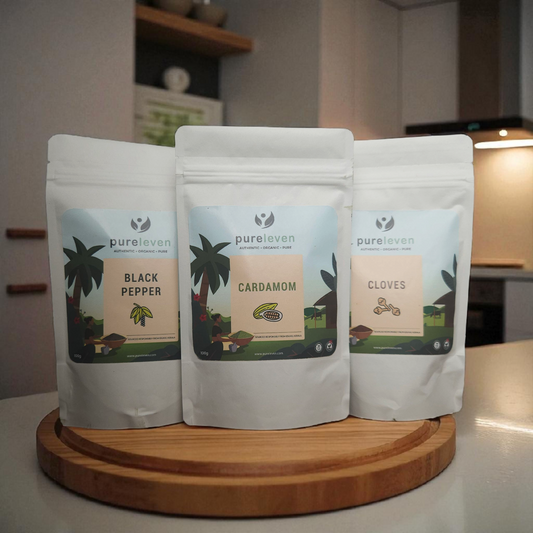
Our prices move with the market over time, like any pepper seller's. The product is the same each time: Kerala black pepper, whole peppercorns grown around Idukki with the vines on shade trees alongside cardamom, packed with nothing added in a resealable pouch. For what to check when you buy, see our Kerala black pepper buyer's guide.
Frequently asked questions
Why is black pepper expensive?
It's labour-heavy. Spikes are picked by hand from climbing vines, then threshed, dried and cleaned, and supply can't respond quickly to demand because new vines take years to bear.
When is black pepper cheapest in India?
Prices often ease in the harvest months, when fresh pepper reaches the market, roughly from the end of the year into spring. Weather, stocks and imports can override that in any year.
If you're unsure if a price is fair, message us on WhatsApp and we'll talk pepper.
Sources

Ready to buy?
Related products for this article
Move from reading intent to shopping intent with product cards tied to this topic and a direct route into the wider catalog.