



Pure Leven Spices & Tea journal
Cooking & Spices
From Kerala soil to your kitchen.
Daily wellness spice guide
Storing Turmeric Powder So It Keeps Its Colour
Turn informational reading into a practical kitchen buy with a shortlist built for daily Kerala-style cooking.
Quick Summary
How to store turmeric powder so it stays bright: the best containers, where to keep it, whether to refrigerate, and how long it lasts.
On this page
The best way to store turmeric powder is in a small, airtight, opaque or dark glass jar, kept in a cool cupboard away from the stove and out of sunlight. Light is the biggest enemy of turmeric's colour, because curcumin (the yellow pigment) breaks down when exposed to it, while moisture causes clumping and musty smells. Use a dry spoon, keep a small daily jar topped up from a larger sealed stock, and aim to finish it within about a year.
Most kitchens get two of those things wrong. The turmeric sits in a clear jar on an open shelf next to the stove, where it gets light, heat and steam every single day.
What makes turmeric powder lose its colour?
Light
Curcumin is sensitive to light. Research on turmeric pigments shows clear colour loss when they're exposed to light, and sunlight is worse than dim room light. A clear jar on a sunny window sill is the fastest way to turn bright turmeric dull.
Heat
Warmth speeds up the loss of the aromatic oils that give turmeric its earthy smell. A shelf just above the gas stove is warm for hours every day.
Moisture and steam
Turmeric powder soaks up moisture from the air. Damp powder clumps, loses flavour and, in the worst case, grows mould. Steam from a pressure cooker or a wet spoon dipped into the jar does most of the damage.
Air
Every time you open the jar, fresh air comes in. Over months that slowly flattens the aroma, which is why a huge jar that's opened daily fades faster than a small one.
How to store turmeric powder, step by step
- Choose the right container. An airtight steel dabba, an amber or dark glass jar, or a clear jar kept inside a closed cupboard all work well.
- Split big packs. Keep a small everyday jar of a few weeks' supply. Store the rest sealed in its pouch or a second airtight jar, away from the kitchen heat.
- Keep it away from the stove. A cupboard on the far side of the kitchen is better than the shelf right above the burners.
- Always use a dry spoon. Never shake turmeric straight from the jar over a steaming pot.
- Close the lid straight away. Don't leave it open while you cook.
- Label the date. Write the month you opened it on the lid, so you know how old it is.
Which container is best for turmeric powder?
| Container | Light | Air and moisture | Stain risk | Verdict |
|---|---|---|---|---|
| Steel dabba with tight lid | Blocks it fully | Good if the lid seals well | Low, wipes clean | Excellent for daily use |
| Amber or dark glass jar | Blocks most of it | Very good with a sealed lid | None | Excellent |
| Clear glass jar in a closed cupboard | Fine while the door is shut | Very good | None | Good |
| Clear jar on an open shelf | Poor | Good | None | Colour fades faster |
| Plastic tub | Depends on colour | Fair | High, stains permanently | Avoid for long storage |
| Original pouch, folded over | Good if opaque | Poor once opened | Low | Only if resealable or clipped tight |
Should you keep turmeric powder in the fridge?
Usually not. Every time a cold jar comes out into a warm Indian kitchen, moisture condenses on the powder. That does more harm than the cool temperature does good.
The freezer can work for a large sealed stock you won't open for months. Keep it in a well-sealed pack, and let it come to room temperature fully before you open it. The everyday jar belongs in the cupboard.
How long does turmeric powder keep?
Ground turmeric doesn't go off quickly, but it slowly loses colour and smell. Stored well, it's at its best for about a year from opening. After that it's usually still safe but noticeably weaker, so you'll need more for the same colour.
Throw it away if it smells musty, has hard wet lumps or shows any mould. Our post on curcumin in turmeric explains why the colour you start with matters too.
How to tell if your turmeric powder is past its best
- The colour has gone from deep golden to pale or brownish yellow.
- You rub a pinch between your fingers and barely smell anything.
- You need noticeably more than usual to colour a dal.
- There are clumps that don't break easily.
Pale powder can also point to poor quality from the start, rather than just age. If a new pack looks dull on day one, see our guide to checking turmeric powder for adulteration. The same storage rules apply to your other spices, which we cover in how to store spices.
A word from our side
We don't sell turmeric yet, though we plan to add it. Until then, our hub on choosing a good turmeric powder will help you pick one worth storing well. Our whole spices, like pepper, cardamom and cloves, keep their aroma far longer than any powder, and you can see them all in our full range.
Frequently asked questions
Why does turmeric powder clump?
It has absorbed moisture, often from a wet spoon or steam. Dry clumped powder can be spread on a plate in a dry spot for a few hours, but if it smells musty, replace it.
Take a look at where your turmeric sits right now. Moving it one cupboard away from the stove might be the easiest kitchen fix you make this week.
Ready to buy?
Related products for this article
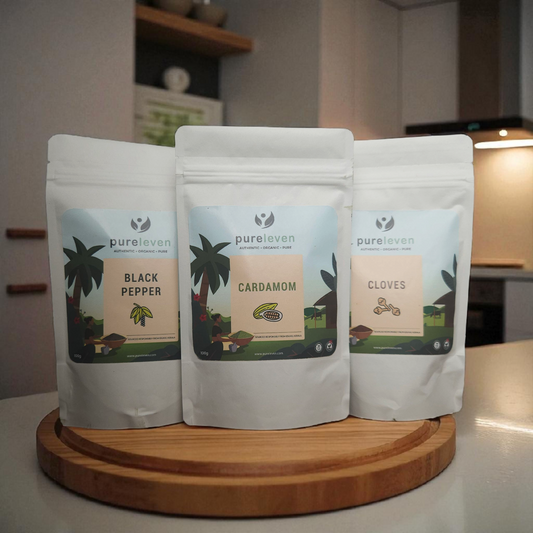 Primary pick3-in-1 Kerala Spice ComboA practical entry point for readers who want multiple Kerala staples in one order instead of one-off trial buying.₹909₹559
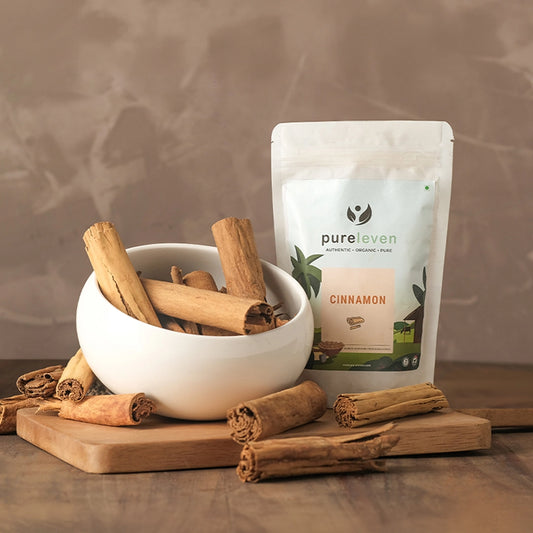 Also considerTrue Ceylon Cinnamon (Dalchini) – Whole Quills from Sri Lanka₹250₹190
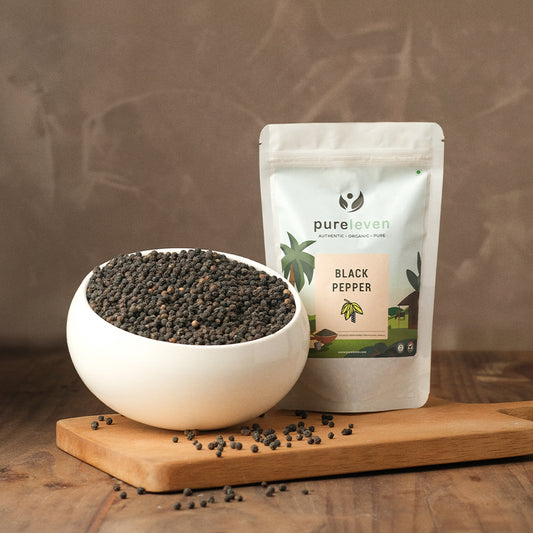 Kitchen add-onKerala Black Pepper (Kali Mirch) – Bold Whole Peppercorns from Idukki₹100
Who is behind this
Basil Thomas
Farmer and founder, Pure Leven Spices & Tea
Basil runs Pure Leven Spices & Tea from Rajakumary in Idukki, where he grew up watching his father farm black pepper, clove, coffee and tea, and later cardamom. He worked as a cyber security architect until Covid brought him home. Customers kept calling back for the farm's produce, so he carried on, and he now runs it with two staff. Farm chores were how he learned farming as a child, so he knows how to source well and set aside the lower grade.
How we write these guides


