



Pureleven journal
Cooking & Spices
From Kerala soil to your kitchen.
Daily wellness spice guide
Checking Turmeric Powder for Adulteration at Home
Turn informational reading into a practical kitchen buy with a shortlist built for daily Kerala-style cooking.
Quick Summary
Simple home tests for adulterated turmeric powder based on FSSAI guidance, and why lead chromate can't be detected in a kitchen.
Jump through the guide
Go straight to the sections that answer the buying, comparison, or sourcing question you came for.
You can run a basic turmeric adulteration test at home with a glass of water: pure turmeric powder settles and leaves the water light yellow, while powder with added dye such as metanil yellow turns the water a strong, bright yellow almost at once. A few drops of iodine can show added starch. But no home test can reliably detect lead chromate, the most dangerous adulterant, so where you buy matters as much as any test.
This post walks through what FSSAI's own guidance says, what each check actually tells you, and where home testing stops being useful.
What is turmeric powder adulterated with?
FSSAI's manual of methods for testing adulterants lists these for turmeric powder:
| Adulterant | Why it's added | Home check? |
|---|---|---|
| Metanil yellow and other synthetic dyes | Makes pale or old powder look bright | Water test gives a useful hint |
| Chalk powder | Cheap bulk filler | Rough only |
| Added starch | Cheap bulk filler | Iodine test works fairly well |
| Lead chromate | Brightens colour of roots and powder | No, needs a lab |
Metanil yellow is a dye that isn't permitted in food in India. Lead chromate is an industrial pigment, and it's the one to worry about most.
How do you do the water test for turmeric powder?
This one comes straight from FSSAI's DART (Detect Adulteration with Rapid Test) guidance for consumers.
- Take a clear glass of plain water at room temperature.
- Add about a teaspoon of turmeric powder. Don't stir.
- Watch for a minute or two as it sinks.
- Pure turmeric slowly settles to the bottom and leaves the water a light yellow.
- If the water turns a strong, bright yellow right away, the powder probably has added colour.
It helps to test a turmeric you already trust alongside, so you have something to compare against.
Testing whole turmeric fingers
DART has a version for whole turmeric too. Drop a few dried fingers into a glass of water. Pure turmeric doesn't release colour quickly. Fingers that have been coated with colour look unusually bright and leach colour into the water straight away.
How can you check for starch?
FSSAI's method uses a few drops of iodine solution on the spice powder. If it turns blue, there's starch in it. Tincture of iodine from a chemist works for this at home.
Turmeric itself is a starchy root, so you may see some darkening even in pure powder. What you're looking for is a clear blue-black colour spreading through the sample. Compare with a trusted powder if you can.
Can you test for chalk at home?
Only roughly. FSSAI's lab method adds dilute hydrochloric acid to turmeric in water, and fizzing shows chalk. Hydrochloric acid isn't a kitchen chemical, so please don't try that one at home.
Some people add a little vinegar or lemon juice instead and watch for bubbles. A steady fizz is a warning sign. No fizz isn't proof of purity, because kitchen acids are much weaker. You might also notice a gritty, white layer at the bottom after the water test, which is worth a second look.
Why can't you detect lead chromate at home?
Lead chromate is bright yellow, and it blends straight into the colour of turmeric. Studies in Bangladesh found it was dusted on dried turmeric roots during polishing to make poor-coloured roots look better. Stanford researchers who tracked it had to use lab instruments and handheld X-ray fluorescence analysers to find it. Nobody could tell by eye.
FSSAI's manual does include a lead chromate test, but it involves ashing the sample and using lab reagents. It isn't something to attempt in a kitchen, and home "lead test" swabs aren't designed for spice powder.
So the practical answer is to be careful about what you buy:
- Be suspicious of turmeric that is unusually bright or neon yellow.
- Buy from sellers who can tell you where the turmeric was grown and processed.
- Choose sealed packs with an FSSAI licence number, batch number and dates printed on them.
- Avoid loose, unlabelled powder when you don't know its source.
What should you do if a test looks bad?
Stop using that pack. Keep it, along with the bill, and contact the seller. You can also report it to your local food safety officer or through FSSAI's consumer complaint channels. Home tests are a hint, not proof, so a lab result is what counts if you want action taken.
Our hub guide on how to choose a good turmeric powder covers colour, varieties and labels, and our spice quality checklist has similar checks for other spices.
Where Pure Leven stands on this
We don't sell turmeric yet, though we plan to add it. One reason we sell whole spices is that they're much harder to adulterate than powders. You can see a whole peppercorn, a whole clove or a cardamom pod for what it is. Have a look at our whole spices if that appeals.
Frequently asked questions
Does pure turmeric dissolve in water?
No. Curcumin, the yellow pigment in turmeric, doesn't dissolve well in water. Pure powder mostly settles at the bottom and gives the water only a light yellow tint.
How do I test turmeric for lead?
You'll need a food testing lab. There's no dependable home method for lead chromate in turmeric. If you're worried, choose sellers who can name the source and avoid unusually bright powder.
Try the water test with the turmeric in your kitchen today. It takes two minutes and tells you more than the label does.
Sources
Ready to buy?
Related products for this article
Move from reading intent to shopping intent with product cards tied to this topic and a direct route into the wider catalog.
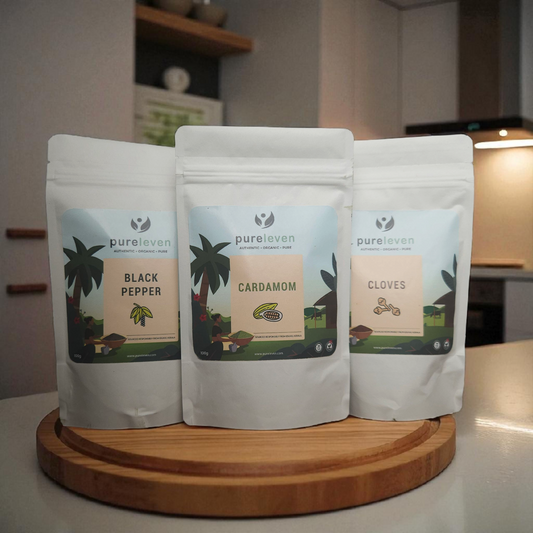 Primary pick3-in-1 Kerala Spice ComboA practical entry point for readers who want multiple Kerala staples in one order instead of one-off trial buying.Rs. 909.00Rs. 559.00
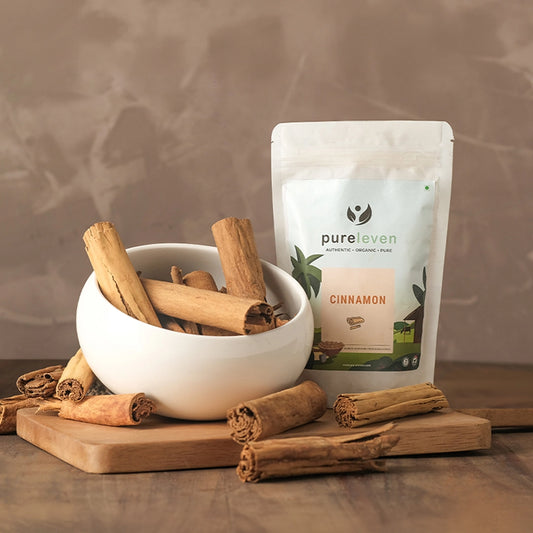 Also considerTrue Ceylon Cinnamon (Dalchini) – Whole Quills from Sri LankaRs. 250.00Rs. 190.00
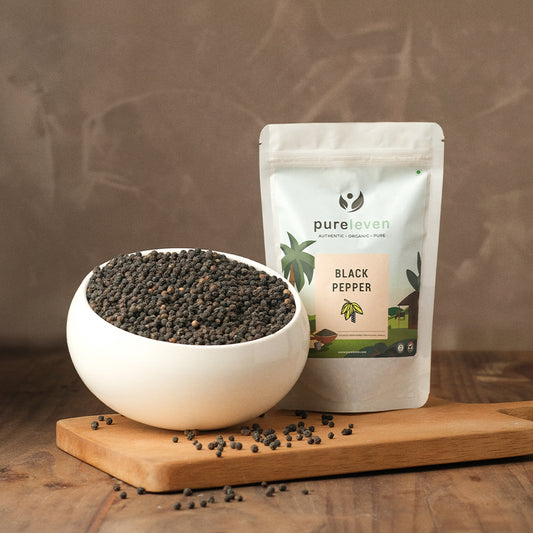 Kitchen add-onKerala Black Pepper (Kali Mirch) – Bold Whole Peppercorns from IdukkiRs. 100.00


