



Pure Leven Spices & Tea journal
Cooking & Spices
From Kerala soil to your kitchen.
Daily wellness spice guide
Curcumin in Turmeric: What the Percentages Mean
Turn informational reading into a practical kitchen buy with a shortlist built for daily Kerala-style cooking.
Quick Summary
How much curcumin turmeric really contains, why label percentages vary, and what a 95% supplement figure actually means.
On this page
The curcumin content of turmeric is usually between about 2% and 7% by weight, depending on the variety, the growing conditions and how it was processed. Commercial turmeric powder averages roughly 3%, while high-curcumin types like Alleppey and Lakadong are quoted at around 5 to 7%. Supplement labels saying "95%" are describing a concentrated extract, not turmeric itself.
Those numbers get thrown around a lot on turmeric packs. This is how to read them without being misled.
What is curcumin, exactly?
Curcumin is the main yellow-orange pigment in turmeric. It belongs to a small family of compounds called curcuminoids. According to the Linus Pauling Institute at Oregon State University, curcumin makes up about 75% of the curcuminoids in turmeric, demethoxycurcumin about 10 to 20%, and bisdemethoxycurcumin less than 5%.
So when a label says "curcumin", it may mean curcumin alone or all three together. That small difference in wording can shift the number.
How much curcumin is in different kinds of turmeric?
| Product | Typical curcumin figure | Where the number comes from |
|---|---|---|
| Madras-type turmeric | About 2% | FAO post-harvest compendium |
| Average commercial turmeric powder | About 3% | Assays of retail samples |
| Alleppey-type turmeric | About 4 to 7% | FAO post-harvest compendium |
| Lakadong (Meghalaya) | About 6.8 to 7.5% | Figures cited for its GI |
| Curry powder | Well under 1% | Turmeric is only one ingredient |
| Standardised extract (supplement) | Often 95% curcuminoids | Solvent-extracted and concentrated |
Across all turmeric, curcuminoids are generally put at about 2 to 9%. Sources vary, so take any single number as approximate.
Does higher curcumin mean better turmeric?
For cooking, higher curcumin mostly means deeper colour and a stronger, earthier taste. You use a little less to get the same result. That's useful, and it's why high-curcumin varieties sell for more.
But curcumin is only part of what makes turmeric taste good. The aroma comes from essential oils, which fade with time and heat. A 3% powder that was ground recently can smell and taste better than a 6% powder that's been open for two years.
So it's a good number to know, but it isn't the whole story. Our hub guide on choosing a good turmeric powder covers the other checks that matter.
Why do curcumin numbers on labels vary so much?
The testing method
Labs use different methods. Spectrophotometry reads the overall yellow colour of an extract, which captures all curcuminoids together. HPLC separates each curcuminoid and measures them one by one. The two approaches don't always give the same answer for the same sample, so numbers from different labs aren't always comparable.
Dry weight and moisture
Some figures are given on a dry-weight basis, which makes them look a little higher than the same turmeric measured as sold.
Added colour
A colour-based test can't tell curcumin from an added yellow dye. That's one more reason to check suspiciously bright powder, as we explain in our post on checking turmeric for adulteration.
Questions worth asking a seller
- Is the figure for curcumin alone or total curcuminoids?
- Which batch was tested, and when?
- Which method was used?
- Is it on a dry-weight basis?
A seller who can answer calmly probably knows their product. One who can't may have copied the number from somewhere else.
What about curcumin and health?
Curcumin gets a lot of research attention. Even so, reviews of the evidence have not found high-quality clinical proof that turmeric or curcumin works as a medicine for any disease. It's also poorly absorbed. Most of what you eat passes straight through.
Curcumin supplements are a different thing from the turmeric in your dal. They're far more concentrated, and there have been reports of liver problems linked to them. They can also interact with some medicines, including blood thinners. Please talk to your doctor before taking one, and especially if you're pregnant or on regular medication.
Our honest position
We don't sell turmeric yet, but we plan to add it, and we'll only quote a curcumin figure if we can say where it came from. For now, you can read more about how turmeric is sorted in our turmeric grading guide, or browse the whole spices we pack.
Frequently asked questions
Is 95% curcumin the same as turmeric?
No. A 95% figure refers to a concentrated extract of curcuminoids, usually sold as a supplement. Turmeric powder itself contains only a few percent curcumin.
Does cooking destroy curcumin?
Some curcumin breaks down with long, high heat, and it also fades in light. Normal Indian cooking, where turmeric goes into hot oil or a simmering curry, still leaves plenty of colour and flavour in the dish.
Next time you see a percentage on a pack, you'll know which questions to ask.
Sources
Ready to buy?
Related products for this article
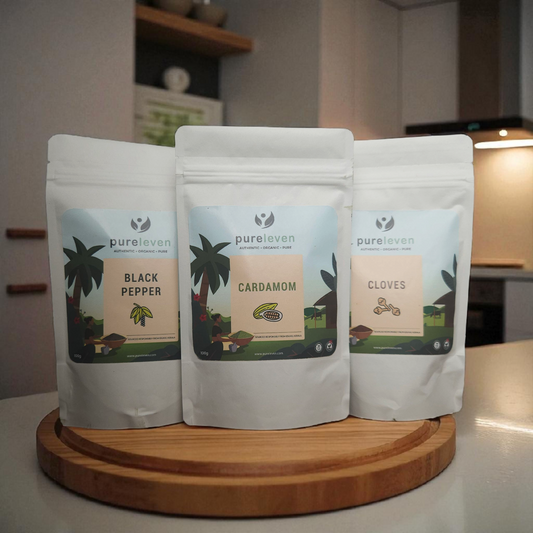 Primary pick3-in-1 Kerala Spice ComboA practical entry point for readers who want multiple Kerala staples in one order instead of one-off trial buying.₹909₹559
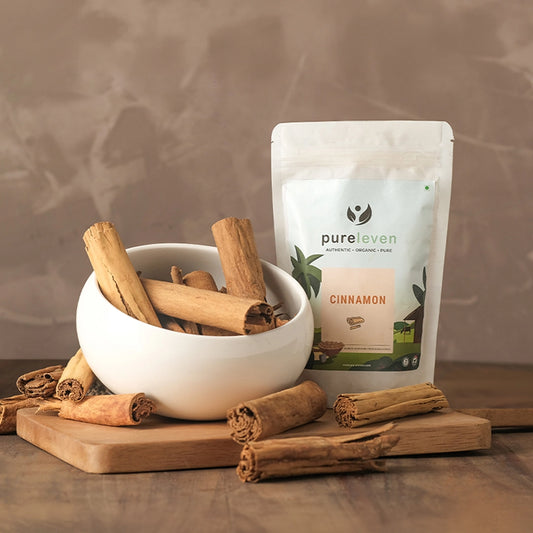 Also considerTrue Ceylon Cinnamon (Dalchini) – Whole Quills from Sri Lanka₹250₹190
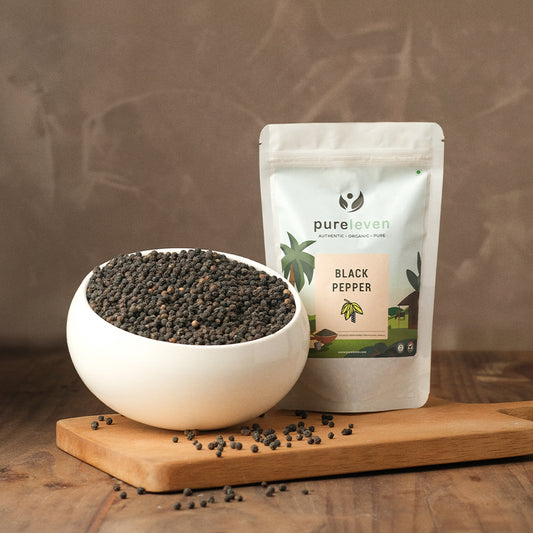 Kitchen add-onKerala Black Pepper (Kali Mirch) – Bold Whole Peppercorns from Idukki₹100
Who is behind this
Basil Thomas
Farmer and founder, Pure Leven Spices & Tea
Basil runs Pure Leven Spices & Tea from Rajakumary in Idukki, where he grew up watching his father farm black pepper, clove, coffee and tea, and later cardamom. He worked as a cyber security architect until Covid brought him home. Customers kept calling back for the farm's produce, so he carried on, and he now runs it with two staff. Farm chores were how he learned farming as a child, so he knows how to source well and set aside the lower grade.
How we write these guides


