



Pureleven journal
Cooking & Spices
From Kerala soil to your kitchen.
Daily wellness spice guide
Turmeric Powder: How to Choose a Good One
Turn informational reading into a practical kitchen buy with a shortlist built for daily Kerala-style cooking.
Quick Summary
How to pick good turmeric powder: colour, smell, variety, curcumin, adulteration checks and storage, from a spice-growing family in Idukki.
Jump through the guide
Go straight to the sections that answer the buying, comparison, or sourcing question you came for.
A good turmeric powder is a deep golden or orange-yellow, not a flat lemon yellow. It smells earthy and a little like ginger, tastes warm and slightly bitter, and the label lists only turmeric with a named origin and a recent packing date. Check those few things and you'll avoid most of the dull, stale or adulterated turmeric powder sold in India.
Manjal (haldi) goes into nearly every Indian curry, so most of us buy it without a second thought. That's exactly why it deserves a few minutes. This is what we'd check, as a family that has grown and packed spices in Idukki for about 30 years.
What does good turmeric powder look like?
Start with your eyes, then your nose, then your tongue. You don't need any equipment.
Colour
Good powder is deep golden to orange-yellow. Very pale powder usually means a low-curcumin variety, old stock or filler. But be just as careful with an unnaturally bright, almost neon yellow. That's what added colour looks like.
Texture
Rub a pinch between your fingers. It should feel soft and fine, and it will stain your skin. It shouldn't feel gritty, chalky or damp, and it shouldn't have hard lumps.
Smell and taste
Fresh turmeric powder smells earthy and woody, with a slight peppery, gingery edge. Taste a tiny pinch. It should be warm and a bit bitter. If it smells of nothing, or of dust, it has been sitting around too long.
Which turmeric variety should you buy?
India grows over 70% of the world's turmeric and has around 30 varieties, according to the government's 2025 announcement of the National Turmeric Board. A few regional types have Geographical Indication (GI) tags, which protect the name for turmeric grown in that area.
| Type | Where it grows | Known for | GI tag |
|---|---|---|---|
| Alleppey Finger | Central Kerala | Deep orange colour, higher curcumin | No, it's a trade name |
| Erode | Tamil Nadu | Bright yellow, a major trading market | 2019 |
| Sangli | Maharashtra | Widely traded, everyday cooking turmeric | 2018 |
| Kandhamal Haladi | Odisha | Hill-grown, traditional low-input farming | 2019 |
| Lakadong | Jaintia Hills, Meghalaya | Very dark, very high curcumin | 2024 |
For everyday cooking, any of these is fine if it's fresh and clean. If you want the deepest colour and strongest flavour, look for Alleppey or Lakadong.
What does the curcumin percentage tell you?
Curcumin is the main yellow pigment in turmeric. Commercial turmeric powder averages roughly 3% curcumin by weight. An FAO post-harvest guide puts Alleppey-type turmeric at about 4 to 7%, against about 2% for the Madras type. Lakadong is often quoted at around 7%.
Higher curcumin usually means deeper colour and a stronger taste, so less powder does the same job. But a number on a pack only means something if the seller can tell you how it was measured. And a high-curcumin powder that's two years old will still disappoint.
How can you tell if turmeric powder is adulterated?
FSSAI's testing manual lists the usual adulterants in turmeric powder: metanil yellow (a dye not allowed in food), chalk powder, added starch and lead chromate.
The easiest home check comes from FSSAI's DART booklet. Stir a teaspoon of turmeric powder into a glass of water and let it settle. Pure turmeric leaves the water a light yellow. If the water turns a strong, bright yellow straight away, there's likely added colour.
Lead chromate is the worrying one, and you can't reliably spot it at home. Researchers in Bangladesh found it being dusted on turmeric roots to brighten the colour, and detecting it took lab equipment or handheld X-ray analysers. Your best protection is buying from a seller you trust and being suspicious of turmeric that looks too bright.
Our longer spice quality checklist covers similar checks for other spices too.
A quick buying checklist
- The ingredient list says turmeric and nothing else.
- The pack names a region or variety, rather than saying only "India".
- There's a recent packing date and a best-before date.
- The pack shows an FSSAI licence number, as all packed food in India should.
- The pouch is sealed, thick and doesn't let light through.
- The size suits you. A 100 g pack you'll finish in a few months beats a kilo that fades.
- The price isn't suspiciously low compared with other sellers.
Powder or whole turmeric fingers?
Whole dried turmeric fingers keep their colour longer and are much harder to adulterate than powder. The catch is that dried turmeric is rock hard. A normal kitchen mixie struggles with it, so most families buy powder or get fingers ground at a local flour mill.
If you buy fingers, look for ones that are hard, heavy, evenly coloured and snap cleanly with an orange-yellow inside. We explain grades in more detail in our guide to turmeric grading.
How should you store turmeric powder?
Light and moisture are the two things that spoil it. Curcumin fades in light, so a clear jar on a sunny windowsill is the worst place for it. Keep turmeric in an airtight, opaque container in a cupboard away from the stove, and always use a dry spoon.
Stored like that, it stays good for a long time, but colour and smell are best in the first several months. Our post on how to store spices has more on containers.
Why is turmeric paired with black pepper?
Turmeric and pepper go together in plenty of Kerala dishes, from fish curry to rasam. There's also research interest in the pairing: a small 1998 study found that piperine from pepper raised blood levels of curcumin, though it used supplement-sized doses, far more than any curry. It's not a reason to think of your curry as medicine. If you're thinking about curcumin supplements, talk to your doctor first, especially if you take other medicines.
What we sell (and what we don't, yet)
We don't sell turmeric at Pure Leven right now. We plan to add it, and when we do, it will be packed the same way as everything else we sell, with nothing added. Meanwhile, if you want the other half of that classic pairing, our whole Idukki black pepper is grown on vines climbing shade trees next to cardamom. You can see all our whole spices here.
Frequently asked questions
How long does turmeric powder last?
Turmeric powder doesn't really go off if kept dry, but it slowly loses colour and smell. For the best flavour, use it within about a year of packing, and sooner once opened. Keep it in an airtight, dark container.
Can I test turmeric for lead at home?
No reliable home test exists for lead chromate. It needs lab testing or special equipment. Buy from sellers you trust and avoid turmeric with an unnaturally bright colour.
If you have a question about turmeric or any of our spices, message us on WhatsApp at +91 88482 65849. We're happy to help.
Sources
Ready to buy?
Related products for this article
Move from reading intent to shopping intent with product cards tied to this topic and a direct route into the wider catalog.
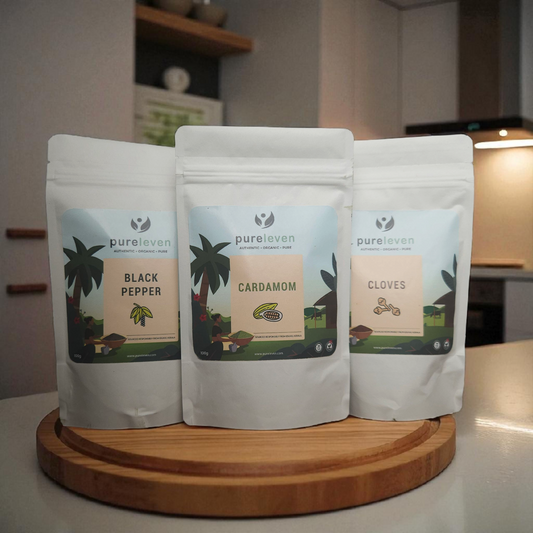 Primary pick3-in-1 Kerala Spice ComboA practical entry point for readers who want multiple Kerala staples in one order instead of one-off trial buying.Rs. 909.00Rs. 559.00
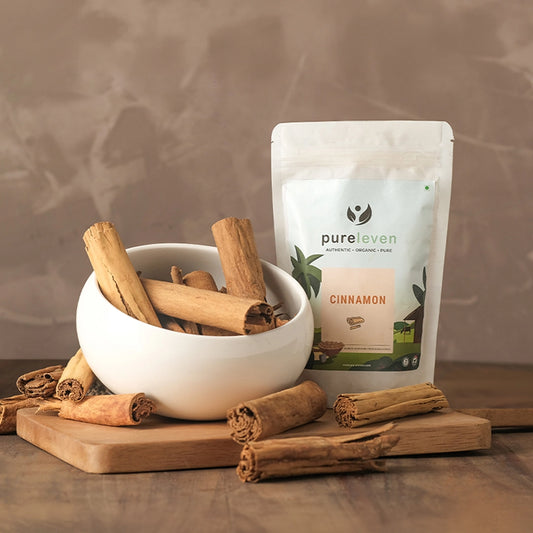 Also considerTrue Ceylon Cinnamon (Dalchini) – Whole Quills from Sri LankaRs. 250.00Rs. 190.00
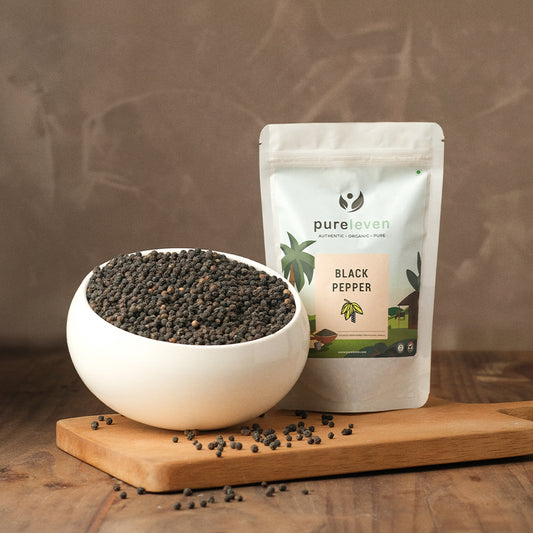 Kitchen add-onKerala Black Pepper (Kali Mirch) – Bold Whole Peppercorns from IdukkiRs. 100.00


