



Pureleven journal
Cooking & Spices
From Kerala soil to your kitchen.
Pureleven spice journal
Star Anise vs Anise Seed: Not the Same Spice
Answer-first guidance with a faster path to farm-origin Kerala products you can buy today.
Quick Summary
How star anise and anise seed differ in plant, flavour and use, how to substitute one for the other, and why Japanese star anise is a real safety concern.
Jump through the guide
Go straight to the sections that answer the buying, comparison, or sourcing question you came for.
Star anise and anise seed are different spices from unrelated plants. Star anise is the star-shaped fruit of an evergreen tree native to southern China and Vietnam, while anise seed comes from a small herb in the carrot family. Both taste of liquorice because both contain anethole, so you can swap them at roughly 1 star to ½ teaspoon of seed.
What exactly is each one?
- Star anise (Illicium verum), called chakra phool in Hindi and thakkolam in Malayalam, is the dried, woody fruit of a tree. Each of its points holds a single shiny seed, but most of the flavour sits in the star-shaped pod itself.
- Anise seed (Pimpinella anisum) is the small, ridged seed of a herb from the eastern Mediterranean. It looks a lot like fennel seed and gets confused with it often enough.
The shared flavour comes from anethole, an aromatic compound that is the main component of the oils of anise, star anise and fennel. That's why all three taste related even though the plants aren't.
How do they differ in the kitchen?
| Star anise | Anise seed | |
|---|---|---|
| Flavour | Stronger, warmer, slightly bitter | Sweeter, lighter |
| Typical uses | Biryani, garam masala, meat curries, Chinese five-spice, pho, spiced tea | Baking, sweets, liqueurs, some breads |
| How it's used | Usually whole, removed before serving | Whole or ground |
| Where it grows | Southern China and Vietnam | Mediterranean and West Asia |
Can you substitute one for the other?
- 1 whole star anise is roughly ½ teaspoon of anise seed. Star anise is stronger, so start with less and taste.
- In Indian cooking, fennel seed (perumjeerakam or saunf) is usually a better stand-in for star anise than anise seed, and it's already sitting in most kitchens. Use about ½ teaspoon per star.
- In baking, ground star anise can replace anise seed, using about half as much.
- In long-cooked dishes like biryani, star anise holds up better. Anise seed can turn a little flat over a long simmer.
Mistakes to avoid
- Too much star anise. One or two stars flavour a whole biryani pot. More turns it medicinal.
- Leaving whole stars in the serving dish. The woody pod is unpleasant to bite. Fish it out, or warn people.
- Grinding star anise too early. Like most spices, it loses aroma quickly once ground.
A safety note: Japanese star anise
A related tree, Japanese star anise (Illicium anisatum), has fruit that looks almost identical but is toxic and not edible. It contains compounds that can cause serious neurological and digestive symptoms, and once dried, the two can be very hard to tell apart by eye. In 2003 the US FDA advised consumers not to drink teas made from star anise after illnesses linked to contamination with the Japanese species.
Buy star anise labelled for culinary use, from a seller you trust. Skip loose, unlabelled stars, and don't give star anise tea to babies or small children.
Where our star anise comes from
Star anise isn't a Kerala crop. Ours is bought in, and we stock it because Kerala biryanis and meat dishes use it alongside our cardamom, cloves and pepper. Our whole star anise is sold for cooking.
For more on the spice itself, see star anise uses and side effects and how and where star anise is grown. It's also one of the whole spices in our Kerala garam masala recipe.
Sources
Ready to buy?
Related products for this article
Move from reading intent to shopping intent with product cards tied to this topic and a direct route into the wider catalog.
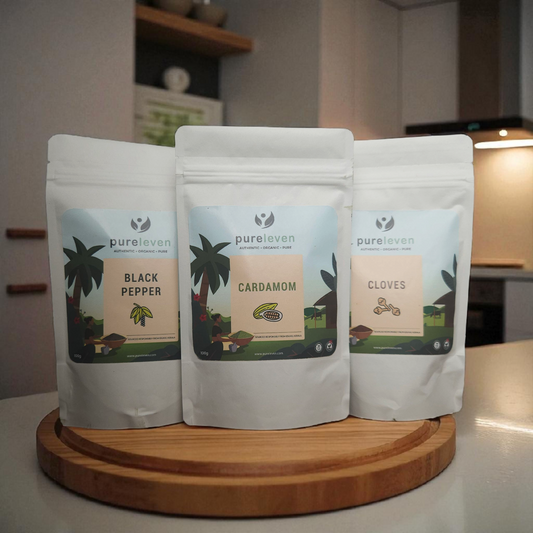 Primary pick3-in-1 Kerala Spice ComboStart with a best-selling Pureleven product picked to match the buying intent behind this article.Rs. 909.00Rs. 559.00
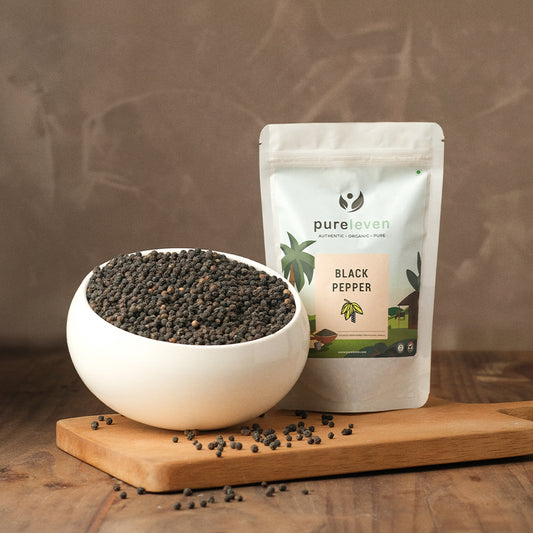 Also considerKerala Black Pepper (Kali Mirch) – Bold Whole Peppercorns from IdukkiRs. 100.00
 Kitchen add-onExtra Bold Kerala Cardamom (Elaichi) – 8mm Whole Pods from IdukkiRs. 309.00Rs. 270.00


