Pureleven journal
Cooking & Spices
From Kerala soil to your kitchen.
Kerala cardamom guide
Can You Grow Cardamom at Home?
Compare pod size, aroma strength, and practical pack sizes before you buy.
Quick Summary
An honest answer from Idukki: cardamom grows well as a shaded pot plant, but pods need humidity, rain, shade, bees and about three years. What to expect where you live.
Jump through the guide
Go straight to the sections that answer the buying, comparison, or sourcing question you came for.
You can grow cardamom at home as a leafy plant in a large pot or shady corner, but getting pods is hard outside the right climate. It needs warmth, deep shade, humidity and lots of water, and on farms it usually bears only from the third year. In humid South India you may get a small harvest. Elsewhere, grow it for the leaves.
We live among cardamom plants in Idukki, so this question comes up often. The details follow.
What does cardamom need to grow well?
Small cardamom comes from the evergreen forests of the Western Ghats. Growers' guides describe its home conditions as heavy rain (roughly 1,500 to 4,000 mm a year), temperatures of about 10 to 35°C, and hill elevations of around 600 to 1,200 m. It grows under tall shade trees in deep soil rich in leaf mould.
That means cool nights, warm days, lots of rain, filtered light and no harsh sun, which is why the crop is concentrated in places like the Idukki hills. We wrote more about that landscape in Idukki spices and the Cardamom Hills.
Can you grow cardamom in a pot?
Yes, as a plant. A clump sends up leafy shoots that can reach 2 metres or more in the ground and a little less in a pot. The leaves smell faintly of cardamom when crushed, which is nice to have near a window.
Checklist for a potted cardamom plant
- A wide, deep pot, at least 40 to 45 cm across, with drainage holes
- A loose, rich mix of garden soil, compost and leaf mould or cocopeat
- Bright shade or filtered light, never direct afternoon sun
- Soil kept evenly moist, never waterlogged
- High humidity, so group it with other plants or mist in dry weather
- Protection from cold below about 10°C and from hot, dry winds
- A light feed of compost every couple of months in the growing season
Brown, crispy leaf edges usually mean dry air or too much sun. Yellow, soft leaves usually mean too much water.
Will a home plant give pods?
It can, but not often unless conditions are close to its home. Cardamom flowers on long shoots called panicles that grow out from the base of the plant along the soil. The flowers need pollinating, mainly by bees on farms. Indoors or on a balcony, with few bees and dry air, plants often never flower or set very few pods.
On farms, plants usually begin bearing from the third year after planting. Pods ripen over several months, and pickers go round about once a month for the ready ones, as we describe in how cardamom is harvested by hand.
| Where you live | What to expect |
|---|---|
| Humid hill areas of Kerala, Karnataka or Tamil Nadu | Good growth and a real chance of pods in the garden |
| Humid coastal South India (plains) | Good leafy growth in shade, pods possible but few |
| Dry or hot plains (much of North and Central India) | Hard work, so grow it as a shaded pot plant for the leaves |
| Flats with air conditioning | Leaves may brown from dry air, flowering unlikely |
How do you start a cardamom plant?
From a sucker or seedling (easier)
Farmers mostly plant rooted suckers (a piece of underground stem with a shoot) or nursery-raised seedlings. This is by far the most reliable way. Nurseries in cardamom areas sell them, and some general plant nurseries stock them too.
From seed (slow)
You can try seeds from a fresh pod, but seeds from dried kitchen cardamom often germinate poorly, because drying that suits a spice doesn't suit a seed. If you try, soak the seeds overnight, sow them shallow in a moist, fine mix, keep them warm and shaded, and be patient. Germination can take weeks.
What else can you do with the plant?
Even without pods it earns its place. Some home cooks tear a leaf or two into rice or tea for a mild, fresh scent. It's gentle and nothing like the seeds, but pleasant.
For the pods, leave it to the hills
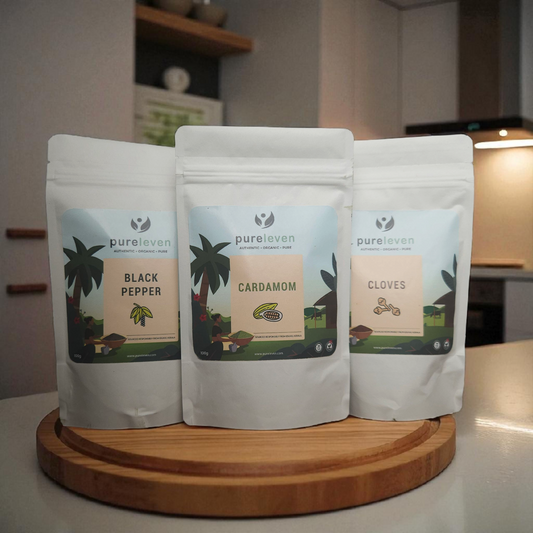
Growing a plant is fun. Growing enough pods to cook with takes a farm, the right climate and years of care. Our Kerala cardamom is grown in Idukki, dried in a cardamom dryer and packed as whole pods in a resealable pouch. To see which varieties farmers here grow, read cardamom varieties grown in Kerala, and for everything else, our Kerala cardamom guide.
Frequently asked questions
Can I grow cardamom from store-bought pods?
You can try, but dried spice seeds often germinate poorly. A rooted sucker or nursery seedling is far more reliable. If you sow seeds, use the freshest pods you can find and expect a long wait.
Can cardamom grow in North India?
As a potted plant in shade with regular watering and humidity, yes, though winters below about 10°C and hot, dry summers are hard on it. Pods are unlikely in those conditions.
If you do get a plant going, crush a leaf now and then. It smells a little like the hills we live in.
Sources

Ready to buy?
Related products for this article
Move from reading intent to shopping intent with product cards tied to this topic and a direct route into the wider catalog.