



Pureleven journal
Cooking & Spices
From Kerala soil to your kitchen.
Pureleven spice journal
Is It Safe to Buy Spices From Small Online Shops?
Answer-first guidance with a faster path to farm-origin Kerala products you can buy today.
Quick Summary
Is it safe to buy spices online from small shops? Green and red flags, what the label should show, and how to test a new seller with a small first order.
Jump through the guide
Go straight to the sections that answer the buying, comparison, or sourcing question you came for.
Yes, it is generally safe to buy spices online from small shops, as long as the seller is clearly identifiable, labels the pack properly and sells whole spices you can check yourself. A small grower-run shop can often give you fresher spice and better origin information than a big marketplace listing. The risk isn't the size of the shop. It's a seller you can't identify or contact.
So the real question is: how do you tell a genuine small seller from one you shouldn't trust? These are the things to look at.
Green flags and red flags
| Green flags | Red flags |
|---|---|
| Full address, not just a city or a PO box | No address, or only a form to fill |
| Working phone, WhatsApp or email, with replies | No reply, or only automated messages |
| Named origin for each spice (district or town) | "Premium Indian spices" with no origin |
| Real photos of the actual product | Only stock photos, same as other sites |
| Clear pack sizes, prices and shipping cost | Shipping cost appears only at the last step |
| Proper checkout with standard payment options | Asked to pay a personal account up front |
| Prices in a believable range | Prices far below everyone else |
| Honest, specific product descriptions | Big health promises or "best in the country" claims |
What should a spice label show?
Packaged food sold in India is expected to carry certain details on the label. When your parcel arrives, look for:
- The name of the spice.
- Net weight.
- Name and address of the packer or seller.
- MRP, and the packing date or a best-before date.
- A customer contact number or email.
- An FSSAI licence or registration number, which is a 14-digit number usually shown next to the FSSAI logo.
FSSAI licence and registration numbers can be looked up on FSSAI's FoSCoS website if you want to double-check one. Small sellers who haven't printed a detail are usually happy to answer if you ask.
Are small shops riskier than big marketplaces?
Not necessarily. On a big marketplace, the platform is well known, but the seller behind a listing may not be. Many listings are from traders who buy from other traders. You get easy returns, but often no idea where the spice came from.
A small shop run by growers or a family business puts its own name on every pack. It has more to lose from one bad review, and it can usually tell you exactly where the spice was grown. What you give up is some convenience, like instant returns.
Both can be good. Both can be bad. Judge the seller, not the size.
How to test a new small shop safely
- Send a question before ordering. Ask where the spice is grown and how it's dried. See how quickly and clearly they answer.
- Place a small first order, one or two spices in the smallest size.
- Pay through the site's normal checkout, not by transferring money to someone's personal account.
- When it arrives, check the seal, label and smell.
- Run a couple of quick home tests for fillers. Our post on spice adulteration home checks shows how, using FSSAI's DART tests.
- If it's good, order more next time. If not, you've only lost a little.
What about spices sold on WhatsApp or Instagram?
Many honest small farms sell this way, especially in Kerala. The same rules apply. Look for a real name and address, clear photos, and a proper payment method. Be more careful if the account is new, has no history, and pushes you to pay quickly.
If a seller has a website as well, compare the details. They should match.
Why whole spices are safer to buy from anyone
Powders are where most adulteration hides, because you can't see what's mixed in. Whole cardamom, pepper and cloves are much harder to fake, and you can judge them by eye, nose and a simple bite. If you're trying a new seller, whole spices are the safer first order.
More on this, and on everything else to check, in our practical guide to buying spices online in India.
Who we are
Pure Leven is a small family-run shop in Rajakumari, Idukki, Kerala 685619. We've been farming for about 30 years and work with a small group of farming families nearby. You can read our farm story or ask us anything on WhatsApp at +91 88482 65849 before you order. If you'd like to try a few spices at once, the Kerala spice combo pack is a small, easy first order.
Frequently asked questions
Is it safe to buy spices online in India?
Generally yes, if the seller is identifiable, labels the pack properly and responds to questions. Start with a small order of whole spices and check the seal, label and smell when it arrives. Avoid sellers who hide their address or ask for payment to a personal account.
Are small spice shops fresher than big brands?
They can be, especially when the shop is close to where the spice is grown and sells fast. It isn't guaranteed. Smell and crush a sample when it arrives to judge freshness yourself.
What should I do if a small shop sends a bad product?
Take photos of the pack and label, and contact the seller the same day. Most genuine small sellers will replace or refund. If they don't respond, leave an honest review so others know.
Sources
Small shops are often the best place to find good spice. Take a few minutes to check who you're buying from.
Ready to buy?
Related products for this article
Move from reading intent to shopping intent with product cards tied to this topic and a direct route into the wider catalog.
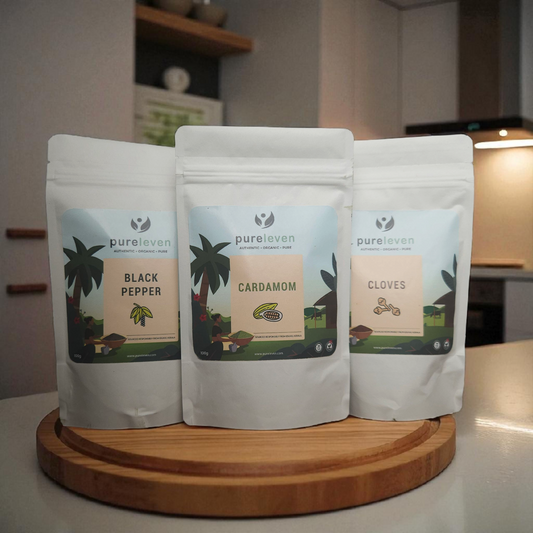 Primary pick3-in-1 Kerala Spice ComboStart with a best-selling Pureleven product picked to match the buying intent behind this article.₹909₹559
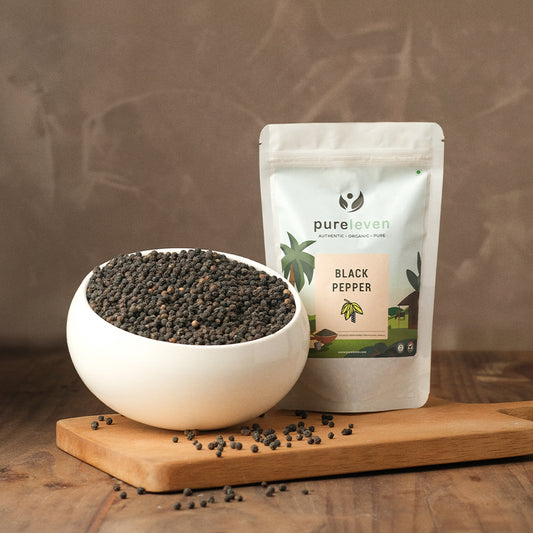 Also considerKerala Black Pepper (Kali Mirch) – Bold Whole Peppercorns from Idukki₹100
 Kitchen add-onExtra Bold Kerala Cardamom (Elaichi) – 8mm Whole Pods from Idukki₹309₹270


