



Pureleven journal
Cooking & Spices
From Kerala soil to your kitchen.
Pureleven spice journal
Small Growers of Idukki: How Family Farms Sell Their Spices
Answer-first guidance with a faster path to farm-origin Kerala products you can buy today.
Quick Summary
Who Idukki's spice farmers are and how family farms sell cardamom and pepper: auctions, local dealers, cooperatives and direct to small sellers.
Jump through the guide
Go straight to the sections that answer the buying, comparison, or sourcing question you came for.
Most Idukki spice farmers are small growers: families farming a few acres of cardamom and pepper on hillside land they've often held for a generation or two. After harvest and drying, they usually sell cardamom through licensed auctioneers at the Spices Board e-auctions, sell pepper and smaller lots to local dealers in nearby towns, or sell directly to small sellers who pack for customers. Which route they choose affects how quickly they're paid and how much of the final price reaches them.
Below is how that works, from the farm gate to your kitchen.
Who are Idukki's spice farmers?
Idukki's farms grew out of settlement in the high ranges, especially from the 1940s onwards, when families from the plains of central Kerala moved up and cleared small plots. Many of today's farms are still in the same families, split between children over the years into smaller holdings.
A typical small farm mixes crops. Cardamom under shade trees, pepper vines on the trunks, a few coffee plants, some coconut, jackfruit and plantain near the house. There's a practical reason for mixing crops too. It spreads the risk when one crop's price or harvest collapses.
Our own family is one of these. We've farmed in Rajakumari for about 30 years, starting with pepper and later moving into cardamom. There's more on that in our farm's story.
How do small farmers sell their spices?
1. Through the cardamom auction
Most cardamom goes this way. A family takes its dried cardamom to a licensed auctioneer, who lists it as a lot at the e-auctions in Puttady or Bodinayakanur. Licensed traders bid, and the auctioneer pays the grower after deducting charges. We explained the process step by step in how the cardamom auctions work.
2. To local dealers
Every spice town has dealers who buy pepper, cardamom, coffee and cloves over the counter. It's quick and familiar, and farmers often get cash the same day. The trade-off is that the price is set by the dealer, and it's usually a little below what the same spice might fetch elsewhere.
3. Through groups and cooperatives
Some growers sell together through farmer producer organisations, societies or planters' groups. Pooling lets small farms sell larger lots and share the cost of transport, drying or grading. How well this works depends a lot on how each group is run.
4. Directly to small sellers and customers
A growing number of families sell some of their crop straight to small brands, shops or customers. This usually means sorting and packing more carefully, but it can bring a fairer price and a steadier buyer year after year.
Comparing the routes
| Route | What's good about it | What's hard about it |
|---|---|---|
| Auction | Open bidding, published prices, handles large volumes | Farmer has no control over the day's price; payment can take days |
| Local dealer | Fast cash, close to home, takes small amounts | Dealer sets the price; less transparency |
| Group or cooperative | Better bargaining, shared costs | Depends on good management and trust |
| Direct to small sellers | Steadier relationship, often a better price | Needs more sorting, packing and communication |
What makes life hard for small growers?
- Prices swing wildly. Cardamom prices can double or halve within a couple of seasons, while costs for labour, fertiliser and water only go up.
- Weather. A dry summer or an extreme monsoon can cut the crop badly. Our post on how the monsoon shapes Idukki's spices covers why.
- Labour. Cardamom is picked by hand in many rounds each season, and finding enough pickers at the right time is a constant worry.
- Drying costs. Running a cardamom dryer takes fuel or power, and smaller farms often pay to use someone else's.
- Waiting for payment. For a family with bills to pay, a few days' delay matters.
How buyers can help
You don't need to do anything dramatic. Buying whole spices from sellers who can name where they came from, paying a fair price rather than chasing the lowest one, and coming back to the same seller all make a difference to the families at the other end.
How we work with growers
Along with our own farm, we buy from a small group of farming families around Idukki. Cardamom is dried in a cardamom dryer, sorted and packed whole with nothing added, and pepper and cloves are cleaned and packed the same way. Our Kerala spice combo pack has cardamom, pepper and Adimali cloves together if you want to try all three. The main Idukki spices online guide explains what else grows here.
Frequently asked questions
How do Idukki spice farmers sell cardamom?
Most sell dried cardamom through licensed auctioneers at the Spices Board e-auctions in Puttady and Bodinayakanur. Others sell to local dealers, through farmer groups, or directly to small sellers.
Do farmers get a fair price for their spices?
It varies a lot with the season and the route they sell through. Auction prices are published, but they swing sharply, and farmers carry most of the weather risk.
Can I buy directly from Idukki farmers?
Some families and small sellers based in Idukki sell directly online. Look for a clear Idukki address and a seller who can tell you how the spices were grown and dried.
Sources
If you have questions about where your spices came from, message us on WhatsApp at +91 88482 65849. We're happy to explain.
Ready to buy?
Related products for this article
Move from reading intent to shopping intent with product cards tied to this topic and a direct route into the wider catalog.
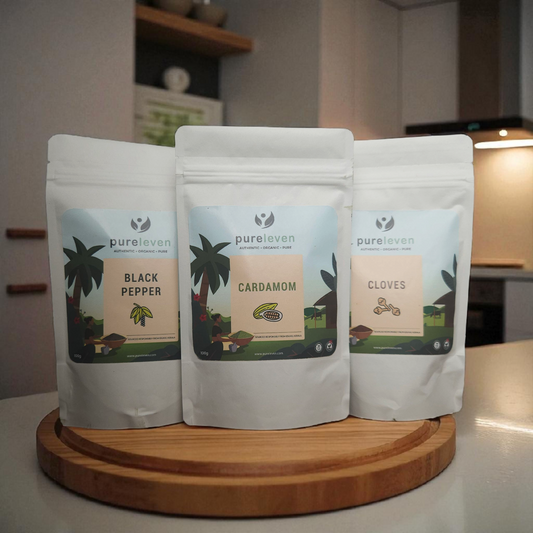 Primary pick3-in-1 Kerala Spice ComboStart with a best-selling Pureleven product picked to match the buying intent behind this article.₹909₹559
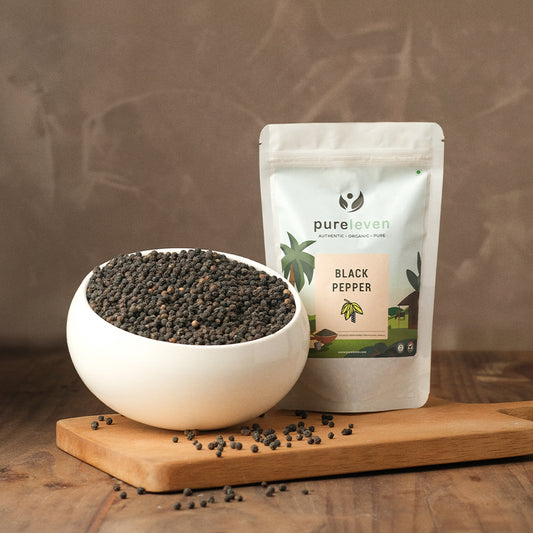 Also considerKerala Black Pepper (Kali Mirch) – Bold Whole Peppercorns from Idukki₹100
 Kitchen add-onExtra Bold Kerala Cardamom (Elaichi) – 8mm Whole Pods from Idukki₹309₹270


