



Pureleven journal
Cooking & Spices
From Kerala soil to your kitchen.
Pureleven spice journal
What to Check When Your Spice Parcel Arrives
Answer-first guidance with a faster path to farm-origin Kerala products you can buy today.
Quick Summary
A five-minute routine to check spices after delivery: box and seals, labels and weight, then look, smell and touch, plus what to do if something is wrong.
Jump through the guide
Go straight to the sections that answer the buying, comparison, or sourcing question you came for.
When your spice parcel arrives, check spices after delivery in three quick stages: the outer box and seals, the label against your order, and then the spice itself by look, smell and touch. The whole thing takes five minutes. Doing it on the day of delivery means that if anything is wrong, you can show the seller clear evidence straight away.
This is the routine we'd suggest, whoever you ordered from.
Stage 1: before you open anything
- Look at the outer box. Is it crushed, wet or torn? A damp box in monsoon is worth noting.
- Check the tape. Signs of re-taping can mean the box was opened in transit.
- Take a quick photo or short video as you open it. This isn't about distrust. It just makes any complaint simple.
Stage 2: check the pouches and labels
- Count the items against your order confirmation.
- Check each pouch is sealed, with no holes, split seams or loose zips.
- Read each label: spice name, net weight, and packing or best-before date if printed.
- If you have a kitchen scale, weigh one pouch. Remember the pouch itself weighs a few grams, so expect the total to be a little over the net weight.
If a pouch seems torn, don't throw it away. Keep it for the photo.
Stage 3: check the spice itself
Open one pouch at a time. Your nose is the best tool here. Fresh whole spices should smell the moment you open the pack, without having to hold it up to your face.
| Spice | What's normal | What's a concern |
|---|---|---|
| Green cardamom (elakka) | Green, plump, closed pods; black, slightly sticky seeds; strong smell when crushed | Pale or yellowed pods, many split or empty, faint smell, musty odour |
| Black pepper (kurumulak) | Dark, wrinkled, hard; hot and slightly citrusy when bitten | Light corns that crush easily, lots of dust, smooth oval seeds mixed in |
| Cloves (grampoo) | Reddish-brown, heads intact, a little oil when pressed | Dry, shrivelled, headless, or floating in water |
| Cinnamon | Matches what was sold: thin papery layers for Ceylon, thick hard bark for cassia | Type doesn't match the label, dull smell |
| Star anise | Mostly whole stars, warm liquorice smell | Mostly broken pieces, very little smell |
For a quick filler check on pepper or cloves, use the DART-based tests in our post on spice adulteration home checks. For fuller quality checks by spice, there's our spice quality checklist.
What signs mean you should not use the spice?
Some problems are about quality. A few are about safety. Don't use a spice that shows:
- Visible mould, white or green fuzz, or a musty, damp smell.
- Live insects, webbing or small holes in the spice.
- Clumped, wet or soft texture in whole spices that should be dry and hard.
- Any chemical or petrol-like smell.
One safety note on star anise. Japanese star anise is a different, toxic plant that can look similar. Buy star anise only from a seller who sells it as a culinary spice, and if you're ever unsure, don't use it.
What if something's wrong with the order?
- Keep everything: box, pouches and any spice.
- Take clear photos of the problem and the label.
- Contact the seller the same day, with your order number and photos.
- Say plainly what you'd like: a replacement or a refund.
Most genuine sellers would rather hear about a problem than lose a customer. A seller who ignores a clear complaint with photos is telling you something useful too.
Once it all looks good, where does it go?
Move the spices into airtight jars, or keep them in their pouches if those are resealable and opaque. Keep them away from the stove and sunlight. Our post on spice packaging explained covers which containers keep aroma in best.
Write the date on the jar. It helps you use older stock first.
When you order from us
Our parcels usually reach you in 4 to 5 working days across India. Everything is packed whole in sealed pouches, with nothing added, so the checks above are easy to do. Our Adimali cloves are a good one to try the fingernail test on. If anything isn't right, WhatsApp us on +91 88482 65849 with a photo and we'll sort it out.
For the full picture on choosing a seller in the first place, see our guide to buying spices online in India.
Frequently asked questions
How do I check spices after delivery?
Check the outer box and each pouch seal first, then match labels to your order. Open each pouch and smell it: fresh whole spices smell strongly straight away. Look for mould, insects, dampness or odd smells, and take photos if anything is wrong.
Why does my spice pack weigh more than the label says?
The label shows net weight, which is the spice alone. The pouch adds a few grams, so the total on your kitchen scale will usually be slightly more. Weigh the spice separately in a bowl if you want to check the net weight.
Is it normal for some cardamom pods to be split?
A few split pods in a pack is normal, especially after travel. A large share of split, empty or pale pods is not, and suggests a lower grade or old stock. Contact the seller if the pack looks very different from what was described.
Sources
Five minutes on delivery day saves a lot of back and forth later.
Ready to buy?
Related products for this article
Move from reading intent to shopping intent with product cards tied to this topic and a direct route into the wider catalog.
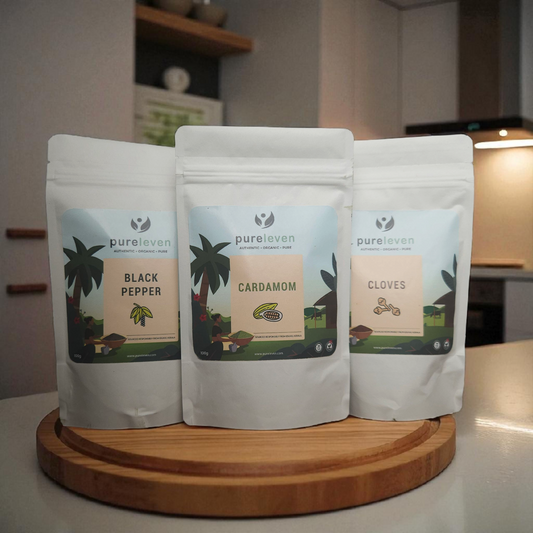 Primary pick3-in-1 Kerala Spice ComboStart with a best-selling Pureleven product picked to match the buying intent behind this article.₹909₹559
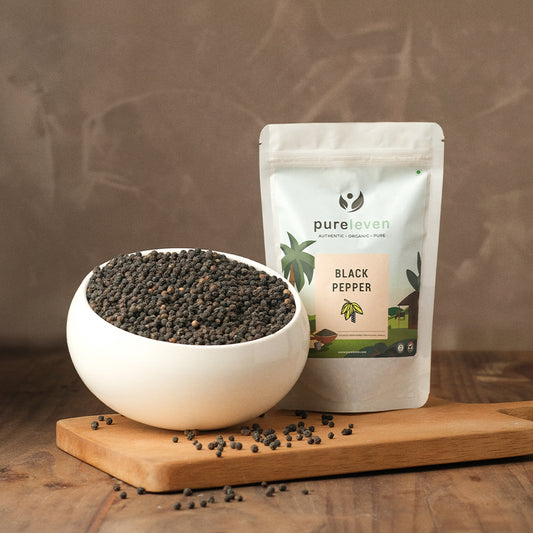 Also considerKerala Black Pepper (Kali Mirch) – Bold Whole Peppercorns from Idukki₹100
 Kitchen add-onExtra Bold Kerala Cardamom (Elaichi) – 8mm Whole Pods from Idukki₹309₹270


