



Pureleven journal
Cooking & Spices
From Kerala soil to your kitchen.
Daily wellness spice guide
How Kerala Kitchens Use Turmeric
Turn informational reading into a practical kitchen buy with a shortlist built for daily Kerala-style cooking.
Quick Summary
Where turmeric (manjal) goes in Kerala cooking, how much to use in fish curry, thoran, avial and dal, and which dishes skip it.
Jump through the guide
Go straight to the sections that answer the buying, comparison, or sourcing question you came for.
In Kerala cooking, turmeric (manjal) goes into almost every everyday savoury dish, but usually in small amounts: a pinch rubbed into fish before frying, a quarter teaspoon crushed with coconut for thoran, or a little stirred into dal, sambar or moru curry. It's there for colour, a gentle earthy taste and habit more than heat. A few dishes, like stew and olan, are deliberately left pale.
If you're cooking Kerala food at home and wondering where the turmeric goes and how much, this is how it's commonly used in homes across the state.
Where does turmeric go in a Kerala meal?
| Dish | How turmeric goes in | Rough amount (for 4) |
|---|---|---|
| Meen varuthathu (fish fry) | Rubbed on with chilli, salt and pepper before frying | About 1/4 tsp |
| Meen curry with kudampuli | Added with chilli powder to the onion or shallot base | 1/4 to 1/2 tsp |
| Thoran | Crushed with grated coconut, green chilli and shallots | A pinch to 1/4 tsp |
| Avial | Cooked with the vegetables | About 1/4 tsp |
| Parippu curry (dal) | Boiled with the dal | A pinch to 1/4 tsp |
| Moru curry or pulissery | Added to the coconut and buttermilk base | About 1/4 tsp |
| Chicken or beef curry | In the marinade and the masala | 1/4 to 1/2 tsp |
| Stew (ishtu) and olan | Usually left out on purpose | None |
These are starting points. Every family has its own hand, and a strong Alleppey-type turmeric needs less than a pale one.
Why do Kerala cooks rub turmeric on fish and meat?
It's one of the most common habits in a Kerala kitchen. Fish or meat is often washed with a little turmeric and salt, then marinated with turmeric, chilli and salt before frying or going into a curry.
Part of it is flavour and colour, since the turmeric gives fried fish its golden crust. Part of it is simply tradition, passed down with the recipe. People also say it takes away the raw fishy smell, which matches most cooks' experience.
How do you add turmeric without it tasting raw?
Raw turmeric powder tastes bitter and dusty. Kerala cooking usually cooks it in one of three ways:
- In hot oil, briefly. After the onions or shallots soften, add turmeric with chilli and coriander powder and stir for 20 to 30 seconds on low heat. Any longer and it burns.
- Crushed with coconut. For thoran and avial, turmeric is crushed or ground with grated coconut, so it cooks gently with the vegetables.
- Boiled in. For dal and sambar, it goes into the pot with the lentils or vegetables and simmers with them.
Add too much and the dish turns bitter and slightly medicinal. If you're unsure, start with less. You can't take it out once it's in.
Why are some Kerala dishes left without turmeric?
Kerala stew, with potato, coconut milk, whole spices and green chilli, is meant to be creamy white. Olan, the ash gourd and coconut milk dish in a sadya, is also kept pale. Adding turmeric wouldn't ruin them, but it would make them look wrong to anyone who grew up with them.
For those dishes, the flavour comes from whole spices like cardamom, cloves, cinnamon and pepper, and from fresh coconut milk.
Turmeric and pepper, the everyday pair
Walk into a Kerala kitchen and you'll usually find turmeric sitting next to the pepper. They go into fish fry, pepper chicken, rasam and plenty of meat dishes together. The heat of pepper and the earthiness of turmeric just suit each other. Our whole Idukki black pepper is what we reach for, crushed fresh just before cooking.
Which turmeric do Kerala cooks prefer?
Kerala has its own famous turmeric, Alleppey Finger, known for a deep orange colour and high curcumin. We cover it and other types in our guide to turmeric varieties of India. Plenty of homes also buy everyday Erode or Sangli turmeric from the local shop. What matters most is that it's fresh, which our hub guide on choosing a good turmeric powder explains.
Where Pure Leven fits in
We don't sell turmeric yet, but we plan to add it. For the rest of a Kerala masala box, our whole spices come from Idukki farms, including cardamom, pepper and Adimali cloves. You can see the full range here.
Frequently asked questions
Do Kerala cooks use fresh turmeric?
Mostly they use dried turmeric powder for everyday cooking. Fresh turmeric turns up in some pickles and home preparations when it's in season. Powder is simply more convenient and keeps longer.
Why does my turmeric curry taste bitter?
Usually there's too much turmeric, or it burned in hot oil. Add turmeric on low heat and stir for only 20 to 30 seconds before adding liquid. Old or poor-quality turmeric can also taste harsh.
Next time you make thoran, try crushing the turmeric with the coconut instead of adding it to the oil. It's a small change you can taste.
Ready to buy?
Related products for this article
Move from reading intent to shopping intent with product cards tied to this topic and a direct route into the wider catalog.
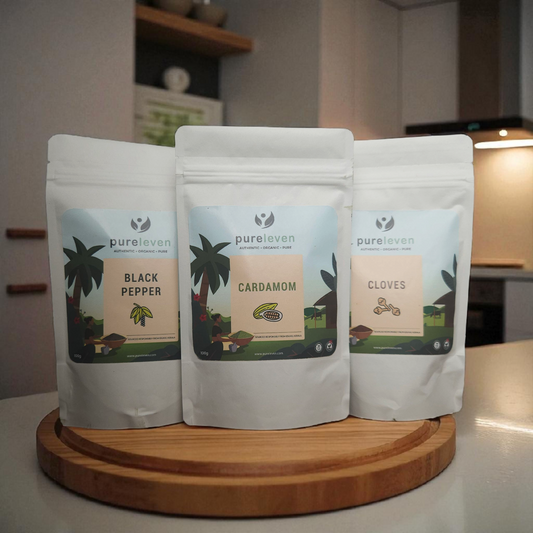 Primary pick3-in-1 Kerala Spice ComboA practical entry point for readers who want multiple Kerala staples in one order instead of one-off trial buying.Rs. 909.00Rs. 559.00
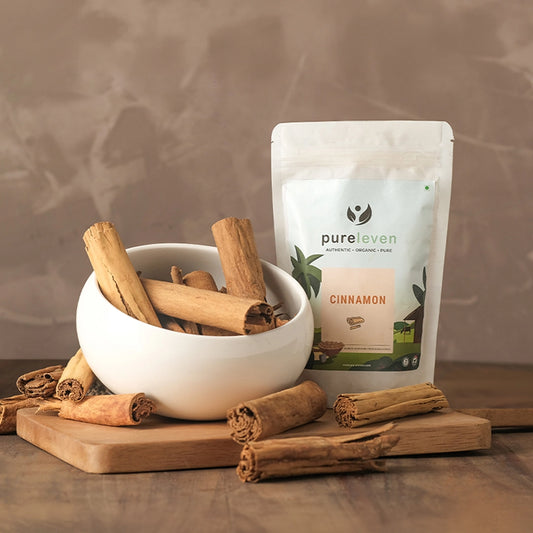 Also considerTrue Ceylon Cinnamon (Dalchini) – Whole Quills from Sri LankaRs. 250.00Rs. 190.00
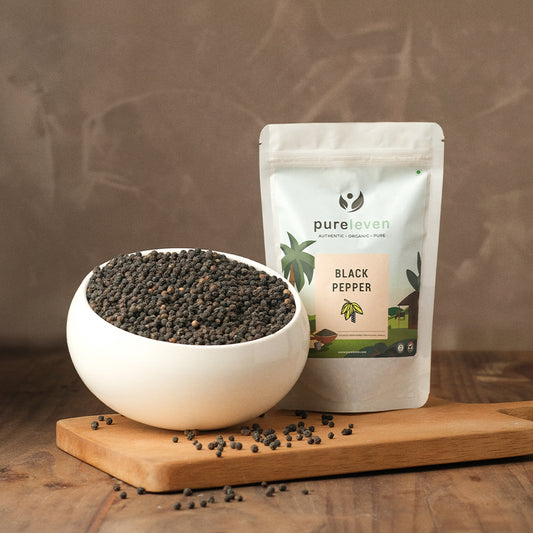 Kitchen add-onKerala Black Pepper (Kali Mirch) – Bold Whole Peppercorns from IdukkiRs. 100.00


