



Pureleven journal
Cooking & Spices
From Kerala soil to your kitchen.
Pureleven spice journal
Comparing Spice Prices Online: Price per 100g and Hidden Costs
Answer-first guidance with a faster path to farm-origin Kerala products you can buy today.
Quick Summary
How to compare spice prices online fairly: work out price per 100g including shipping, and watch for hidden costs like lower grades, waste and stale stock.
Jump through the guide
Go straight to the sections that answer the buying, comparison, or sourcing question you came for.
The fairest spice price comparison online is price per 100g, including shipping, for the same spice at the same grade. Divide the total you'll pay by the net weight in grams, multiply by 100, and you have a number you can compare across any pack size or seller. Then check for hidden costs like cash-on-delivery fees, lower grades, and big packs that go stale before you finish them.
It sounds obvious. But most of us compare the sticker price on the listing, and that's exactly where cheap-looking packs win.
How do you work out price per 100g?
The formula is simple:
(Pack price + shipping + any extra fees) ÷ net weight in grams × 100
Use the net weight, not the gross weight. Net weight is the spice alone, without the pouch.
India's packaging rules now require a unit sale price on packaged goods (per gram for packs under 1 kg), so you'll often see it printed on the pack or shown on bigger shopping sites. Smaller sites may not show it, so do it yourself. Your phone calculator is enough.
A worked example
These are made-up numbers, just to show how the maths works. Say you're comparing three listings of whole cardamom of a similar size:
| Listing | Pack | Price | Shipping | Total paid | Real price per 100g |
|---|---|---|---|---|---|
| Seller A | 50g | ₹250 | ₹60 | ₹310 | ₹620 |
| Seller B | 100g | ₹450 | Free | ₹450 | ₹450 |
| Seller C | 250g | ₹1,000 | Free | ₹1,000 | ₹400 |
Seller A looks cheapest on the listing. Once shipping is in, it's the most expensive by a long way.
Seller C is cheapest per 100g. But if you only use a little cardamom each month, 250g might sit open for a year and lose much of its aroma. Which brings us to the hidden costs.
What hidden costs should you watch for?
Shipping and free-shipping thresholds
Small orders often carry a flat shipping fee that can add a lot per 100g. If a shop has a free-shipping threshold, combining two or three spices into one order can make each one cheaper.
Cash on delivery charges
Some sellers add a small fee for COD. It's worth checking at checkout, before you confirm.
Lower grades
A lower price sometimes simply means smaller cardamom pods, or ungarbled pepper with stalks and light berries. Compare like with like. Our post on spice grades explained will help you match grades between listings.
Waste inside the pack
Dust, broken pieces, stalks and empty pods all count towards net weight. If 10% of a pack is waste, your real price is higher than it looks.
Stale stock
This is the biggest one, and it doesn't show on any calculator. A spice that has lost its aroma means you use more of it, or your food just tastes flat. Old stock is often why some prices are so low.
Buying too much
Big packs are cheaper per 100g, but only if you use them while they're still good. Buy what you'll finish in a few months.
Step by step: comparing spice prices before you order
- Pick the same spice, same form (whole or powder), and similar grade across sellers.
- Note the net weight and price for each.
- Add shipping and any COD or handling fee.
- Work out the price per 100g.
- Knock out any listing that doesn't state origin or grade clearly.
- Pick the lowest real price in a pack size you'll finish in two to three months.
For cardamom in particular, our guide on how to buy cardamom online has more on what to look for beyond price.
Is the cheapest spice ever the best value?
Sometimes, yes, if it's fresh, correctly graded and you'll use it quickly. But with spices, value is really price per 100g divided by how much flavour you get. Fresh cardamom goes further than old cardamom, so you often use less.
If one seller is far cheaper than all the others for the same grade, it's reasonable to ask why before ordering. The answer is usually age, grade, or oil already removed.
How our pricing works
We show our prices with the pack size, and shipping is free across India on orders above ₹649. Many people add a couple of spices together to cross that line, or pick the Kerala spice combo pack with cardamom, pepper and cloves. Everything is on our spice list so you can do the per-100g maths yourself.
For the other things to check beyond price, see our practical guide to buying spices online.
Frequently asked questions
How do I compare spice prices online?
Add the pack price, shipping and any extra fees, divide by the net weight in grams, and multiply by 100. That gives the real price per 100g. Compare only the same spice in the same form and similar grade.
Why are some spices so cheap online?
Very low prices usually mean old stock, a smaller or lower grade, or spice that has had some oil extracted. Sometimes it's just a smaller pack that looks cheap. Checking price per 100g and the stated grade will usually explain the gap.
Is a bigger pack better value?
Per 100g, usually yes. But whole spices slowly lose aroma once opened, so a big pack only saves money if you finish it while it's still good. Two or three months of use is a sensible size for most homes.
Sources
Five minutes with a calculator before you order can save you more than any discount code.
Ready to buy?
Related products for this article
Move from reading intent to shopping intent with product cards tied to this topic and a direct route into the wider catalog.
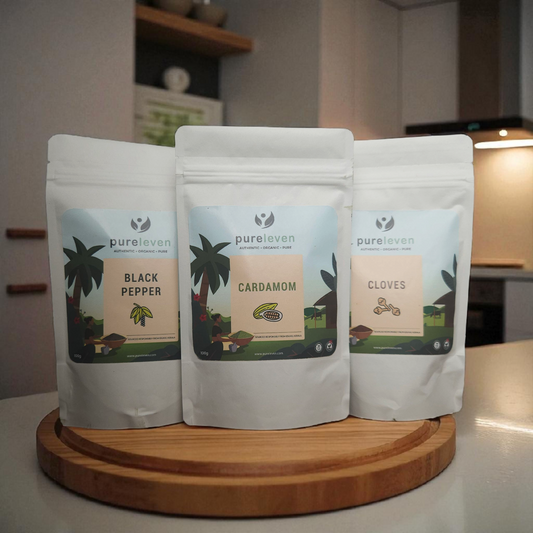 Primary pick3-in-1 Kerala Spice ComboStart with a best-selling Pureleven product picked to match the buying intent behind this article.₹909₹559
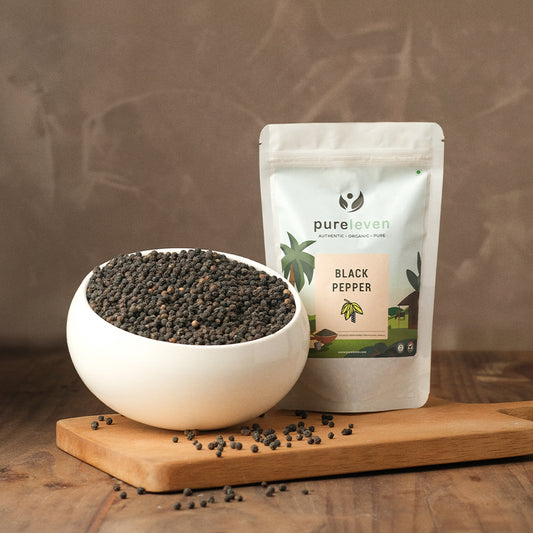 Also considerKerala Black Pepper (Kali Mirch) – Bold Whole Peppercorns from Idukki₹100
 Kitchen add-onExtra Bold Kerala Cardamom (Elaichi) – 8mm Whole Pods from Idukki₹309₹270


