Kerala cardamom guide
How to Buy Cardamom Online in India: A Kerala Grower's Guide
Compare pod size, aroma strength, and practical pack sizes before you buy.
Quick Summary
Learn how to buy cardamom (elaichi) online in India: pod grades (AGEB vs fruit-seed), farm-direct vs Amazon pricing, free delivery/COD options, and red flags to avoid.
Jump through the guide
Go straight to the sections that answer the buying, comparison, or sourcing question you came for.
Buying cardamom online is easy. Buying good cardamom online takes a little more care, because you can't smell it through the screen. As growers in Idukki, here's what we'd tell anyone ordering cardamom online for the first time.
1. Check the size (grade)
Cardamom is sorted by pod size, usually given in millimetres. Bigger pods generally hold more seeds and cost more.
- 8 mm and above (bold): large, full pods. Good for chai, sweets and gifting.
- 7 to 7.5 mm: mid-size, good everyday cardamom.
- Below 7 mm: smaller pods, often cheaper; fine for masala blends when fresh.
If a listing doesn't mention size at all, ask. We explain the grades in more detail in our 8 mm vs 7 mm guide and cardamom grades explained.
2. Look for signs of freshness
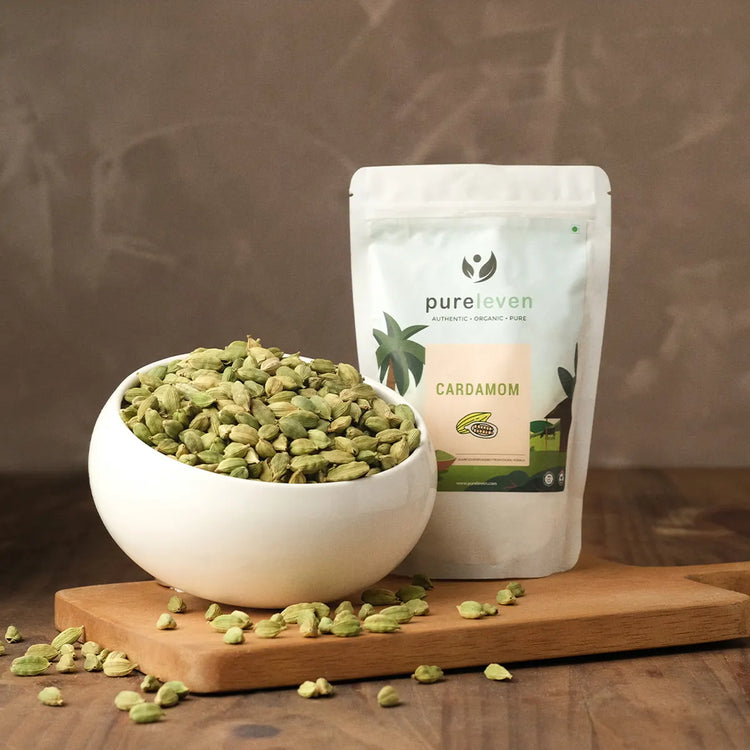
When your cardamom arrives, it should:
- Smell strong as soon as you open the pack
- Have a natural green colour, with some variation between pods (an unnaturally even, bright green can be a warning sign)
- Be plump and closed, not shrivelled or split
- Have black, slightly sticky seeds when you crack one open
Pale, dry, brown seeds and a faint smell usually mean old stock.
3. Buy whole pods, not powder
Cardamom powder loses its smell within weeks and is impossible to judge by looking. Whole pods keep far longer, and you can grind a little at a time. More on this in our guide on making cardamom powder at home.
4. Ask where it's from
A seller close to the farm can usually tell you the district (such as Idukki), and sometimes even the harvest round. If a seller can only say "India" or "premium quality", they're probably reselling.
5. Compare prices sensibly
Cardamom prices change a lot from season to season and year to year, so we won't quote fixed numbers here. For the current wholesale picture, the Spices Board of India publishes daily auction prices. When comparing shops:
- Compare price per 100 g for the same size grade.
- Be wary of 8 mm cardamom that's far cheaper than everywhere else. It's often old or not the grade claimed.
- Remember that a pack you finish while it's fresh is better value than a big pack that goes flat.
6. Check the practical details
- A real address and an FSSAI number on the site
- Delivery times and shipping costs to your pincode
- A phone number or WhatsApp you can actually reach
- If the pack says "organic", certification details (NPOP or PGS-India)
Red flags
- Only stock photos, no photos of the actual product
- No size, origin or packing date mentioned
- Prices far below the market for the same grade
- Reviews that are all five stars with no detail
How much to buy
- Daily chai: 50 to 100 g at a time is plenty for most homes.
- Frequent sweets or biryani: 100 to 200 g.
- Restaurants and shops: talk to the supplier directly about grades and bulk quantities.
Store it in an airtight jar, away from the stove, and try to use it within a few months.
Buying from us
We're based in Rajakumari, Idukki, and pack our cardamom whole after sorting. Delivery across India usually takes 4 to 5 working days, with free shipping on orders above ₹649. If you have a question before ordering, message us on WhatsApp at +91 88482 65849 or email purelevenexim@gmail.com.
Read next: cardamom harvest season in Idukki and our spice quality checklist.
Ready to buy?
Related products for this article
Move from reading intent to shopping intent with product cards tied to this topic and a direct route into the wider catalog.
 Primary pickExtra Bold Kerala Cardamom (Elaichi) – 8mm Whole Pods from IdukkiExport-grade Kerala cardamom with strong aroma for chai, desserts, and everyday cooking.Rs. 309.00Rs. 270.00
Also considerExtra Bold Kerala Cardamom (Elaichi) – 8mm Whole Pods from IdukkiRs. 309.00Rs. 270.00
Kitchen add-onExtra Bold Kerala Cardamom (Elaichi) – 8mm Whole Pods from IdukkiRs. 309.00Rs. 270.00
Primary pickExtra Bold Kerala Cardamom (Elaichi) – 8mm Whole Pods from IdukkiExport-grade Kerala cardamom with strong aroma for chai, desserts, and everyday cooking.Rs. 309.00Rs. 270.00
Also considerExtra Bold Kerala Cardamom (Elaichi) – 8mm Whole Pods from IdukkiRs. 309.00Rs. 270.00
Kitchen add-onExtra Bold Kerala Cardamom (Elaichi) – 8mm Whole Pods from IdukkiRs. 309.00Rs. 270.00