



Pureleven journal
Cooking & Spices
From Kerala soil to your kitchen.
Kerala clove guide
How the Clove Tree Grows in Kerala's Hills
Use the article as your buying bridge from clove education to stronger aroma and better pack selection.
Quick Summary
The clove plant in Kerala is a tall evergreen tree. Here is the climate it needs, how long it takes to bear, and how the buds are picked.
Jump through the guide
Go straight to the sections that answer the buying, comparison, or sourcing question you came for.
The clove plant in Kerala is a tall evergreen tree, and the spice is its dried flower bud. It likes warm, humid weather, steady monsoon rain and soil that drains well, which suits Kerala's hill and midland farms. A tree usually needs seven or eight years before it gives a useful crop, and longer to bear fully.
People expect something low, like pepper or cardamom. Cloves are picked from a ladder.
What does a clove tree look like?
A mature tree is often somewhere around 8 to 12 metres tall, with a straight trunk and a dense, cone-shaped crown. The leaves are dark, glossy and leathery, and they smell of clove when crushed. New leaves come out pinkish before turning green.
Botanically it's Syzygium aromaticum, in the Myrtaceae family, which makes it a cousin of the njaval (jamun) tree. If you know jamun leaves, these will look a little familiar.
What climate does it need?
Cloves are tropical. Agricultural guides describe warm temperatures and well-spread rain through the year as ideal, and Kerala's two monsoons give that on many hill and midland farms.
Waterlogging and long harsh dry spells are what the tree dislikes. It wants deep soil with plenty of fallen leaf litter. Young plants need shade in their first few years, so farmers plant them under other trees or give them temporary cover.
Where in Kerala is it grown?
Clove grows in several districts, mostly on mixed spice farms in the hills and midlands. Around Adimali in Idukki, clove trees stand beside pepper vines, cardamom and other crops. Our guide to Idukki spices shows how these farms are laid out, and the Rajakumari farm story shows mixed farming up close.
How long does a clove tree take to bear?
Slowly. A clove farmer plants for the long run.
| Stage | Rough age | What happens |
|---|---|---|
| Seedling | First year or two | Raised in a nursery, then planted out with shade |
| Young tree | Up to about 7 years | Builds its crown, no real crop yet |
| First bearing | Around 7 to 8 years | First useful flower buds |
| Full bearing | Many years later | Steadier, heavier crops |
| Old tree | Decades | Can keep bearing with good care |
Crops swing a fair bit from year to year, even on the same tree. That's normal for clove.
When do the buds come?
Buds form in small clusters at the branch tips. Flowering timing depends on altitude and season. On lower ground it tends to start earlier, and in the hills it comes later, generally in the cooler, drier months after the monsoon. Exact months vary from farm to farm and year to year.
The buds start green and turn pinkish. Farmers watch for that change.
How are the buds picked?
- Watch the colour. Pickers check the trees every few days as buds move from green towards pink.
- Pick whole clusters by hand. This is done from ladders, taking care not to break branches, since that hurts later crops.
- Come back again. Buds on one tree don't ripen together, so the same tree is picked more than once.
- Pull the buds off their stems.
- Dry them until dark brown and crisp. They lose roughly two-thirds of their weight.
A bud left too long opens into a small pale flower, and it's no longer a clove for the kitchen. Left longer still, it turns into a berry called a mother clove, which has much weaker flavour.
Can you grow a clove tree at home in Kerala?
You can, if you have space and patience. It needs shade while young, soil that doesn't hold water and regular watering in the dry months. It grows tall, and the first buds may be close to a decade away. Most home growers treat it as a long-term garden tree, not a source of spice for the kitchen.
Where ours come from
Our cloves come from farms around Adimali in Idukki, packed whole with nothing added. See Adimali cloves, whole if you'd like to try them, and the Kerala cloves buyer's guide for what to look for in any pack.
Next time you drop a clove into a curry, picture the ladder it came down.
Sources
Ready to buy?
Related products for this article
Move from reading intent to shopping intent with product cards tied to this topic and a direct route into the wider catalog.
 Primary pickKerala Adimali Clove Whole BudsKerala cloves selected for richer aroma, kitchen usefulness, and better value than commodity-grade alternatives.Rs. 200.00Rs. 140.00
Also considerKerala Adimali Clove Whole BudsRs. 200.00Rs. 140.00
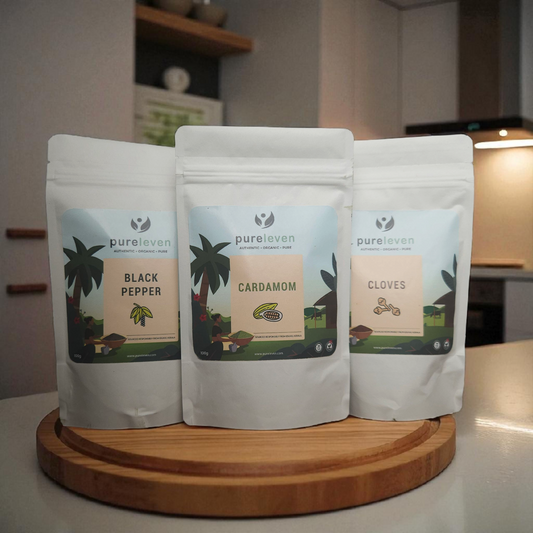 Kitchen add-on3-in-1 Kerala Spice ComboRs. 909.00Rs. 559.00


