



Pureleven journal
Cooking & Spices
From Kerala soil to your kitchen.
Kerala clove guide
Clove Grades: Hand-Picked, Headless and What to Pay For
Use the article as your buying bridge from clove education to stronger aroma and better pack selection.
Quick Summary
How clove grades work: heads, stems, defects and oil content, with a five-minute way to grade a pack at home and know what is worth paying for.
Jump through the guide
Go straight to the sections that answer the buying, comparison, or sourcing question you came for.
Clove grades come down to three things: how many buds still have their round heads, how many stems and broken bits are mixed in, and how much oil is left in the buds. Whole, dark, oily cloves are the grade worth paying for. Headless cloves, stems and exhausted cloves are cheaper for a reason.
Once you know how grading works, most of the price spread you see online starts to make sense.
What do clove grades measure?
No single grade stamp is used by every seller. Traders, exporters and standards bodies each use their own names. Underneath, they all look at the same few things.
- Heads on or off. The round ball is the unopened petals, and a lot of the smell sits there.
- Stems. The thin stalks the buds grow on. They smell of clove, only much fainter.
- Defects. Mother cloves (the ripe fruit), khoker cloves (pale, fermented buds), dust and leaf bits.
- Oil content. The volatile oil left in the bud, which is what you smell and taste.
- Moisture and colour. Well-dried cloves are dark reddish-brown and snap cleanly.
The Indian standard for whole cloves and the Codex standard both limit headless cloves, stems, mother cloves and foreign matter, and both ask for a minimum volatile oil. You don't need the exact figures to shop well. You need to know what each defect looks like.
Whole, mixed, headless and stems compared
| What's in the pack | What it looks like | Flavour | Worth paying for? |
|---|---|---|---|
| Whole, sorted cloves | Nearly all with heads, even dark brown, few stems | Strong, warm, slightly sweet | Yes, for cooking |
| Mixed or "ordinary" cloves | Some headless buds, some stems, uneven size | Good, a bit less punchy | Fine if priced lower |
| Headless cloves | Mostly stalks without the round top | Noticeably weaker | Only at a clear discount |
| Clove stems | Thin, twig-like pieces | Faint and woody | Not for home cooking |
| Exhausted cloves | Can look normal, feel light, little oil | Very little | No |
What does "hand-picked" mean on a label?
Nearly all cloves are picked by hand, since buds have to come off the tree at the right moment, cluster by cluster. When a seller uses "hand-picked" as a grade, they usually mean the dried cloves were also sorted by hand to take out headless buds, stems and odd bits. That sorting is slow, and it explains part of the price. There's no fixed definition though, so judge the pack itself.
For how the buds are picked in the first place, see how the clove tree grows in Kerala's hills.
Are headless cloves bad?
Weaker, that's all. The head can break off during drying and handling, and a few headless ones in any pack are normal. If they're most of the pack, it's a lower grade and should be priced like one.
How can you grade a pack at home?
Tip a small handful onto a white plate. It takes about five minutes.
- Count heads. Take 20 cloves at random. Most should have their heads.
- Look for stems. Pick out the twiggy pieces. A few is fine, a small pile isn't.
- Check colour. Dark reddish-brown is right. Pale, grey or dusty means old or badly dried.
- Press with a fingernail. A fresh clove feels slightly oily and smells strong straight away.
- Feel the weight. Very light, hollow ones may have lost oil.
- Snap one. A well-dried clove breaks cleanly. A bendy one is holding moisture.
The same idea for pepper and cardamom is in our spice quality checklist.
Why do clove prices differ so much?
Crops swing from year to year, so prices move with the harvest. Sorting out stems and headless buds takes labour. And some cheap cloves aren't whole, fresh cloves at all.
Watch for exhausted cloves. The oil has been taken out for industry and the buds sold on. They can look almost normal. A weak smell, a dry feel and no oil on your fingernail give them away. Our Kerala cloves buyer's guide covers the rest, including storage and how much to use.
So what should you pay for?
Whole, dark, heavy, oily cloves with most heads intact. You'll use fewer of them because each one carries more flavour. Don't pay a whole-clove price for stems and headless buds, and be wary of a price far below everyone else's.
Our cloves come from farms around Adimali in Idukki, packed whole with nothing added. You can see them as Adimali cloves, whole. If a pack doesn't look right when it arrives, message us on WhatsApp.
Are bigger cloves better?
Not always. Size depends partly on the tree and the season. Heads, colour, oil and smell matter more, and a small, oily, fresh clove beats a large, dry, old one.
Tip out twenty cloves from your next pack and count the heads.
Sources
Ready to buy?
Related products for this article
Move from reading intent to shopping intent with product cards tied to this topic and a direct route into the wider catalog.
 Primary pickKerala Adimali Clove Whole BudsKerala cloves selected for richer aroma, kitchen usefulness, and better value than commodity-grade alternatives.Rs. 200.00Rs. 140.00
Also considerKerala Adimali Clove Whole BudsRs. 200.00Rs. 140.00
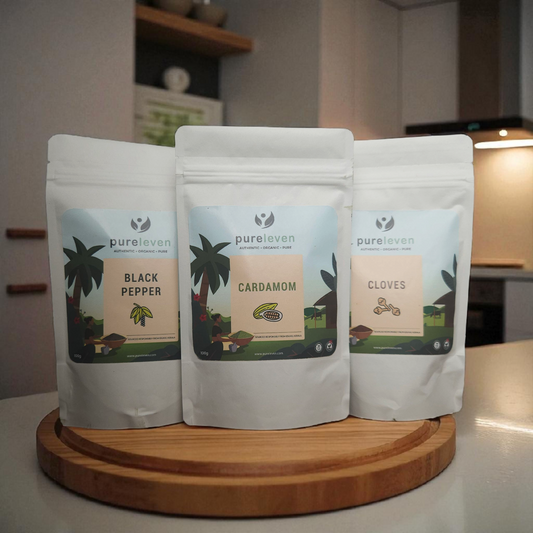 Kitchen add-on3-in-1 Kerala Spice ComboRs. 909.00Rs. 559.00


