



Pureleven journal
Cooking & Spices
From Kerala soil to your kitchen.
Kerala clove guide
Kerala Cloves: A Buyer's Guide
Use the article as your buying bridge from clove education to stronger aroma and better pack selection.
Quick Summary
How to pick good Kerala cloves: what to check on the pack, what the trade terms mean, and how to use and store them.
Jump through the guide
Go straight to the sections that answer the buying, comparison, or sourcing question you came for.
A good Kerala clove is a whole dark reddish-brown bud with its round head still on, heavy for its size, and oily enough to leave a mark when you press it with a fingernail. Check the heads, the smell and the oil, and buy whole rather than ground. That covers most of what matters when you order cloves online.
What makes a clove a Kerala clove?
A clove is the dried, unopened flower bud of Syzygium aromaticum, a tree that started out in the Maluku Islands of Indonesia. We say grampoo in Malayalam, laung in Hindi, kirambu in Tamil.
The tree reached south India in the early 1800s and later spread into the hill and midland farms of Kerala, where you'll find it growing among pepper, nutmeg and cardamom. A Kerala clove isn't a separate variety. The tree is the same as anywhere else. The difference in the jar comes from when the buds were picked, how well they were dried and how long the pack has been sitting around.
So a fresh, well-handled Kerala clove will usually beat an old clove from anywhere. Origin alone tells you very little.
How are cloves picked and dried?
Clove trees take seven or eight years to give a useful crop. The buds grow in clusters, and pickers look for the moment they turn from green to a slight pink, just before they open. Leave them a few days too long and they flower, which is no use as a spice.
After picking, the buds are pulled off their small stems and dried until dark brown and crisp. Dried cloves weigh roughly a third of the fresh buds, which is part of why good cloves cost what they do. We go into the tree and the harvest in our post on Idukki spices.
How do you check clove quality before you buy?
A small handful tells you a lot.
- Heads on. Most cloves should still have the round ball on top. A lot of the aroma sits there.
- Colour. Deep reddish-brown to dark brown. Pale, dusty or greyish cloves are old or were dried badly.
- Oil. Press one with your fingernail. A fresh clove feels slightly oily and smells strong at once.
- Weight. Good cloves feel solid. Light, hollow ones may have lost their oil.
- Stems. A few are normal. A pack that's mostly stems and headless bits is a lower grade.
Our spice quality checklist covers pepper and cardamom the same way.
What do the trade terms mean?
Indian and international standards list a few defects you may see on a listing. In plain words:
| Term | What it means | What it does to the pack |
|---|---|---|
| Whole clove | Full bud, round head intact | Best aroma, keeps longest |
| Headless clove | Stalk only, head broken off | Weaker, usually priced lower |
| Mother clove | The ripe fruit of the tree, not the bud | Weak flavour |
| Khoker clove | Pale, mealy bud that fermented in drying | Dull, off smell |
| Exhausted clove | Bud that has had its oil taken out | Looks fine, tastes of little |
The Indian standard for whole cloves and the Codex standard both put limits on these defects and ask for a minimum of volatile oil. You don't need a lab. A good pack is mostly whole, dark, oily buds.
There's also a water check for exhausted cloves. Drop a few into a glass. Oily ones tend to sink or stand head-up, and exhausted ones tend to lie flat. It's a rough clue only, so test a handful and smell them too.
How much clove goes into a Kerala curry?
Very little. Two or three whole cloves are enough for a pot of chicken or mutton curry for four, usually crushed with cinnamon and cardamom. Cloves also go into ishtu (stew) with appam, Malabar biryani, ghee rice and homemade garam masala, and a pinch goes into Christmas plum cake.
Ground clove is stronger still, so start with a pinch. Too much turns a dish bitter and medicinal. If you make your own masala, see the spices in garam masala.
Whole or ground, and how to store them
Buy whole. Ground clove loses its smell quickly once the oil meets air, and it's harder to know what's in a powder. Whole cloves grind fine in a mixie or a mortar, so grind only the week's worth.
Keep them in an airtight glass jar or a resealable pouch, away from the stove and out of sunlight. Stored like this they hold their smell for a year or more. If you have to hunt for the smell when you open the jar, buy fresh.
Where ours come from
Our cloves come from farms around Adimali in Idukki, not far from us in Rajakumari. We pack them whole with nothing added, in resealable pouches. Try Adimali cloves, whole, or ask us anything about a pack on WhatsApp at +91 88482 65849.
When a pack arrives, do the fingernail test first and trust your nose.
Sources
Ready to buy?
Related products for this article
Move from reading intent to shopping intent with product cards tied to this topic and a direct route into the wider catalog.
 Primary pickKerala Adimali Clove Whole BudsKerala cloves selected for richer aroma, kitchen usefulness, and better value than commodity-grade alternatives.Rs. 200.00Rs. 140.00
Also considerKerala Adimali Clove Whole BudsRs. 200.00Rs. 140.00
Primary pickKerala Adimali Clove Whole BudsKerala cloves selected for richer aroma, kitchen usefulness, and better value than commodity-grade alternatives.Rs. 200.00Rs. 140.00
Also considerKerala Adimali Clove Whole BudsRs. 200.00Rs. 140.00
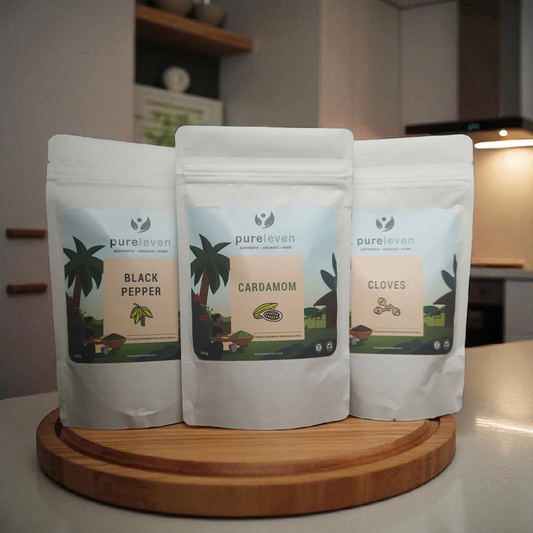 Kitchen add-on3-in-1 Kerala Spice ComboRs. 909.00Rs. 559.00


