



Pureleven journal
Cooking & Spices
From Kerala soil to your kitchen.
Pureleven spice journal
A Year on an Idukki Spice Farm, Month by Month
Answer-first guidance with a faster path to farm-origin Kerala products you can buy today.
Quick Summary
A typical year on an Idukki cardamom and pepper farm, month by month: summer care, monsoon flowering, cardamom picking and the pepper harvest.
Jump through the guide
Go straight to the sections that answer the buying, comparison, or sourcing question you came for.
On a typical Idukki spice farm, the year runs on the monsoon. Cardamom is planted and fed around the June rains, flowers through the wet months, and is picked in rounds from roughly August to early the next year. Black pepper, growing up the same shade trees, is harvested in the cool, dry months after that, and the hot summer from March to May is spent keeping plants alive until the rain comes back.
This is a general calendar for a mid-altitude cardamom and pepper farm in the Idukki high ranges. Every farm and every year is a little different, and the weather has the final say.
The Idukki spice farm calendar at a glance
| Month | Cardamom | Pepper | Weather |
|---|---|---|---|
| January | Last harvest rounds, trashing, feeding | Harvest begins | Cool, dry, misty mornings |
| February | Mulching, watering if dry | Main harvest, drying | Dry, warming up |
| March | Irrigation, shade checks, watching for thrips | Harvest ends in most places | Hot and dry |
| April | Irrigation, waiting for summer showers | Vines rest | Hottest month, first thunder showers |
| May | Trashing, feeding, new planting prep | Pits and new cuttings prepared | Pre-monsoon showers |
| June | Planting, flowering picks up | Flowering with the first heavy rain | Southwest monsoon arrives |
| July | Flowering, weeding, drainage | Spikes set | Heaviest rain, landslide risk |
| August | First picking rounds | Berries growing | Rain easing |
| September | Picking, trashing, feeding | Berries growing | Showers, sun breaking through |
| October | Peak picking and drying | Berries filling out | Northeast monsoon, afternoon rain |
| November | Picking continues | Early spikes in lower areas | Rain tapering off |
| December | Later picking rounds | Harvest starts in warmer spots | Cool and clear |
January and February: pepper time
The cardamom season winds down in the new year. The last rounds of picking come off, and the plants get a cleaning called trashing, where old dried tillers and leaves are cut away. It sounds small, but it keeps pests from breeding in the mess at the base of the clump.
Meanwhile the pepper (kurumulak) is ready. Spikes are cut when one or two berries on them start turning red or yellow. The spikes are threshed to separate the berries and then dried until they go black and wrinkled. On a farm with both crops, these weeks are busy.
Mulch goes down around the cardamom now: fallen leaves and plant waste packed around the base to hold moisture before the dry heat.
March to May: getting through summer
This is the hardest stretch. Cardamom is a forest plant and hates heat and dry soil. Farmers who have water run hoses or sprinklers every week or two. Those who don't watch the sky.
Thrips, tiny insects that scar the pods, tend to be worst in these months. Shade trees get checked too: too little shade and the plants scorch, too much and they don't flower well.
The first summer showers in April or May are a big relief. They wake the plants up, and cardamom starts pushing out new panicles (the flowering stems that run along the ground).
New planting
Late May is when pits are dug for new cardamom suckers or seedlings and new pepper cuttings. The idea is to have them in the ground just as the monsoon settles in, so they get steady rain for their first few months.
June and July: the monsoon months
The southwest monsoon reaches Kerala in early June, and in the high ranges it means weeks of heavy, steady rain. Most of Idukki's yearly rainfall comes in this season.
Cardamom flowers heavily through these months. The small white and purple flowers sit low near the soil, and each one that gets pollinated becomes a pod about three to four months later. Pepper vines flower with the first strong rains too, and the long flower spikes hang down from every node.
Farm work in July is mostly weeding, clearing drains and hoping the rain isn't too much. Very heavy spells can knock off flowers, and landslides are a real worry on steep plots. We've written more about this in our post on the history of the Cardamom Hills, where the forest canopy was protected partly to hold these slopes together.
August to December: cardamom harvest season
Picking starts in August on most farms and carries on in rounds roughly every few weeks. Only the ripe capsules are taken each time, by hand, so a single plant gets visited many times in one season. October and November are usually the peak.
After each round, the fresh green pods are washed and dried the same day or the next. In Idukki, most of this happens in cardamom dryers (heated drying chambers) rather than under the sun, because slow indirect heat keeps the pods green. Our post on how cardamom is handpicked and dried goes through that in detail.
The dried cardamom is then cleaned, sorted by size, and sold. Most of it goes to the e-auctions at Puttady and Bodinayakanur, which we explained in how the cardamom auctions work.
Why the dates keep moving
A late monsoon, a dry summer or an unusually wet October can shift the whole calendar by weeks. Farmers here plan by what the plants are doing, not by the date on the wall.
Where our spices fit into this year
Our family has farmed in Rajakumari for about 30 years, and we work with a small group of farming families around Idukki who follow this same cycle. We pack cardamom and pepper whole with nothing added, in resealable pouches, as the season's crop comes in. You can see what's available in our whole Idukki cardamom, or read the main guide to Idukki spices online for the wider picture.
If you ever want to know what's happening on the farms right now, send us a message on WhatsApp. We'll tell you straight.
Ready to buy?
Related products for this article
Move from reading intent to shopping intent with product cards tied to this topic and a direct route into the wider catalog.
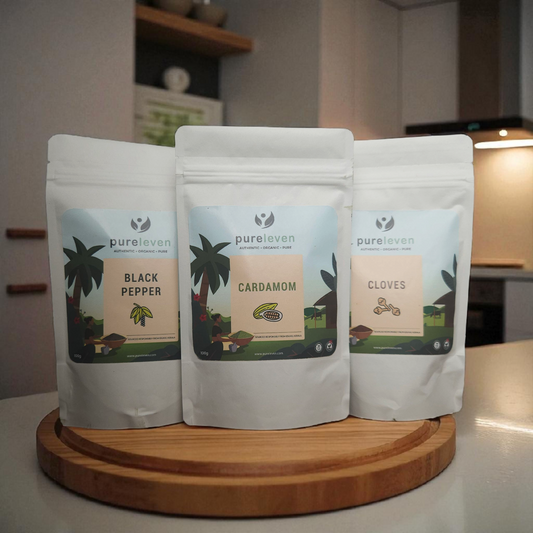 Primary pick3-in-1 Kerala Spice ComboStart with a best-selling Pureleven product picked to match the buying intent behind this article.Rs. 909.00Rs. 559.00
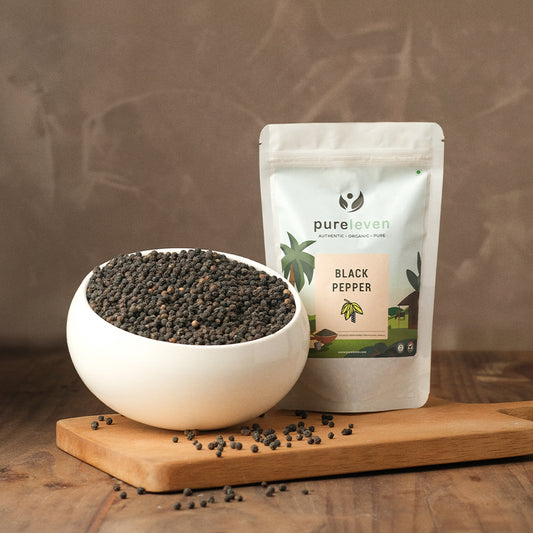 Also considerKerala Black Pepper (Kali Mirch) – Bold Whole Peppercorns from IdukkiRs. 100.00
 Kitchen add-onExtra Bold Kerala Cardamom (Elaichi) – 8mm Whole Pods from IdukkiRs. 309.00Rs. 270.00


