



Pureleven journal
Cooking & Spices
From Kerala soil to your kitchen.
Kerala clove guide
Whole Cloves vs Clove Powder
Use the article as your buying bridge from clove education to stronger aroma and better pack selection.
Quick Summary
When to use whole cloves or clove powder, how to convert between them, and how to avoid a bitter, over-spiced dish.
Jump through the guide
Go straight to the sections that answer the buying, comparison, or sourcing question you came for.
Use whole cloves when a dish cooks slowly or when you're infusing oil, rice or a drink, and use clove powder for baking, spice blends and quick dishes. As a rough rule, 3 to 4 whole cloves equal about ¼ teaspoon of ground cloves, and it's safer to start with less powder than you think.
Whole cloves vs clove powder at a glance
| Whole cloves | Clove powder | |
|---|---|---|
| Releases flavour | Slowly, over minutes to hours | Immediately |
| Best for | Tempering, biryani, rice, tea, pickles | Baking, masalas, rubs, quick dishes |
| Risk of overdoing it | Low, and you can remove them | High, and you can't take it back out |
| Keeps its aroma | A long time in an airtight jar | Fades within months once opened |
When whole cloves work better
- Tempering in oil or ghee for curries, biryani and pulao. The oil picks up the flavour and carries it through the dish.
- Infusing liquids such as tea, sulaimani, syrups and the water for rice.
- Slow-cooked dishes like meat curries and stews, where the clove has time to give up its flavour.
- Pickles and brines, where powder would make the liquid cloudy.
For a sense of how many to use in rice dishes, see our post on how many cloves go in biryani.
When clove powder works better
- Baking: plum cake, cookies and spiced breads, where a whole clove would be an unpleasant bite.
- Spice blends: garam masala and chai masala.
- Quick dishes that don't cook long enough for whole cloves to infuse.
- Dry rubs for meat and fish.
How do you convert between whole and ground cloves?
A common kitchen rule of thumb:
- 3 to 4 whole cloves ≈ ¼ teaspoon ground cloves
- 1 teaspoon whole cloves ≈ ¾ teaspoon ground cloves
These are approximate. Freshly ground cloves are much stronger than a powder that's been open for months, so if you've just ground your own, use a little less than the recipe says and taste.
Why clove powder is so easy to overdo
Cloves are among the most concentrated spices in the kitchen. Their aromatic oil is mostly eugenol, which has a strong, slightly numbing taste. Grinding releases all of it at once. Too much powder makes a cake or curry taste bitter and medicinal, and there's no way to fish it out.
Measure clove powder with a spoon rather than shaking it from the jar, and add it in small steps.
Grinding cloves at home
- Dry-roast the cloves for a minute on low heat if you want a deeper flavour, then let them cool completely.
- Grind them together with other spices or a spoon of sugar (for baking). Cloves are oily and can turn into a sticky paste on their own.
- Use short pulses so the blades don't heat the spice.
- Grind only what you'll use in a few weeks and store it in a small airtight jar.
Our guide to grinding spices in a mixie has more tips.
Common mistakes
- Swapping one for one. A teaspoon of powder is far stronger than a teaspoon of whole cloves.
- Leaving whole cloves in for guests. Biting into one is unpleasant. Count them in and fish them out, or warn people.
- Keeping powder for years. Old clove powder tastes dusty rather than warm. Grind fresh instead.
How to spot good whole cloves
- Most heads intact
- An even reddish-brown colour
- A little oil when you press one with a fingernail
- A strong, warm smell as soon as the pack is opened
Our Kerala cloves buying guide goes further. We sell whole Adimali cloves from Idukki, so you can grind exactly as much as you need.
Ready to buy?
Related products for this article
Move from reading intent to shopping intent with product cards tied to this topic and a direct route into the wider catalog.
 Primary pickKerala Adimali Clove Whole BudsKerala cloves selected for richer aroma, kitchen usefulness, and better value than commodity-grade alternatives.Rs. 200.00Rs. 140.00
Also considerKerala Adimali Clove Whole BudsRs. 200.00Rs. 140.00
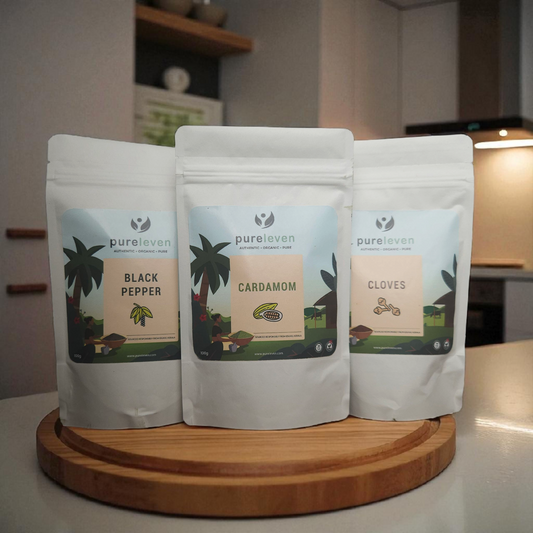 Kitchen add-on3-in-1 Kerala Spice ComboRs. 909.00Rs. 559.00


