



Pureleven journal
Cooking & Spices
From Kerala soil to your kitchen.
Daily wellness spice guide
Turmeric Varieties of India: Alleppey, Erode, Lakadong and More
Turn informational reading into a practical kitchen buy with a shortlist built for daily Kerala-style cooking.
Quick Summary
A plain guide to India's main turmeric varieties, their GI tags and curcumin, and which one suits your cooking.
Jump through the guide
Go straight to the sections that answer the buying, comparison, or sourcing question you came for.
There's no single best turmeric variety in India. The right one depends on what you want. Lakadong from Meghalaya and Alleppey from Kerala are known for deep colour and high curcumin, while Erode and Sangli turmeric are the dependable everyday types that fill most Indian kitchens. Several of these carry Geographical Indication (GI) tags, which protect the name for turmeric grown in that region.
India grows over 70% of the world's turmeric and has around 30 varieties, according to the Ministry of Commerce when the National Turmeric Board was launched in January 2025. Here are the names you're most likely to see on a pack, and what they actually mean.
Which Indian turmeric varieties have a GI tag?
| Name | State | GI tag | What it's known for |
|---|---|---|---|
| Waigaon | Maharashtra (Wardha) | 2016 | Deep colour, grown on black soil |
| Sangli | Maharashtra | 2018 | Big trading name, everyday cooking |
| Erode | Tamil Nadu | 2019 | Bright yellow, huge market town |
| Kandhamal Haladi | Odisha | 2019 | Hill-grown by tribal farming families |
| Lakadong | Meghalaya | 2024 | Very dark, very high curcumin |
| Alleppey Finger | Kerala | Trade name, not a GI | Deep orange, high curcumin |
A GI tag tells you where the turmeric is supposed to come from. It doesn't guarantee freshness or purity, so the usual checks still apply.
Lakadong turmeric (Meghalaya)
Lakadong comes from Lakadong village and nearby areas in the Jaintia Hills of Meghalaya. It got its GI tag in 2024. It's darker than most Indian turmeric, and its curcumin is often cited at around 6.8 to 7.5%, which is at the top of the range.
It's more expensive and produced in smaller amounts. People who buy it usually want the deepest colour, or they've read about its curcumin figure. If you want to understand those percentages, see our post on what curcumin numbers mean.
Alleppey Finger turmeric (Kerala)
Alleppey Finger is the Kerala name most people know. It's grown in central Kerala, and the name comes from the old port town of Alleppey (Alappuzha). Kerala's cardamom carries the Alleppey name for a similar reason: Alleppey was the old trading and processing depot, not necessarily where the spice grew.
An FAO post-harvest guide gives Alleppey-type turmeric about 4 to 7% curcumin and 3.5 to 5.5% volatile oil, compared with about 2% of each for the Madras type. That's why it smells stronger and colours food more deeply. It has a long export history, especially to the US and Europe.
As far as we could find, Alleppey Finger turmeric doesn't have its own GI tag. It's a trade name and grade.
Erode turmeric (Tamil Nadu)
Erode is sometimes called the turmeric city. Erode turmeric received its GI tag in 2019, and the town is one of India's biggest turmeric markets, second only to Nizamabad in Telangana. Nizamabad is also where the National Turmeric Board has its headquarters.
Erode turmeric is bright yellow and reliable. A lot of the turmeric powder sold in South Indian shops traces back to these markets.
Sangli and Waigaon turmeric (Maharashtra)
Maharashtra is one of the top two turmeric-growing states, along with Telangana. Sangli turmeric got its GI tag in November 2018, and Sangli is a large trading centre. Waigaon turmeric, from Wardha district, got its GI tag earlier, in 2016, and is known for deep colour.
Kandhamal Haladi (Odisha)
Kandhamal turmeric is grown in the hills of Kandhamal district, largely by Kondh tribal farming families, with very little in the way of bought inputs. It received its GI tag on 1 April 2019, the first turmeric from Odisha to get one. It's known for its golden colour and is exported in modest amounts.
How do you choose between them?
- For everyday dal, sambar and curries: Erode or Sangli, bought fresh and in small packs.
- For deep colour in dishes like fish curry or pickles: Alleppey.
- If you want the highest curcumin: Lakadong, bought from a seller who can show you where it came from.
- If you prefer small hill-farm produce: Kandhamal or Lakadong.
Whichever you pick, the hub guide on how to choose a good turmeric powder has a checklist for colour, smell and labels. And if you're buying whole fingers, our turmeric grading guide explains what the grades mean.
What about Pure Leven?
We don't sell turmeric yet. We plan to add it, and when we do we'll tell you plainly which variety it is and where it was grown. For now, our spices are the ones that do well in Idukki, like cardamom, pepper and cloves. You can see everything we pack here.
Frequently asked questions
Is Alleppey turmeric GI tagged?
Not as far as we could find. Alleppey Finger is a long-established trade name for turmeric from central Kerala. The Alleppey name with a GI tag belongs to Alleppey green cardamom.
Try two varieties side by side in the same dal sometime. The difference in colour and smell is easy to see.
Sources
Ready to buy?
Related products for this article
Move from reading intent to shopping intent with product cards tied to this topic and a direct route into the wider catalog.
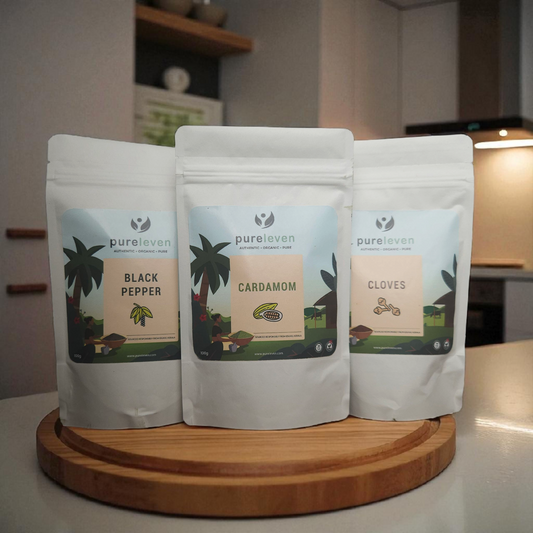 Primary pick3-in-1 Kerala Spice ComboA practical entry point for readers who want multiple Kerala staples in one order instead of one-off trial buying.Rs. 909.00Rs. 559.00
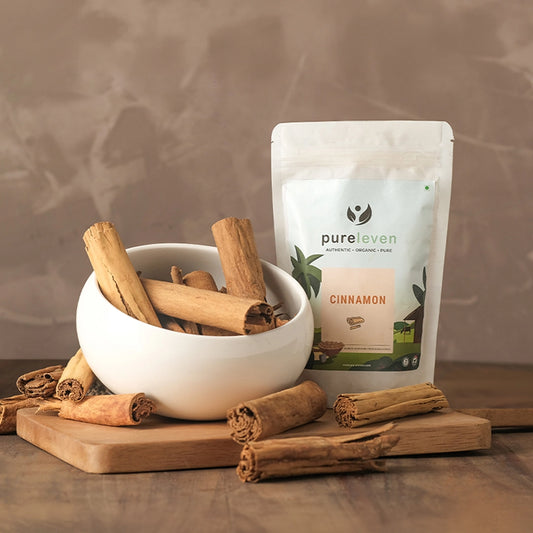 Also considerTrue Ceylon Cinnamon (Dalchini) – Whole Quills from Sri LankaRs. 250.00Rs. 190.00
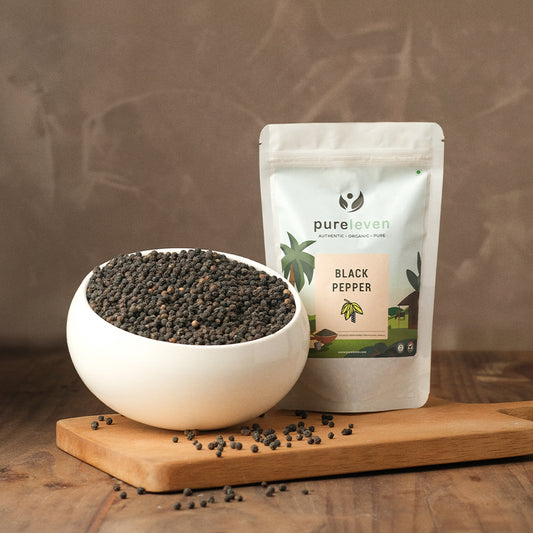 Kitchen add-onKerala Black Pepper (Kali Mirch) – Bold Whole Peppercorns from IdukkiRs. 100.00


