Pureleven journal
Cooking & Spices
From Kerala soil to your kitchen.
Kerala pepper guide
Kerala Dishes Built Around Black Pepper
Move from comparison content into bold, kitchen-ready Kerala pepper with a cleaner buying path.
Quick Summary
Kerala pepper dishes where black pepper leads, from kurumulaku chicken and pepper fry to ishtu, rasam and chukku kaapi, with tips for crushing and adding it.
Jump through the guide
Go straight to the sections that answer the buying, comparison, or sourcing question you came for.
The best-known Kerala pepper dishes are kurumulaku chicken, beef or mutton pepper fry, fish fried in a pepper masala, Kerala stew, pepper rasam and chukku kaapi. In most of them black pepper is the main heat, crushed coarse and cooked into the masala, not sprinkled on at the end.
Chillies only reached India in the 1500s. Before that, pepper was the heat in South Indian food, and you can still taste that in these dishes.
Which Kerala dishes use the most black pepper?
| Dish | How pepper is used | What it does |
|---|---|---|
| Kurumulaku chicken | Freshly crushed, a generous amount, added to the onion masala | Main heat and smell, with little or no chilli |
| Beef or mutton pepper fry | Coarsely crushed, added near the end of roasting | Sharp bite that clings to the meat |
| Meen kurumulaku (fish pepper fry) | Crushed pepper in the marinade paste | A peppery crust without the chilli red |
| Kerala stew (ishtu) | Whole peppercorns with cardamom, cloves and cinnamon | Gentle warmth in a mild coconut milk gravy |
| Kurumulaku rasam | Crushed with cumin and garlic | Thin, peppery broth, drunk hot |
| Chukku kaapi | A few corns boiled with dry ginger and jaggery | Warming drink for rainy evenings |
How is kurumulaku chicken made?
Nadan kurumulaku kozhi is a dry or semi-dry chicken where pepper does the job chilli powder does in other curries. Every house does it a little differently, but the method follows one shape.
- Dry-roast whole peppercorns (some cooks add a little fennel) until they smell warm, then crush them coarse in a mortar.
- Marinate the chicken with turmeric, salt and some of the crushed pepper.
- Fry sliced shallots or onions in coconut oil with curry leaves, ginger, garlic and green chilli until soft and golden.
- Add the chicken and cook covered until nearly done.
- Uncover, add the rest of the pepper and roast until the masala coats the pieces and the oil separates.
- Finish with fresh curry leaves and one more pinch of crushed pepper.
Crush the pepper fresh, because ready-made powder goes muddy in a long cook. And split it between the start and the end. The early batch gives heat, the late batch gives smell. Our post on piperine and why pepper tastes hot covers the reason.
Pepper fry and other roasts
Beef fry, mutton pepper fry, mushroom pepper fry and even pepper chickpeas follow the same idea. Cook the meat or vegetable first, then roast it hard with shallots, curry leaves, coconut slivers in some kitchens, and a heap of crushed pepper.
Because the pepper goes in late, it keeps its sharp smell. Use it coarse. Fine powder scorches and turns bitter in a hot, dry pan.
Not every pepper dish is fiery
Ishtu, the coconut milk stew served with appam, uses whole peppercorns with cardamom, cloves and a piece of cinnamon. The pepper stays whole, so you get warmth without much burn. Bite into a corn and you get a small burst of heat, which most people like.
Chicken, mutton, egg and vegetable stews all work this way. Crack a few extra corns with the back of a spoon if you want more warmth.
Rasam and chukku kaapi on a rainy day
Kurumulaku rasam is a thin, tangy broth of tamarind or tomato, cooked with crushed pepper, cumin and garlic. Many families sip it from a steel tumbler in the monsoon or when someone has a cold. It's comfort food, and nobody should expect a cure from it.
Chukku kaapi is simpler. Water is boiled with dry ginger (chukku), a few peppercorns, sometimes coriander seeds or tulsi, and jaggery. Some homes add coffee powder, some don't.
Tips for cooking with whole pepper
- Toast before crushing for fry and roast dishes. A minute in a dry pan brings out the oils.
- Crush coarse in a mortar. A mixie on short pulses works too.
- Add in two stages for long cooks, some early and some at the end.
- Balance with coconut or shallots. Their sweetness softens the bite.
- Taste as you go. Fresh whole pepper is stronger than old powder, so you may need less than the recipe says.
If you're setting up a Kerala spice shelf from scratch, our guide to buying Kerala spices online lists what to start with.
Our pepper
Our Kerala black pepper is grown around Idukki, where the vines climb shade trees alongside cardamom. It comes whole, with nothing added, in a resealable pouch. If you're choosing pepper for the first time, our Kerala black pepper buyer's guide covers what to look for.
Frequently asked questions
How much pepper goes into Kerala pepper chicken?
Home recipes commonly use one to two tablespoons of peppercorns for about a kilo of chicken, depending on how hot the family likes it. Start at the lower end and add more at the finishing stage if you want extra bite.
Can I use ready-ground pepper?
You can, but the dish will taste flatter and look muddier. Ground pepper loses its smell within weeks and fine powder can scorch in a dry roast. Crushing whole peppercorns just before cooking makes a clear difference.
Pick one dish from the table, buy whole pepper, and crush it fresh.
Ready to buy?
Related products for this article
Move from reading intent to shopping intent with product cards tied to this topic and a direct route into the wider catalog.
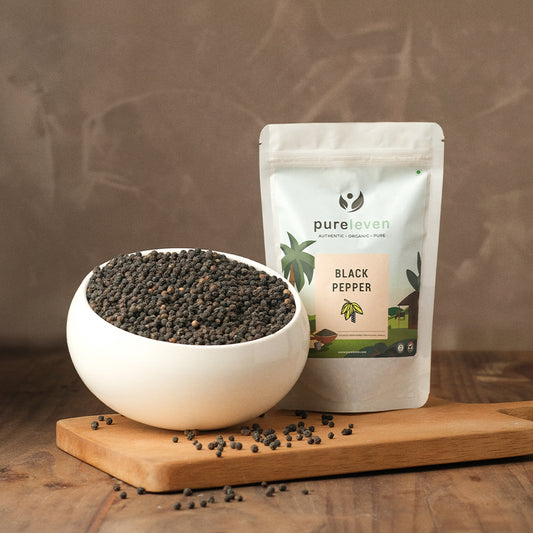 Primary pickKerala Black Pepper (Kali Mirch) – Bold Whole Peppercorns from IdukkiWhole Kerala peppercorns with high aroma and a straightforward upgrade from generic supermarket stock.Rs. 100.00
Also considerKerala Black Pepper (Kali Mirch) – Bold Whole Peppercorns from IdukkiRs. 100.00
 Kitchen add-onKerala White Pepper Whole PeppercornsRs. 184.50Rs. 150.00