



Pureleven journal
Cooking & Spices
From Kerala soil to your kitchen.
Pureleven spice journal
Should You Keep Spices in the Fridge?
Answer-first guidance with a faster path to farm-origin Kerala products you can buy today.
Quick Summary
Whether spices belong in the fridge, when cold storage helps, how to avoid condensation, and better options for humid kitchens.
Jump through the guide
Go straight to the sections that answer the buying, comparison, or sourcing question you came for.
For most whole spices, no: a cool, dry, dark cupboard is better than the fridge. Every time a cold jar meets warm kitchen air, moisture condenses on it, and moisture is one of the quickest ways to spoil spices. The exceptions are sealed back-up stock and oily seeds bought in bulk.
Why the fridge isn't ideal for everyday spices
- Condensation. Take a cold jar out into a warm, humid kitchen and water forms on it, and inside it once you open the lid. Moisture makes spices clump, lose aroma and, in time, go mouldy.
- Smells. Spices pick up fridge odours, and the fridge picks up spice smells.
- Habit. Spices tucked behind the milk get forgotten.
Fridge, freezer or cupboard: what goes where?
| What you're storing | Best place | Why |
|---|---|---|
| Daily-use whole spices | Cupboard, airtight jar | No condensation from constant opening |
| Masala dabba and daily powders | Cupboard or counter away from the stove | Used too often for cold storage |
| Unopened bulk stock (e.g. a large pack of cardamom) | Fridge or freezer, well sealed | Slows aroma loss over many months |
| Poppy seeds, sesame seeds in bulk | Fridge, well sealed | High oil content can turn rancid |
| Ground coffee | Cupboard, sealed | Same condensation problem |
How to use cold storage properly
If you've bought a large amount, the fridge or freezer can help, as long as you follow a simple routine:
- Split the stock first. Keep a small jar in the cupboard for daily use.
- Seal the rest well. Our spices come in resealable pouches, so press the air out and close the zip properly, then set the pack inside an airtight container or box for extra safety.
- Refill occasionally. When the cupboard jar runs low, take out the sealed stock.
- Let it warm up before opening. Wait until the pack reaches room temperature, which takes about an hour or so, then open, refill and reseal.
- Don't shuttle the same jar in and out every day.
Very hot homes and heavy monsoons
In a kitchen that gets very hot in summer, sealed back-up stock can do better in the fridge, with the same condensation rule. But for Kerala's monsoon, the bigger enemy is humidity, and the fridge doesn't solve that for jars in daily use. Instead:
- Use airtight glass jars with rubber-seal lids.
- Keep them in a cupboard away from the stove and sink.
- Put a food-safe silica gel sachet in the storage box, not inside the spice itself.
- Buy smaller amounts more often during the rainy months.
- Always use a dry spoon.
Choosing the right jar makes a big difference here. Our comparison of glass, steel and plastic spice containers covers what to look for.
Common mistakes
- Opening a cold pack straight away. Moisture settles on the spice itself.
- Refrigerating the masala dabba. It gets opened too often.
- Using loose lids in the fridge. Spices absorb onion and fish smells quickly.
- Forgetting the stock. Label it with the date you put it in.
For more on keeping spices fresh, read our spice storage guide and our post on how long whole spices last. If your cupboard needs restocking, you can browse all our spices.
Ready to buy?
Related products for this article
Move from reading intent to shopping intent with product cards tied to this topic and a direct route into the wider catalog.
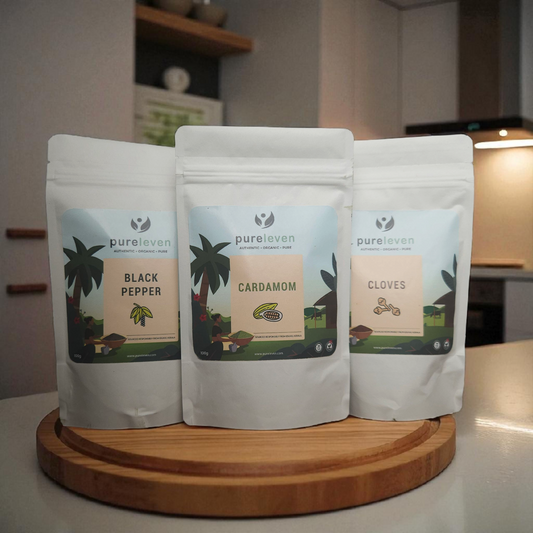 Primary pick3-in-1 Kerala Spice ComboStart with a best-selling Pureleven product picked to match the buying intent behind this article.Rs. 909.00Rs. 559.00
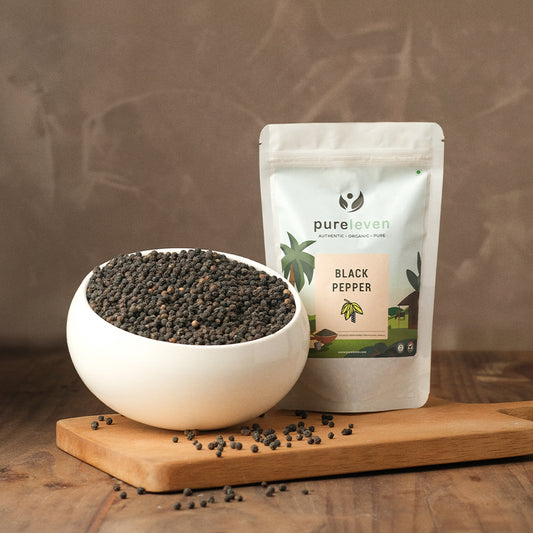 Also considerKerala Black Pepper (Kali Mirch) – Bold Whole Peppercorns from IdukkiRs. 100.00
 Kitchen add-onExtra Bold Kerala Cardamom (Elaichi) – 8mm Whole Pods from IdukkiRs. 309.00Rs. 270.00


