



Pureleven journal
Cooking & Spices
From Kerala soil to your kitchen.
Pureleven spice journal
Glass, Steel or Plastic: Best Containers for Spices
Answer-first guidance with a faster path to farm-origin Kerala products you can buy today.
Quick Summary
How glass, steel, plastic and pouches compare for storing spices, what makes a lid truly airtight, and the mistakes to avoid.
Jump through the guide
Go straight to the sections that answer the buying, comparison, or sourcing question you came for.
The best container for spices is one with a truly airtight lid that keeps out light and doesn't hold on to smells. In practice that means small glass jars with a rubber or silicone seal kept inside a closed cupboard, or a steel tin with a tight-fitting lid. The seal matters more than the material.
What makes a spice container good?
Whole and ground spices lose their aroma mainly through contact with air, moisture, light and heat. So judge any container on four points:
- Airtight seal: keeps aroma in and humidity out.
- Light protection: light fades colour and aroma over time.
- No smell transfer: the container shouldn't absorb or pass on odours.
- Easy to use daily: if it's awkward, the lid gets left half-open.
Glass, steel, plastic or the original pouch?
| Container | Airtight? | Blocks light? | Holds smells? | Best use |
|---|---|---|---|---|
| Glass jar with gasket lid | Yes | No, unless tinted | No | Main storage, kept in a cupboard |
| Steel tin or dabba | Depends on the lid | Yes | No | Daily-use spices near the stove |
| Plastic tub | Often not | Partly | Yes, over time | Short-term use only |
| Resealable pouch | Only if closed properly | Depends on the pack | No | Back-up stock |
Why the lid matters most
A glass jar with a loose lid does worse than a pouch sealed tight. When you're buying jars, look for:
- a rubber or silicone gasket on the lid
- a clip-lock or screw-top that closes firmly
- no air escaping when you close it and press gently on the lid
Many steel dabbas have lids that simply rest on top. They're fine for a week's supply near the stove, but not for keeping cardamom fragrant for months.
A simple setup that works
- Everyday jars: small airtight glass jars inside a closed cupboard, so light isn't a problem.
- Masala dabba: keep it for daily-use spices, refill it with small amounts every week or two, and keep the lid on between uses.
- Back-up stock: our spices come in resealable pouches, so you can leave the stock in the same pack. Press the air out, close the zip properly and keep it in a cool, dark place. If the seal ever feels weak, slide the whole pouch into a larger airtight box.
Match the jar to the amount
A big jar that's half empty holds a lot of air, and that air carries away aroma every time you open it. Move spices to smaller jars as they run down. For how long different spices stay good, see our post on whole spices shelf life.
Common mistakes to avoid
- Keeping jars on the shelf directly above the stove, where heat and steam rise.
- Clear jars on a sunny windowsill or open shelf.
- Wooden boxes without a sealed lid.
- Reusing a plastic tub that held something strong for something delicate. Cardamom kept in an old chilli box will smell of chilli.
- Dipping a wet spoon into any jar. Moisture leads to clumping and, eventually, mould.
Label everything
Write the spice name and the month you filled the jar on a small label. It feels fussy. It also saves guessing later, when you're deciding whether that cinnamon is still worth using.
Our spice storage guide covers the rest of the basics, including where in the kitchen to keep them. Good containers matter most for whole spices you want to last, like the cardamom, pepper and cloves in our Kerala spice combo.
Ready to buy?
Related products for this article
Move from reading intent to shopping intent with product cards tied to this topic and a direct route into the wider catalog.
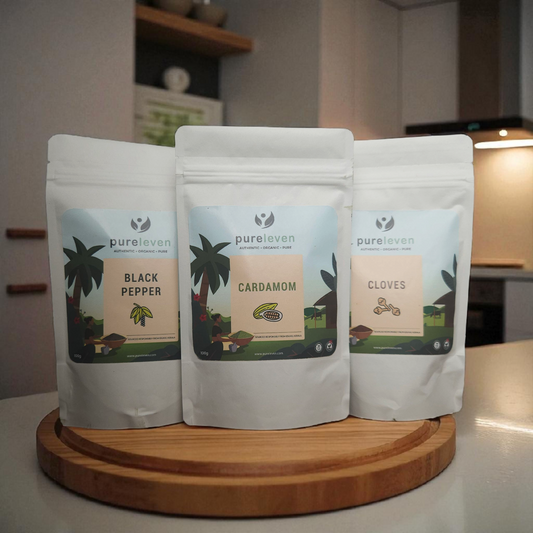 Primary pick3-in-1 Kerala Spice ComboStart with a best-selling Pureleven product picked to match the buying intent behind this article.Rs. 909.00Rs. 559.00
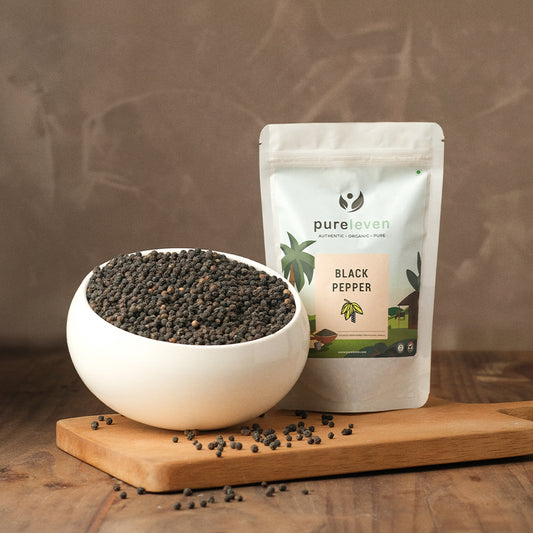 Also considerKerala Black Pepper (Kali Mirch) – Bold Whole Peppercorns from IdukkiRs. 100.00
 Kitchen add-onExtra Bold Kerala Cardamom (Elaichi) – 8mm Whole Pods from IdukkiRs. 309.00Rs. 270.00


