



Pureleven journal
Cooking & Spices
From Kerala soil to your kitchen.
Pureleven spice journal
How Long Do Whole Spices Last, and How to Tell They're Stale
Answer-first guidance with a faster path to farm-origin Kerala products you can buy today.
Quick Summary
How long whole cardamom, pepper, cloves, cinnamon and star anise keep their flavour compared with ground spices, how to tell a spice is stale by smell, colour and taste, and why colour fades.
Jump through the guide
Go straight to the sections that answer the buying, comparison, or sourcing question you came for.
Whole spices stay safe to use for years if they're kept dry, but they taste their best for roughly one to two years, and cardamom for less. To tell whether a spice is stale, crush a little and smell it, look for faded colour, and taste a pinch. If the smell is faint and the colour dull, it's past its best.
How long do whole spices last?
There are two different answers: how long a spice stays usable, and how long it stays good. Iowa State University's extension service puts whole spices at around three to six years before they're no longer worth keeping, against two to three years for ground ones. Flavour fades well before that.
The table below is a practical guide for spices kept sealed, dry and away from heat. Treat it as a rough guide, not a rule.
| Spice | Whole: best flavour | Ground: best flavour |
|---|---|---|
| Black and white pepper | 1 to 2 years or more | About 3 to 6 months |
| Cloves | 1 to 2 years | A few months |
| Cinnamon and cassia sticks | 1 to 2 years | A few months |
| Star anise | About 1 to 2 years | A few months |
| Cumin, coriander, fennel seeds | About 1 year | A few months |
| Green cardamom pods | About 6 months to a year | A few weeks |
Cardamom is the delicate one. Its smell comes from light aromatic oils that escape faster than the heavier oils in cloves or pepper, so buy it in amounts you'll finish within a few months. Our comparison of cardamom pods and powder goes into this in more detail.
Why do whole spices outlast ground ones?
A spice's flavour sits in aromatic oils inside the seed, bark or bud. The outer skin, husk or bark keeps air and light away from them.
Grinding breaks that protection and exposes far more surface to air, so ground spices lose their smell much faster. That's the main reason to buy whole and grind small amounts. We explain the other reasons in why cook with whole spices.
How to tell a spice has gone stale
- Smell it. Crush a peppercorn, snap a clove or split a cardamom pod. Fresh spice smells strong straight away. If you have to hold it to your nose and search for the smell, it's stale.
- Look at the colour. Compare it with how it looked when you bought it. Green cardamom turning pale or yellowish, cloves going grey-brown, or red chillies turning dull orange are all signs of age.
- Taste a pinch. Stale pepper tastes woody with little heat. Stale cloves lose their numbing tingle. Old cumin tastes dusty rather than warm.
- Check the texture. Pods and seeds that feel hollow, light or papery have usually dried out and lost oil.
For a fuller quality check when you're buying, see our spice quality checklist.
Why does a spice's colour fade?
Colour in spices comes from natural pigments: chlorophyll in green cardamom, curcumin in turmeric, and red-orange carotenoids in chillies. Light and air break these pigments down over time.
Light is the biggest culprit. In one lab study, turmeric extract left under ordinary fluorescent household lighting lost about two-thirds of its colour intensity within 24 hours. Whole spices fade far more slowly than that, but a clear jar on a bright shelf still loses colour within months.
Faded colour and lost flavour usually go together, because the same things cause both: light, air, heat and time.
What makes spices go stale faster?
- Heat: the shelf just above the stove is the worst spot in the kitchen.
- Steam and moisture: shaking a jar over a boiling pot lets steam in.
- Light: clear jars on a sunny windowsill fade quickly.
- Air: half-closed pouches and loose lids.
Our guide on how to store spices covers containers and placement.
Is an old spice safe to use?
A dry, old spice with no mould, clumps or insects is usually just weak. You can still use it, but you'll need more and the flavour won't be the same.
Anything damp, mouldy, musty-smelling or with insects should be thrown out. That's a food safety problem, not a flavour one.
One habit that helps
Write the month you opened each pack on a small label. A year later you won't have to guess.
We pack all our spices whole, with nothing added, in resealable pouches. If you're restocking, our Kerala spice combo of cardamom, pepper and cloves covers the three that fade most noticeably when old.
Sources
Ready to buy?
Related products for this article
Move from reading intent to shopping intent with product cards tied to this topic and a direct route into the wider catalog.
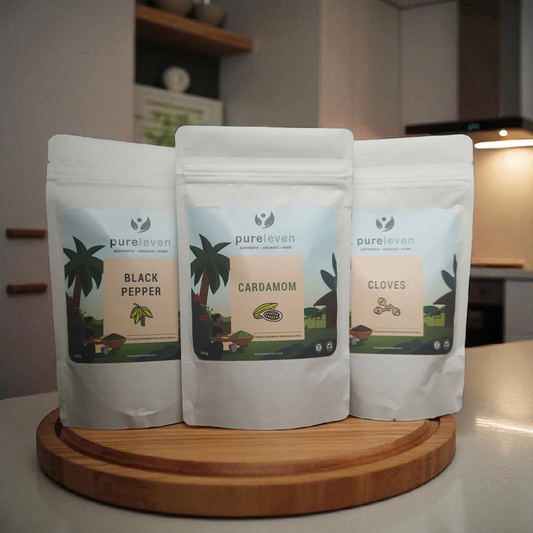 Primary pick3-in-1 Kerala Spice ComboStart with a best-selling Pureleven product picked to match the buying intent behind this article.Rs. 909.00Rs. 559.00
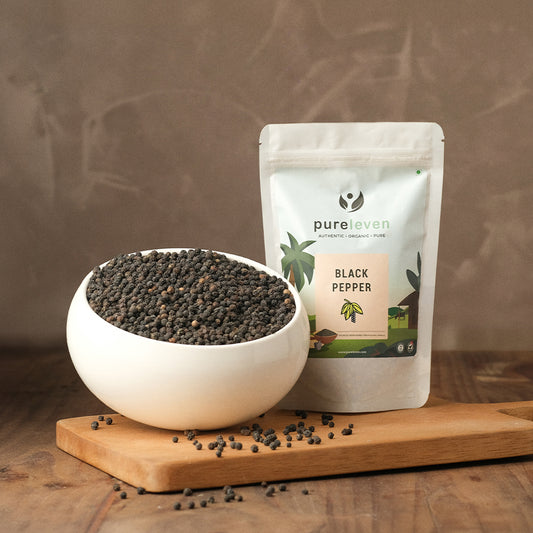 Also considerKerala Black Pepper (Kali Mirch) – Bold Whole Peppercorns from IdukkiRs. 100.00
 Kitchen add-onExtra Bold Kerala Cardamom (Elaichi) – 8mm Whole Pods from IdukkiRs. 309.00Rs. 270.00


