



Pureleven journal
Cooking & Spices
From Kerala soil to your kitchen.
Pureleven spice journal
Robusta vs Arabica for South Indian Filter Coffee
Answer-first guidance with a faster path to farm-origin Kerala products you can buy today.
Quick Summary
How robusta and arabica differ in taste, strength and caffeine, why robusta suits milky filter coffee, and what blends South Indian homes typically use.
Jump through the guide
Go straight to the sections that answer the buying, comparison, or sourcing question you came for.
Robusta and arabica are the two coffee species you'll see in Indian filter coffee, and they behave differently once milk and sugar go in. Robusta is stronger, more bitter and higher in caffeine, which is why most South Indian filter coffee blends lean on it. Arabica is softer and more acidic, and gets lost easily under hot milk.
The basic difference
| Arabica | Robusta | |
|---|---|---|
| Taste | Softer, more acidic, fruity or floral notes | Stronger, more bitter, earthy, chocolatey |
| Body | Lighter | Heavier, thicker |
| Caffeine | Lower | Roughly double, on average |
| Where it grows | Higher altitudes | Lower altitudes, hotter and wetter areas |
| In India | Chikmagalur, Coorg, Araku, and others | Wayanad, Coorg, and others |
Why filter coffee leans on robusta
A filter coffee cup is mostly hot milk with a small amount of strong decoction stirred in. A delicate arabica can disappear under all that milk. Robusta's heavier body and stronger flavour push through, so the cup still tastes of coffee once it's two-thirds milk. That's the whole reason for the style.
Where Wayanad fits in
Wayanad, in north-east Kerala, grows mostly robusta, and a lot of it heads into filter coffee blends across South India. "Wayanad Robusta Coffee" received a Geographical Indication tag in 2019, which is a legal recognition that coffee from the region has a character tied to that place.
Which should you choose?
- Milky and sweet, the usual way: robusta, or a robusta-heavy blend.
- Black, or with very little milk: arabica, or an arabica-heavy blend, tastes smoother and less harsh.
- Watching your caffeine: arabica has less to start with, and a blend that includes chicory cuts it further per spoon.
- Not sure: the classic South Indian cup is robusta with a little chicory. Our post on the coffee to chicory ratio goes into that part.
Is arabica actually "better"?
You'll read this a lot, and it's too simple. Arabica fetches higher prices in the specialty coffee world, largely because of how it's grown and processed. But well-grown robusta, roasted properly, is good coffee, and for a milky South Indian cup it often works better than arabica does. Badly grown arabica is still bad coffee.
A note on our coffee
Our Naadan filter coffee is Wayanad Robusta, blended with chicory in the proportion used for hotel-style South Indian filter coffee. We don't publish an exact percentage. If you want coffee with no chicory in it, this isn't that pack, so look for one labelled pure coffee. For more on the district and how it grows, see our Wayanad spices and coffee guide.
Frequently asked questions
Can I mix arabica and robusta powder myself at home?
Yes, if you can buy both separately. A common home mix is around two parts robusta to one part arabica for a cup that's still strong but a little smoother. Adjust to taste over a few tries.
Does robusta always taste harsher than arabica?
Not necessarily. A well-roasted, well-processed robusta can taste rounded and chocolatey rather than sharp. Poor processing is usually what gives robusta its reputation for tasting harsh, not the bean itself.
Sources
Ready to buy?
Related products for this article
Move from reading intent to shopping intent with product cards tied to this topic and a direct route into the wider catalog.
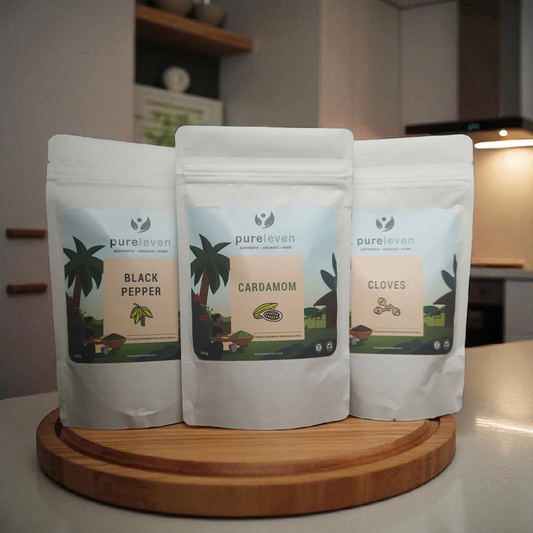 Primary pick3-in-1 Kerala Spice ComboStart with a best-selling Pureleven product picked to match the buying intent behind this article.Rs. 909.00Rs. 559.00
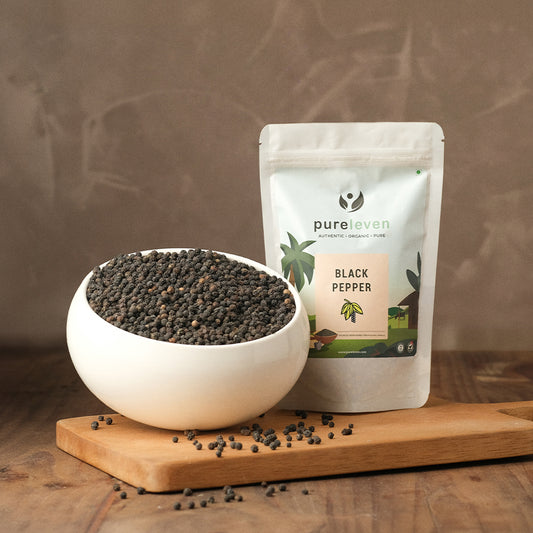 Also considerKerala Black Pepper (Kali Mirch) – Bold Whole Peppercorns from IdukkiRs. 100.00
 Kitchen add-onExtra Bold Kerala Cardamom (Elaichi) – 8mm Whole Pods from IdukkiRs. 309.00Rs. 270.00


