



Pureleven journal
Cooking & Spices
From Kerala soil to your kitchen.
Pureleven spice journal
Loose Tea Leaves vs Tea Bags
Answer-first guidance with a faster path to farm-origin Kerala products you can buy today.
Quick Summary
How loose tea leaves and tea bags differ in leaf grade, flavour, cost and waste, plus brewing amounts and temperatures for black and green tea without special equipment.
Jump through the guide
Go straight to the sections that answer the buying, comparison, or sourcing question you came for.
Loose tea leaves usually give a fuller, more aromatic cup than tea bags, because most bags hold fannings, the small particles left after larger leaf is sorted for loose tea. Bags win on speed and easy clean-up. With a simple strainer, loose tea takes barely a minute longer, and that applies to green and black tea alike.
What's actually inside a tea bag?
Most tea bags use fannings or dust, tiny broken pieces of leaf. They brew fast and dark, which is handy, but they give up their flavour all at once and can taste flat or bitter if left in too long. Some brands do put whole leaf in bags, usually the larger pyramid-shaped ones, so the grade matters more than the bag itself.
Loose tea uses whole leaves or larger broken pieces. They open up in the water and release flavour more gradually, which gives a rounder cup with more aroma.
Loose leaves vs tea bags, side by side
| Tea bags | Loose leaves | |
|---|---|---|
| Convenience | Very easy, no strainer | Needs a strainer or infuser |
| Flavour | Quick and strong, less complex | Fuller, more aroma |
| Control | Fixed amount per bag | Easy to adjust strength |
| Cost per cup | Often higher | Often lower |
| Waste | Bags, strings, tags, wrappers | Just leaves, which can be composted |
| Freshness once opened | Small particles go stale faster | Larger leaves keep their aroma longer |
How to brew loose tea without fuss
- Pan and strainer: brew in a small pan or pot and pour through a tea strainer. This is how most Indian homes already do it.
- Infuser: a small steel mesh ball or basket that sits in your cup. Leave room for the leaves to open.
- French press: add leaves and water, steep, then press. Pour it all out so the tea doesn't keep brewing.
How much tea, how hot, and for how long?
- Black leaf tea: 1 teaspoon per cup (about 180 ml), water just off the boil, 3 to 5 minutes.
- Green tea: 1 teaspoon per cup, water cooled to roughly 70 to 80 °C (let boiled water stand for a few minutes), 2 to 3 minutes. Water that's too hot or a steep that's too long pulls out tannins and makes green tea bitter.
- Milk tea: finer tea powders are made to brew fast and strong for milk, so a strainer works better than a bag.
Mistakes people make with loose tea
- Cramming leaves into a tiny infuser. They can't open, so you get a weak cup.
- Boiling green tea. It turns harsh in seconds.
- Squeezing the bag or pressing the leaves hard. That pushes bitterness into the cup.
- Storing tea next to spices or coffee. Tea absorbs smells easily. Keep it in an airtight tin away from light and heat.
When do tea bags make sense?
At the office, while travelling, or when you want one quick cup with no washing up. Plenty of people keep both, bags for work, loose leaves at home. If you're working out quantities for loose tea, our post on how much tea powder per cup helps.
Trying loose tea at home
If you want a light cup to drink without milk, our orange pekoe tea is a leaf grade made from younger, smaller leaves. Our post on what orange pekoe means explains the grade name. For a stronger cup that also takes milk, try our black tea granules.
Sources
Ready to buy?
Related products for this article
Move from reading intent to shopping intent with product cards tied to this topic and a direct route into the wider catalog.
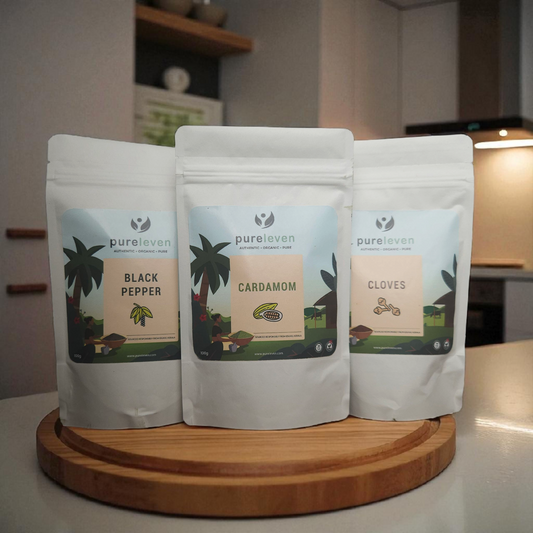 Primary pick3-in-1 Kerala Spice ComboStart with a best-selling Pureleven product picked to match the buying intent behind this article.Rs. 909.00Rs. 559.00
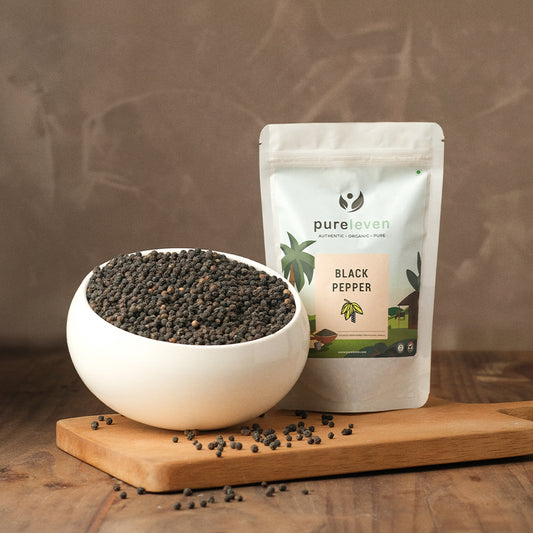 Also considerKerala Black Pepper (Kali Mirch) – Bold Whole Peppercorns from IdukkiRs. 100.00
 Kitchen add-onExtra Bold Kerala Cardamom (Elaichi) – 8mm Whole Pods from IdukkiRs. 309.00Rs. 270.00


