



Pureleven journal
Cooking & Spices
From Kerala soil to your kitchen.
Pureleven spice journal
Coffee and Chicory: What the Ratio Changes
Answer-first guidance with a faster path to farm-origin Kerala products you can buy today.
Quick Summary
Why South Indian filter coffee often has chicory, what common coffee-to-chicory ratios taste like, and how to choose the blend that suits you.
Jump through the guide
Go straight to the sections that answer the buying, comparison, or sourcing question you came for.
The coffee to chicory ratio on a filter coffee pack tells you how much of the powder is actually coffee. More chicory gives a darker, thicker, more bitter decoction with less caffeine per spoon. Less chicory, or none, gives a cleaner coffee taste and more aroma. For milky, sweet filter coffee, 80:20 is a common starting point.
What is chicory?
Chicory is a plant whose root is dried, roasted and ground. It is not coffee and has no caffeine. Roasted chicory tastes woody, slightly bitter and a little like burnt sugar, and it colours water very dark, very quickly.
Why is chicory added to filter coffee?
- Body and colour. Chicory makes the decoction thicker and darker, which holds up well once you add plenty of hot milk.
- Taste. It adds a round, slightly bitter note that a lot of South Indian households grew up with and expect.
- Cost. Chicory costs less than coffee, so blends are cheaper. That's fine as long as the label is honest about it.
What do different coffee to chicory ratios taste like?
| Coffee : chicory | Taste and body | Suits |
|---|---|---|
| 100 : 0 | Cleaner coffee flavour, more aroma, lighter body | Black coffee, or light milk |
| 85 : 15 to 80 : 20 | Strong, thick, still clearly coffee | Classic milky filter coffee |
| 70 : 30 | Darker, more bitter, heavier | People who like a very dark cup with lots of milk |
| 60 : 40 or less | Very dark and bitter, coffee taste fades | Mostly a budget choice |
What must the label say in India?
Under Indian food standards, a coffee-chicory mixture has to contain at least 51% coffee, so chicory can't be more than 49%.
From 1 July 2026, FSSAI's amended labelling rules require coffee-chicory mixtures to declare the blend on the front of the pack, with the coffee and chicory percentages shown, for example "Coffee blended with chicory. This mixture contains coffee 80%, chicory 20%". If a pack of powder says nothing about chicory, it should be plain coffee. If you're not sure, ask the seller before you buy.
How do you choose the right ratio?
- Lots of milk and sugar: 80:20 is the traditional balance. It stays strong through the milk.
- Black coffee or very little milk: pure coffee, or a low-chicory blend, will taste smoother and less harsh.
- You want a lighter caffeine load: a blend with more chicory gives body with less caffeine per spoon. Drinking a smaller cup does the same.
- Not sure: start at 80:20 and adjust with the next pack.
Common mistakes when comparing blends
- Judging strength by colour. Chicory darkens the decoction without adding coffee flavour or caffeine. A black decoction isn't always a strong one.
- Using the same amount after switching. If you move from a chicory blend to pure coffee, the cup may seem thinner at first. Try a little more powder, or a little less water, before deciding you don't like it.
- Buying a large pack to try a new blend. Ground coffee loses aroma once opened. Buy a small pack first.
- Adding milk before tasting the decoction. Taste a drop of decoction on its own. That's where you'll notice the difference between ratios most clearly.
No filter at home? Our guide to making filter coffee without a filter works with any of these blends.
A note on our coffee
Our Naadan Kerala coffee is Wayanad Robusta blended with chicory, in the proportion used for hotel-style South Indian filter coffee. We don't publish an exact percentage. If you want coffee with no chicory at all, this pack isn't that, so look for one labelled pure coffee instead. If you'd like to know more about the district itself, read our Wayanad spices and coffee guide.
Sources
Ready to buy?
Related products for this article
Move from reading intent to shopping intent with product cards tied to this topic and a direct route into the wider catalog.
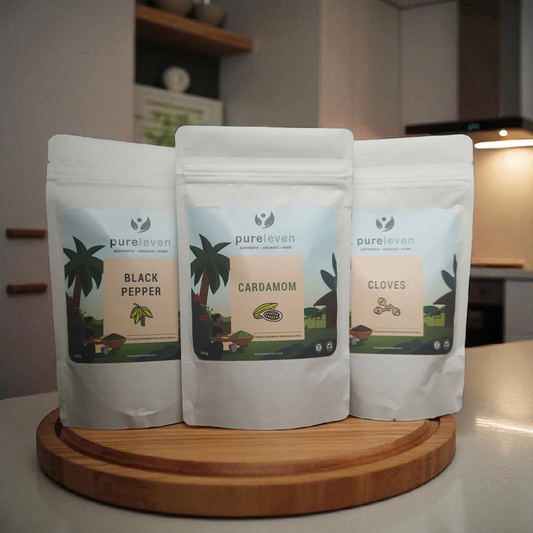 Primary pick3-in-1 Kerala Spice ComboStart with a best-selling Pureleven product picked to match the buying intent behind this article.Rs. 909.00Rs. 559.00
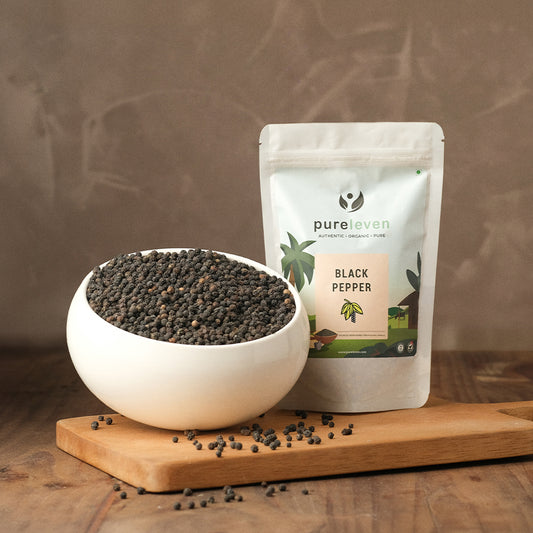 Also considerKerala Black Pepper (Kali Mirch) – Bold Whole Peppercorns from IdukkiRs. 100.00
 Kitchen add-onExtra Bold Kerala Cardamom (Elaichi) – 8mm Whole Pods from IdukkiRs. 309.00Rs. 270.00


