



Pureleven journal
Cooking & Spices
From Kerala soil to your kitchen.
Pureleven spice journal
How to Read a Spice Listing Online: Weight, Grade, Origin and Date
Answer-first guidance with a faster path to farm-origin Kerala products you can buy today.
Quick Summary
How to choose spices online by reading the four lines that matter on any listing: net weight, grade, origin and packing date.
Jump through the guide
Go straight to the sections that answer the buying, comparison, or sourcing question you came for.
To choose spices online well, read four things on every listing before you look at the photos: the net weight, the grade or size, the origin, and the packing or harvest date. These tell you how much you're really paying for, what quality it is, where it came from and how fresh it's likely to be. If a listing hides one of them, ask the seller before you order.
Photos online are nearly always nice. The text underneath is where the useful information sits, and it's usually in small print. This post shows how to read it.
The four things every spice listing should tell you
| What to read | What a clear listing says | What should make you pause |
|---|---|---|
| Weight | Net weight in grams for each pack size | "1 jar" or "1 pack" with no grams, or weight including the jar |
| Grade | A size or named grade, for example pod size in mm for cardamom | Only "premium", "super" or "A1" with no explanation |
| Origin | A state and ideally a district, such as Idukki or Wayanad | "Sourced from the finest farms" or no origin at all |
| Date | Packing date, or harvest season, plus a best-before | No date, or "no expiry" |
How do you read the weight on a spice listing?
Look for net weight, meaning the spice alone, without the pouch or jar. It should be listed for every size the seller offers, including the largest and the smallest.
Then work out price per 100 g yourself. A 50 g pack and a 75 g pack at similar prices are not the same deal. Our post on testing Kerala spices against supermarket packs shows why cheaper per gram isn't always better value, but the maths is still worth doing.
Watch the jar weight
Glass jars are heavy. If a listing says "200 g jar", check whether that's 200 g of spice or 200 g including glass. A good seller makes this clear.
What does the grade tell you?
Grade is about size, colour, density and how carefully the spice was sorted. It's the part of a listing most people skip, and the part that explains most price differences.
- Cardamom is often sold by pod size in millimetres. Bigger bold pods usually cost more, but smaller pods can smell just as good. Our guide to cardamom grades explains the common terms.
- Black pepper is graded by size and density. Heavier, bolder corns usually have fewer hollow or light berries.
- Cloves are judged on whole heads, colour and how few stems are mixed in.
If a listing just says "premium" or "A grade", that's a word, not a grade. Ask what it means.
What should the origin say?
"India" is true for most spices and tells you almost nothing. "Kerala" is better. A district, like Idukki for cardamom or Wayanad for coffee, is best, because it suggests the seller knows the actual source.
Some Kerala spices also carry a GI (Geographical Indication) tag, like Alleppey Green Cardamom or Malabar Pepper. Our post on GI-tagged spices of Kerala explains what the tag does and doesn't promise.
Be a little careful with names that sound like places but are really trade grades. "Tellicherry" pepper, for example, often refers to a size grade rather than a promise the pepper grew near Thalassery.
Which date matters: packing, harvest or best-before?
All three help, in this order:
- Harvest season. Tells you how old the crop is. Few listings show it, so it's a good sign when one does.
- Packing date. Tells you how long it's been sealed.
- Best-before. The least useful. Whole spices are usually safe long after aroma has faded, so a long best-before doesn't mean fresh.
If the listing shows none of these, message the seller and ask when the current stock was packed. A seller close to the farm will usually know the season without looking it up.
Other things worth reading
Ingredients
For a whole spice, the ingredients line should be the spice and nothing else. Powders and blends may include salt, oil, starch or anti-caking agents. That's not always wrong, but you should know.
Seller name and address
Packaged food sold in India should show who packed or sold it and where they are. A real address and a contact number you can message are good signs, especially from a small seller.
Delivery and returns
Check the delivery time, whether it ships to your pin code, and what happens if the parcel arrives damaged. These are usually on a separate policy page, and they're worth a minute.
What our own listings say
We try to put the useful facts up front. Our Kerala cardamom is from Idukki, dried in a cardamom dryer, sold as whole pods in 50 g, 100 g and 200 g packs in resealable pouches, with nothing added. Orders usually take 4 to 5 working days across India, and shipping is free above ₹649. If something on a listing isn't clear, message us on WhatsApp and we'll answer it. For more on buying from Kerala in general, see our Kerala spices online buying guide.
Next time you order, read the small print first and the photos last. It changes what you buy.
Ready to buy?
Related products for this article
Move from reading intent to shopping intent with product cards tied to this topic and a direct route into the wider catalog.
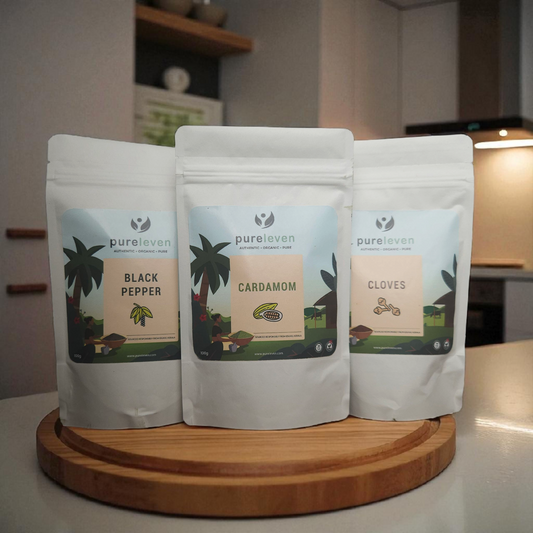 Primary pick3-in-1 Kerala Spice ComboStart with a best-selling Pureleven product picked to match the buying intent behind this article.₹909₹559
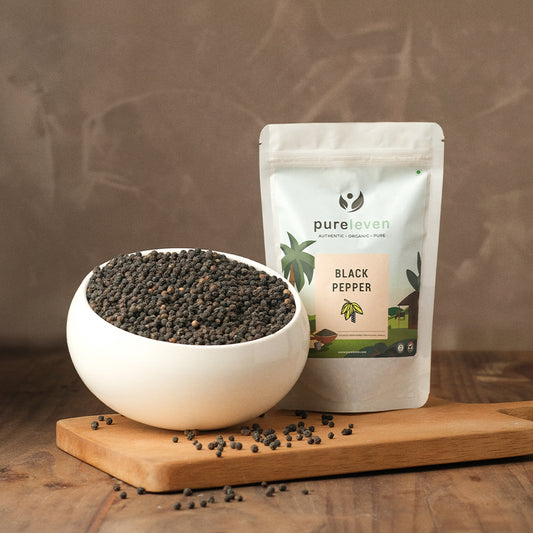 Also considerKerala Black Pepper (Kali Mirch) – Bold Whole Peppercorns from Idukki₹100
 Kitchen add-onExtra Bold Kerala Cardamom (Elaichi) – 8mm Whole Pods from Idukki₹309₹270


