



Pureleven journal
Cooking & Spices
From Kerala soil to your kitchen.
Pureleven spice journal
GI-Tagged Spices of Kerala and Why the Tag Matters to You
Answer-first guidance with a faster path to farm-origin Kerala products you can buy today.
Quick Summary
Which Kerala spices carry a GI tag, what the tag actually protects, and what it doesn't tell you about freshness or grade when you buy.
Jump through the guide
Go straight to the sections that answer the buying, comparison, or sourcing question you came for.
The main GI tag Kerala spices are Alleppey Green Cardamom and Malabar Pepper, both registered as Geographical Indications in 2007 to 2008, with Thalanad cloves from Kottayam added more recently. A GI tag ties a product's name to the place it comes from, so only registered producers from that area can legally use the name. For you as a buyer, it's a useful sign of origin, but not a guarantee of freshness or grade.
People ask us about GI tags more and more, usually because they've seen the logo on a pack and want to know if it's worth paying extra for. The plain answer is below.
What is a GI tag, in simple words?
A Geographical Indication is a name that tells you where something comes from, where that place gives it a particular quality. Think Darjeeling tea or Kashmir saffron. In India these are registered under the Geographical Indications of Goods (Registration and Protection) Act, 1999, which came into force in September 2003. The GI Registry sits in Chennai.
A registration lasts ten years and can be renewed. Producers from the area can apply to become "authorised users" of the name. Once a name is registered, someone from outside that area using it on their product can be taken to court for infringement.
Which Kerala spices have a GI tag?
This is the current picture for spices and spice-like crops connected to Kerala.
| GI name | What it is | Area covered | Registered |
|---|---|---|---|
| Alleppey Green Cardamom | Small green cardamom | Southern Kerala hills, plus parts of the Tamil Nadu Western Ghats | 2007 to 2008 |
| Malabar Pepper | Black pepper | Malabar coast region, with parts of neighbouring states | 2007 to 2008 |
| Thalanad clove (Thalanadan grambu) | Cloves | Thalanad, Meenachil taluk, Kottayam district | 2025 |
| Edayur chilli | Chilli | Edayur, Malappuram district | 2020s |
| Kanthalloor-Vattavada garlic | Hill garlic | Kanthalloor and Vattavada, Idukki district | 2022 |
For a wider look at what grows here without the legal labels, see our Kerala spices list.
Why is it called "Alleppey" cardamom if it's grown in the hills?
This one confuses everyone. Alappuzha (Alleppey) is a coastal town, and cardamom doesn't grow there. The name comes from trade history. In the 18th century the Travancore kingdom controlled the cardamom trade, and the crop was sold and shipped through Alleppey. The name stuck to the spice, even though the pods themselves come from the high ranges, mostly Idukki.
Malabar Pepper and Tellicherry
Malabar Pepper is the GI. "Tellicherry" is a trade grade for bigger, bolder berries picked from the same broad region. They're related but not the same thing. We've written a full piece on Malabar vs Tellicherry black pepper if you want the detail.
Thalanad cloves
This is the newest spice on the list. Thalanad sits at around 3,000 feet in Kottayam district, and the cloves are known for large buds and strong oil content. They're picked in the cool months, around December and January.
Why the GI tag matters to you as a buyer
- It protects the name. A seller can't legally call pepper from elsewhere "Malabar Pepper" if it isn't. That cuts down on outright fakes.
- It points to a place. The tag means the crop comes from a defined area with a known growing style, soil and weather.
- It supports growers. When buyers look for the name, the value stays closer to the area that built the reputation.
What a GI tag does not tell you
This is the part most people miss. A GI tag is about origin. It says nothing about when the spice was harvested, how it was dried, or how long it sat in a godown.
- It doesn't tell you the grade. Alleppey Green Cardamom still comes in several sizes and qualities. Check the size in millimetres.
- It doesn't tell you the age. A two-year-old GI pack will still smell flat.
- It's not a quality certificate for one packet. It covers the name and region, not every batch.
- Lots of good spice has no logo. Many small farms in the right area simply never register as authorised users. Their cardamom is from exactly the same hills.
So treat the GI tag as one good sign among several. Freshness, whole form and a seller who can name the district still matter more in your kitchen. The guide to buying Kerala spices online covers those other checks.
How we handle this at Pure Leven
Our Kerala cardamom grows on Idukki farms around Rajakumari, which is well inside the high ranges where Alleppey Green Cardamom comes from. Our black pepper grows on the same farms, climbing the shade trees. We'd rather tell you the district and the drying method (a cardamom dryer, not the sun) than lean on a logo. If a GI registration matters to you for any product, ask us or any seller directly whether they're a registered authorised user.
Frequently asked questions
How many GI tags does Kerala have?
Kerala has a few dozen GI registrations across food, crafts and farm produce, and the number keeps growing. Only a handful are spices. The key spice ones are Alleppey Green Cardamom, Malabar Pepper and Thalanad cloves.
Does Wayanad coffee have a GI tag?
Yes. Wayanad Robusta Coffee was one of five Indian coffees given GI status in 2019. As with spices, coffee from Wayanad and coffee sold under the registered GI are two different claims, so read the label carefully.
Have a question about where a particular spice of ours comes from? Send it on WhatsApp to +91 88482 65849 and we'll tell you straight.
Sources
Ready to buy?
Related products for this article
Move from reading intent to shopping intent with product cards tied to this topic and a direct route into the wider catalog.
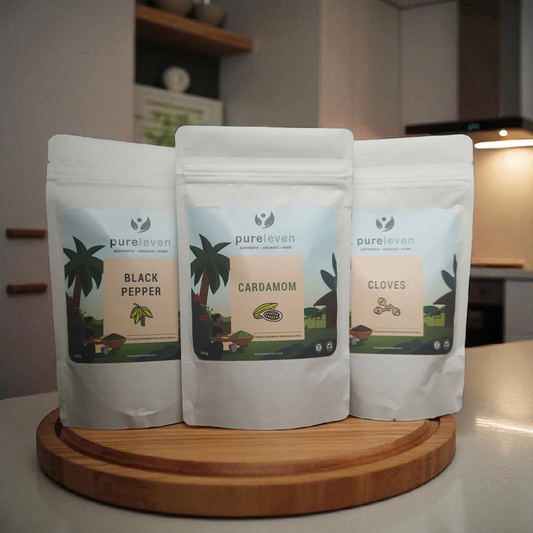 Primary pick3-in-1 Kerala Spice ComboStart with a best-selling Pureleven product picked to match the buying intent behind this article.Rs. 909.00Rs. 559.00
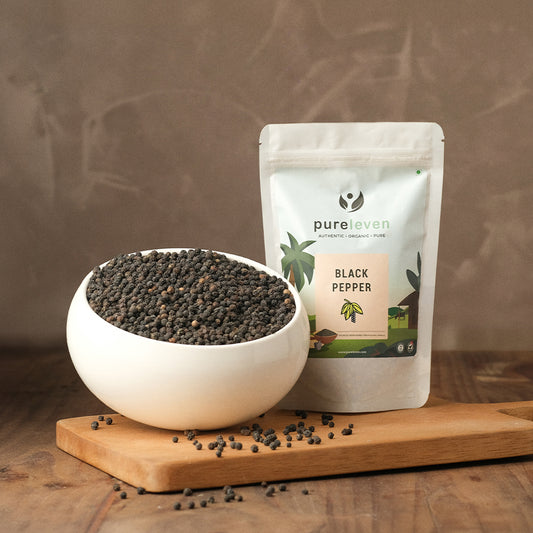 Also considerKerala Black Pepper (Kali Mirch) – Bold Whole Peppercorns from IdukkiRs. 100.00
 Kitchen add-onExtra Bold Kerala Cardamom (Elaichi) – 8mm Whole Pods from IdukkiRs. 309.00Rs. 270.00


