




Farm-origin spice comparison
Kerala Spices: Buying Close to the Farm vs General Online Stores
Compare generic marketplace sourcing with Pureleven's direct Kerala route, then move straight into the matching products.
Quick Summary
Farm-origin Kerala spices give buyers stronger aroma, fresher flavor, and clearer sourcing than generic online retail listings. Comparing harvest timelines, processing, packaging, and traceability shows why direct Kerala sourcing creates a better fit for serious home cooks and quality-focused pantry buying.
Jump through the guide
Go straight to the sections that answer the buying, comparison, or sourcing question you came for.
If you're buying Kerala spices online, you'll mostly choose between two kinds of seller. Some are general online stores that stock many products from many suppliers. Others are smaller sellers close to the farms, often in Idukki or Wayanad, who sell fewer things they know well. Both can be good. Here's how they differ, and what to check whichever you choose.
We've rewritten this article. An earlier version compared us directly with another named brand and included figures we couldn't back up. This version sticks to what you can check yourself.
General online stores
- Strengths: wide range, one order for many products, often fast delivery and easy returns.
- What to watch: spices may pass through several traders and warehouses before reaching you, so it's harder to know how old they are or where exactly they were grown.
Sellers close to the farm
- Strengths: they can usually tell you the district or even the farm, and the spices may reach you sooner after curing and sorting.
- What to watch: smaller range, sometimes limited stock, and quality still depends on how carefully they sort and pack. "Farm-direct" on a label isn't a guarantee on its own.
Why freshness matters so much
The smell and much of the flavour of cardamom, pepper and cloves comes from volatile oils. Those oils fade with time, heat, light and air, and much faster once a spice is ground. So the two things that matter most are:
- How long ago it was harvested and packed
- Whether it's whole or ground
A seller who can answer the first question clearly, and who sells whole spices, is usually a good bet.
What to check with any seller
- Origin: a district or town, not just "Kerala" or "India".
- Whole spices: easier to judge and they keep far longer.
- Packing: sealed, resealable pouches in sensible sizes.
- Labels: an FSSAI number and a real address. If it says "organic", certification details.
- A contact who answers: ask a question before you buy and see how they reply.
When it arrives: the two-minute test
- Cardamom: crack a pod. Seeds should be black and sticky, and the smell immediate.
- Black pepper: it should feel heavy. Bite one: hot and a little citrusy, not dusty.
- Cloves: press with a fingernail. A little oil should come out.
If a spice fails these tests, it's old, whoever sold it. Our spice quality checklist goes into more detail.
About us
Pure Leven is a small business in Rajakumari, Idukki. We work with farming families across the district and pack cardamom, pepper and cloves whole. We're not neutral about our own spices, so run the same tests on ours. If you have a question, message us on WhatsApp at +91 88482 65849.
Related reading
Ready to buy?
Related products for this article
Move from reading intent to shopping intent with product cards tied to this topic and a direct route into the wider catalog.
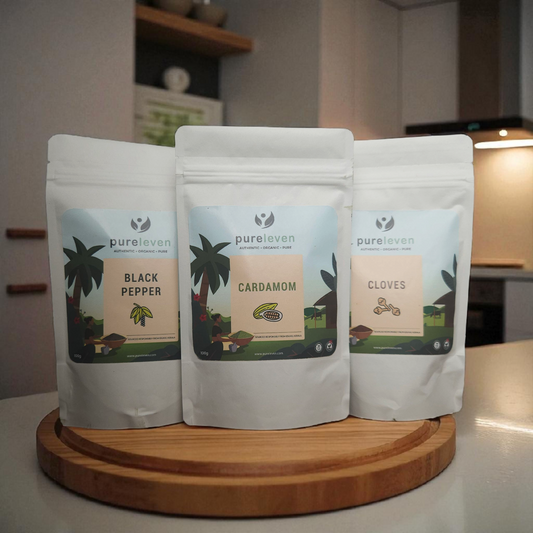 Primary pick3-in-1 Kerala Spice ComboUse this article as a buying bridge from retailer comparison into traceable, farm-origin Pureleven products.Rs. 909.00Rs. 559.00
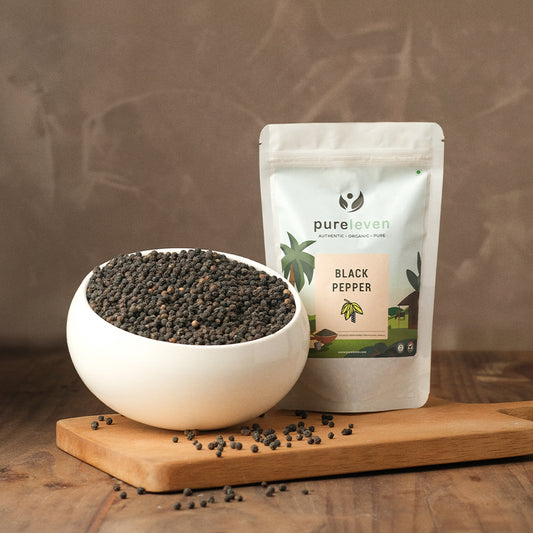 Also considerKerala Black Pepper (Kali Mirch) – Bold Whole Peppercorns from IdukkiRs. 100.00
 Kitchen add-onExtra Bold Kerala Cardamom (Elaichi) – 8mm Whole Pods from IdukkiRs. 309.00Rs. 270.00


