



Pureleven journal
Cooking & Spices
From Kerala soil to your kitchen.
Pureleven spice journal
Traceable Spices: Questions That Show Where a Spice Came From
Answer-first guidance with a faster path to farm-origin Kerala products you can buy today.
Quick Summary
Most spice packs only name the packer. These seven questions help you trace a spice back to its district, harvest and drying method.
Jump through the guide
Go straight to the sections that answer the buying, comparison, or sourcing question you came for.
Spice traceability means being able to follow a spice back to the district, the farms and the season it came from. Most retail packs in India only name the packer, so the practical way is to ask the seller a few specific questions: where it grew, who grew it, when it was harvested, how it was dried and when it was packed. A seller who knows the answers can give them in a sentence or two.
You don't need a lab or a certificate for this. You need the right questions and a sense of what a good answer sounds like.
Why is it so hard to know where a spice came from?
Because most spices change hands several times before they reach a shop. A typical route runs from a farm to a local collector or trader, then to an auction or a wholesale market, then to a packer, then to a distributor and finally to the shelf or website.
Each step is normal and legal. But each step also blurs the trail a little. By the time a spice is packed, the packer may know which auction lot it came from and nothing more. That's why the name on the pack is often a packer, not a grower.
The questions that show where a spice came from
These are the questions worth asking before you buy, especially for cardamom, pepper and cloves. You can send them by message to almost any small seller.
- Which district or area was this grown in? "Kerala" or "South India" is a region, not an answer. Idukki, Wayanad or a town name is.
- Do you grow it, buy it from farmers directly, or buy it at auction? All three can be fine. What matters is that the seller knows which one it is.
- Which harvest is this from? Anyone close to the crop will know roughly which months it was picked.
- How was it dried? Cardamom, for example, is usually dried in a heated drying chamber. A clear answer shows the seller understands the processing.
- When was this batch packed? The pack should show a month and year. If it doesn't, ask.
- Is it sold whole, and is anything added? Whole spices are far easier to trace and check than powders or blends.
- Which of your spices do you not grow? This is the most revealing question of all.
What do good and weak answers sound like?
| Question | A traceable answer | A weak answer |
|---|---|---|
| Where was it grown? | A district or town, such as Idukki or Adimali | "Kerala", "the best farms", "premium source" |
| Who grew it? | "Our farm" or "farming families near us", or "bought at the Puttady auction" | "Directly from farmers" with no detail when you ask more |
| Which harvest? | A season or a range of months | "Fresh stock" and nothing else |
| How was it dried? | A specific method | "Traditionally" or "naturally" |
| What don't you grow? | An honest list | "We grow everything ourselves" |
Why "we grow everything" is a warning
Spices need very different conditions. Cardamom wants cool, shaded hills. Star anise comes mainly from southern China and Vietnam. Saffron is a crop of Kashmir and Iran. A seller claiming to grow all of them on one farm is either very unusual or not being straight with you.
What about batch numbers and certificates?
Packaged food in India is supposed to carry a lot or batch number, and that helps a packer trace a problem internally. It doesn't tell you, the buyer, anything about the farm.
Marks like AGMARK or a GI name tell you about grade or a defined area, which is useful, but they're not a full trail back to the grower. We go through what each mark does and doesn't promise in our post on spice certifications in India. And if a pack leans only on the word "Kerala", our post on trusting "Product of Kerala" on a label explains what that phrase is worth.
Why does spice traceability matter to a home cook?
Mostly because origin and freshness are linked. A seller who knows the harvest also knows how old the spice is, and old spice has lost much of what you're paying for.
Traceability also makes the tricks harder. Exhausted cardamom, spent cloves and dyed pods are easier to slip into long, anonymous supply chains than into short ones. Origin is one of the three parts of authenticity we describe in what makes a spice authentic, and it's the one you can check just by asking.
How we answer these questions
We're a farming family in Rajakumari, Idukki, and we work with a small group of farming families around us. Our cardamom, black pepper and white pepper are grown in Idukki, and our cloves come from around Adimali. The cardamom is dried in a cardamom dryer. Star anise is bought in, and we'll tell you so. Everything is packed whole with nothing added.
If you want to ask any of the questions above about our Kerala cardamom or anything else, message us on WhatsApp at +91 88482 65849 and we'll answer plainly.
Frequently asked questions
Is a spice bought at auction less traceable?
Not necessarily. Auction lots in India, such as cardamom at the Spices Board e-auctions, come from registered growing areas. A seller who buys at auction and says so openly is still giving you a traceable answer.
What is the single best question to ask a spice seller?
Ask which of their spices they don't grow themselves. An honest seller will name some straight away, and that honesty usually carries over to everything else they tell you.
Are whole spices easier to trace than powders?
Yes. A whole pod or berry can be checked by eye, smell and feel, and it's rarely blended from many sources. Powders and masalas often mix several lots, which makes any single origin hard to pin down.
Pick one spice in your kitchen this week and ask its seller the seven questions. You'll learn a lot from how quickly they answer.
Sources
Ready to buy?
Related products for this article
Move from reading intent to shopping intent with product cards tied to this topic and a direct route into the wider catalog.
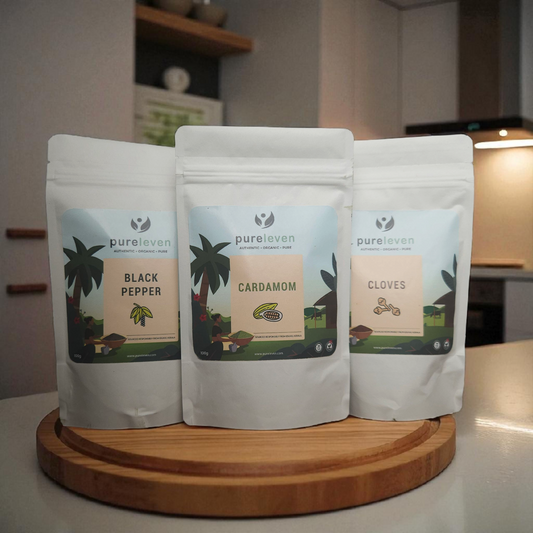 Primary pick3-in-1 Kerala Spice ComboStart with a best-selling Pureleven product picked to match the buying intent behind this article.Rs. 909.00Rs. 559.00
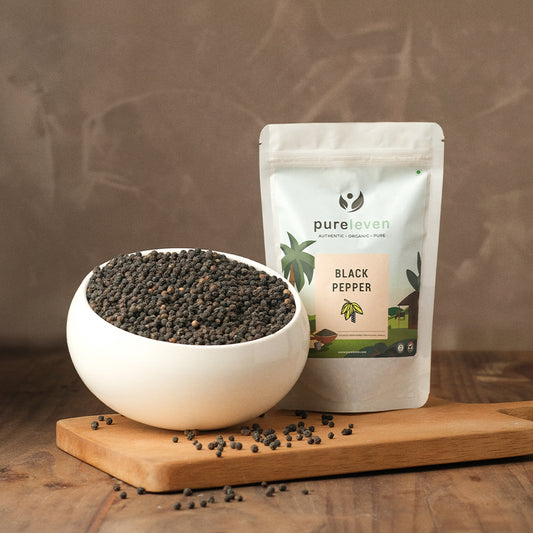 Also considerKerala Black Pepper (Kali Mirch) – Bold Whole Peppercorns from IdukkiRs. 100.00
 Kitchen add-onExtra Bold Kerala Cardamom (Elaichi) – 8mm Whole Pods from IdukkiRs. 309.00Rs. 270.00


