Pureleven journal
Cooking & Spices
From Kerala soil to your kitchen.
Kerala pepper guide
How Black Pepper Is Dried and Cleaned
Move from comparison content into bold, kitchen-ready Kerala pepper with a cleaner buying path.
Quick Summary
How black pepper is generally processed on Kerala farms: harvesting, threshing, blanching, drying and cleaning, and how to spot good processing in your pack.
Jump through the guide
Go straight to the sections that answer the buying, comparison, or sourcing question you came for.
Black pepper is made by picking the green berry spikes, separating the berries from the stalks, often dipping them briefly in hot water, and drying them for several days until they turn black and wrinkled. The dried pepper is then cleaned and sorted to take out stalks, dust, pinheads and hollow light berries. Nothing is added. The black colour comes from the berry's own skin darkening as it dries.
The steps are simple. Small choices at each one give you either clean, sharp pepper or a dusty, musty lot.
How is black pepper processed, step by step?
This is the general practice on Kerala farms, including hill farms where pepper vines climb shade trees. Individual growers do things a little differently.
- Harvest the spikes. Pepper grows in long hanging spikes. Growers pick when the berries are full-sized and green, usually once one or two berries on the spike start turning yellow or red.
- Heap and thresh. Spikes are often piled briefly so the berries loosen, then threshed. On small farms this is done by rubbing or trampling gently on a mat. Bigger growers use a small mechanical thresher.
- Blanch (optional). Many growers dip the berries in boiling water for about a minute. It cleans them and helps the skins blacken evenly.
- Dry. Berries are spread thin and turned often. In good sun this takes several days. Mechanical dryers are used too, especially when the weather won't cooperate.
- Clean and sort. Dried pepper is winnowed and sieved to remove stalks, stones, dust, pinheads and light berries.
- Store dry. Clean pepper goes into lined bags or sealed containers, kept off the floor and away from damp walls.
Why does pepper turn black?
A fresh berry is green. As it dries, enzymes in the outer skin react with compounds in the berry, and the skin browns and then blackens, a bit like a cut apple going brown but slower and deeper. The skin shrinks and wrinkles over the hard seed.
Blanching speeds this up. Hot water breaks down the cell walls of the skin, so the reaction runs faster and more evenly. Unblanched pepper can turn out patchy, with some grey or brown corns in the mix.
White pepper is a different process. Riper berries are soaked and the skin is removed before drying. Our white pepper guide covers it.
How dry should pepper be?
The usual target is around 10 to 12 percent moisture, though standards differ. Wetter pepper can grow mould in storage, and a Kerala monsoon makes that a real risk. Drying far below the target costs extra time and fuel for little gain.
Growers often judge by feel and sound rather than a meter. Well-dried corns are hard, rattle when you shake a handful and don't dent under a thumbnail.
Pepper also loses a lot of weight in drying. Fresh green berries dry down to roughly a third of their weight, which is part of the price of dried pepper.
What goes wrong in drying?
| Problem | Usual cause | What you notice at home |
|---|---|---|
| Mould or musty smell | Drying too slowly, or storing before fully dry | Stale, damp smell, grey or white dust on corns |
| Dirt and grit | Drying on bare ground instead of clean mats or floors | Sand at the bottom of the pack, gritty grind |
| Uneven colour | No blanching, or berries picked at mixed stages | A mix of black, brown and grey corns |
| Many light berries | Immature spikes picked, poor cleaning | Corns float in water and feel hollow |
| Weak aroma | Over-drying at high heat, or long storage | Little smell when cracked, flat taste |
Light berries are berries that never filled, so they dry into hollow shells. Cleaning removes most of them by winnowing or floating. For why traders care, see pepper density grades like 500 g/l and 550 g/l.
How is pepper cleaned after drying?
Much of the quality difference shows up here. A basic clean shakes out stalks and dust. A careful one goes further.
- Winnowing blows away dust, chaff and the lightest corns.
- Sieving separates pinheads and sorts berries by size.
- Hand-picking on small lots removes stones, twigs and discoloured corns.
- Size grading for trade sends the biggest berries to Tellicherry bold grades and the rest to Malabar grades.
"Garbled" on a grade name means the pepper has been through this cleaning and sorting. Ungarbled pepper hasn't, or not as thoroughly.
How can you judge processing in your own pack?
- Colour should be dark brown to black and fairly even.
- Skins should be deeply wrinkled, not smooth or dusty.
- There should be very little sand or grit at the bottom of the pack.
- A cracked corn should smell sharp and woody at once, never damp or mouldy.
Our Kerala black pepper buyer's guide adds a bite test and a water test.
Is black pepper fermented?
Not the way tea or cocoa is. The blackening comes from enzymes in the skin reacting as it dries, sometimes helped by a short heap before threshing. No culture is added.
About our pepper
Our Kerala black pepper is whole peppercorns from Idukki farms where the vines grow up shade trees alongside cardamom. It's packed whole with nothing added.
Pour a little of any pepper onto a white plate and look closely. The processing shows.
Sources
Ready to buy?
Related products for this article
Move from reading intent to shopping intent with product cards tied to this topic and a direct route into the wider catalog.
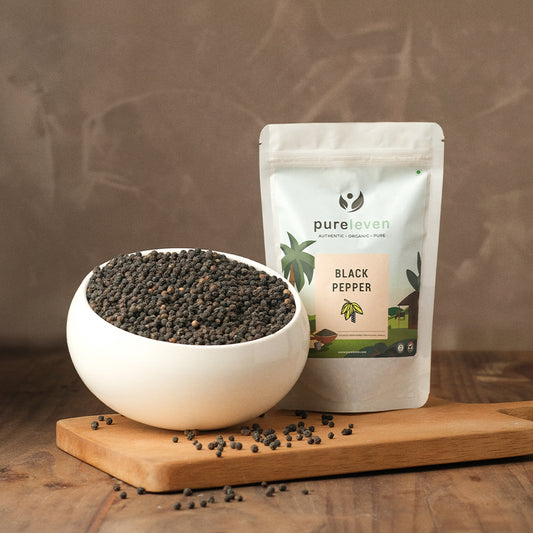 Primary pickKerala Black Pepper (Kali Mirch) – Bold Whole Peppercorns from IdukkiWhole Kerala peppercorns with high aroma and a straightforward upgrade from generic supermarket stock.Rs. 100.00
Also considerKerala Black Pepper (Kali Mirch) – Bold Whole Peppercorns from IdukkiRs. 100.00
 Kitchen add-onKerala White Pepper Whole PeppercornsRs. 184.50Rs. 150.00