



Pureleven journal
Cooking & Spices
From Kerala soil to your kitchen.
Pureleven spice journal
Spices From Kerala: What Grows Here and What Each Is For
Answer-first guidance with a faster path to farm-origin Kerala products you can buy today.
Quick Summary
A grower's Kerala spices list: cardamom, pepper, cloves, nutmeg, ginger, turmeric, cinnamon and more, with where each grows and how to cook with it.
Jump through the guide
Go straight to the sections that answer the buying, comparison, or sourcing question you came for.
A short Kerala spices list covers cardamom, black pepper, ginger, turmeric, cloves, nutmeg with mace, cinnamon, kudampuli (Malabar tamarind) and vanilla. Cardamom and pepper are the big two, grown mostly in the hill districts of Idukki and Wayanad, while the rest are spread across the state from the Kottayam hills to the Thrissur plains. Below is what each one is, where it grows, and what you actually do with it in the kitchen.
I grow and pack spices in Rajakumari, Idukki, so this list is written from the farm side. It's not every plant that has ever been grown in Kerala, just the ones you'll really meet when you shop.
What spices grow in Kerala?
Kerala's spice land sits mostly along the Western Ghats. The hills get a long monsoon, cool nights and plenty of shade, which suits cardamom and pepper especially well. Lower down, in the midland districts, you find nutmeg, cloves and ginger in mixed home gardens alongside coconut, banana and rubber.
The quick version is in the table below.
| Spice (Malayalam name) | Main growing areas in Kerala | What it's mostly used for |
|---|---|---|
| Green cardamom (elakka) | Idukki, plus parts of Wayanad and Palakkad hills | Chai, payasam, biryani, sweets |
| Black pepper (kurumulak) | Idukki, Wayanad, Kannur, Kasaragod | Pepper chicken, rasam, stews, everyday seasoning |
| Cloves (grampoo) | Idukki hills (Adimali), Kottayam hills (Thalanad) | Biryani, garam masala, pickles |
| Nutmeg and mace (jathikka, jathipathri) | Thrissur, Ernakulam, Kottayam | Garam masala, sweets, meat dishes |
| Ginger (inchi, dry ginger is chukku) | Wayanad and other hill areas | Curries, chukku kaapi, masala tea |
| Turmeric (manjal) | Across the state, often in home gardens | Almost every curry, pickles |
| Cinnamon (karuvapatta) | Kannur has a historic cinnamon estate at Anjarakandy | Biryani, meat curries, appam stew |
| Kudampuli (Malabar tamarind) | Common in central and southern Kerala | Fish curry, especially the red meen curry |
| Vanilla | Small plantings in Wayanad and Idukki | Baking, desserts |
The two big ones: cardamom and pepper
Cardamom (elakka)
Kerala's green cardamom grows under shade trees in the hills, and Idukki grows most of it. The pods are picked by hand in rounds through the season, then dried. On our side we dry them in a cardamom dryer, a heated chamber, which keeps the green colour.
Use it whole in biryani and pulao, crushed in chai, or with the seeds ground fresh into payasam and halwa. A little goes a long way.
Black pepper (kurumulak)
Pepper is a vine. On Idukki farms it climbs up the same shade trees that shelter the cardamom, so many farms have both. The berries are picked when a few on each spike start turning red, then dried until black and wrinkled.
Kerala pepper is sharp and slightly citrusy. It goes into pepper chicken, rasam, mutton stew and on top of eggs. White pepper is the same berry with the outer skin removed, milder and good in light-coloured dishes.
The supporting cast: cloves, nutmeg, ginger and cinnamon
Cloves (grampoo)
Cloves are the dried flower buds of a tree. In Kerala they grow well in the cooler hill areas. Adimali, near us in Idukki, is known for them, and Thalanad in Kottayam district recently got a GI tag for its cloves. Use two or three in biryani rice, in garam masala, or in a lemon pickle.
Nutmeg and mace (jathikka)
One fruit gives you two spices. The seed is nutmeg, and the red lacy covering around it is mace. The Indian Institute of Spices Research lists Thrissur, Ernakulam and Kottayam as the main nutmeg districts. Grate a little into sweets or a meat masala. Use sparingly.
Ginger (inchi and chukku)
Fresh ginger goes into almost every Kerala curry. Chukku, the dried form, is what grandmothers put into chukku kaapi when someone has a cold. Wayanad is well known for ginger.
Cinnamon (karuvapatta)
Kerala has a long cinnamon history, including the old Anjarakandy estate in Kannur, started in the 1760s. In shops you'll see two kinds: thin, papery Ceylon cinnamon and thick, hard cassia. They taste different and behave differently. We explain it properly in our post on Ceylon vs cassia cinnamon.
A small safety note: cassia has much more coumarin than Ceylon cinnamon, so if you use cinnamon daily in large amounts, Ceylon is the gentler choice.
Is star anise a Kerala spice?
No. Star anise is used a lot in Kerala biryani and meat dishes, but it's not grown here. Most of it comes from China and Vietnam. It's a fair thing to buy from a Kerala seller, just don't let anyone tell you it's from the hills.
Which ones should you buy first?
If you're starting from zero, get the ones where freshness makes the biggest difference: cardamom, black pepper and cloves. These three lose smell over time, and that's where buying close to the farm helps most. The Kerala spices online buying guide has a checklist for judging any seller.
How we fit into this list
At Pure Leven we sell a short list, on purpose. Our Kerala cardamom, black pepper, white pepper and Adimali cloves come from farming families around Idukki, and everything is packed whole with nothing added, in resealable pouches. Turmeric isn't in the shop yet, though we plan to add it. If you want to know more about the district itself, read about Idukki spices from the cardamom hills.
Frequently asked questions
What is the most famous spice of Kerala?
Black pepper has the longest history, since it drew traders to the Malabar coast for centuries. Green cardamom is the other famous one, and Idukki grows most of Kerala's crop. Most people would name one of these two.
Is turmeric grown in Kerala?
Yes, turmeric grows across Kerala, often in home gardens, and "Alleppey turmeric" is a well-known trade name. It's harvested from around January to March. It's a bulk crop in other states too, so check the origin on any pack.
If you're not sure where to start, message us on WhatsApp at +91 88482 65849 and tell us what you cook. We'll suggest a sensible first few.
Sources
Ready to buy?
Related products for this article
Move from reading intent to shopping intent with product cards tied to this topic and a direct route into the wider catalog.
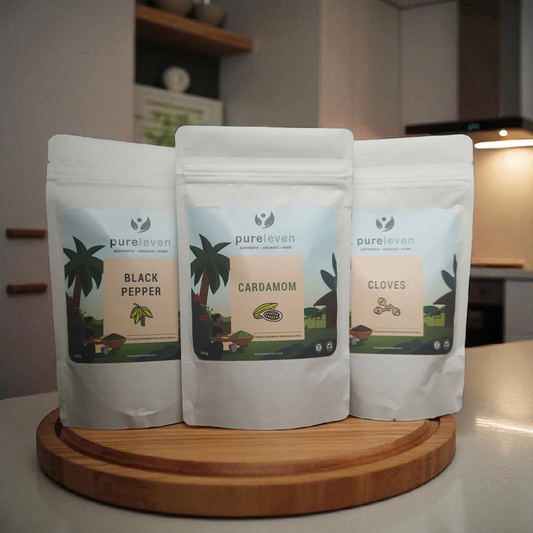 Primary pick3-in-1 Kerala Spice ComboStart with a best-selling Pureleven product picked to match the buying intent behind this article.Rs. 909.00Rs. 559.00
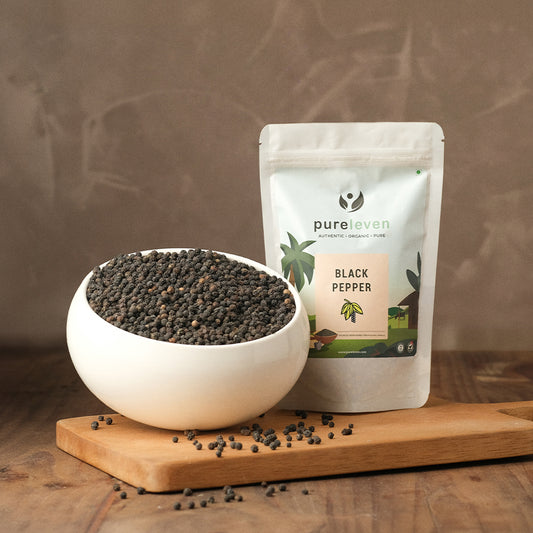 Also considerKerala Black Pepper (Kali Mirch) – Bold Whole Peppercorns from IdukkiRs. 100.00
 Kitchen add-onExtra Bold Kerala Cardamom (Elaichi) – 8mm Whole Pods from IdukkiRs. 309.00Rs. 270.00


