




Pepper heat, cleaner look
White pepper is useful when you want pepper bite without visible black specks in lighter dishes.
Shop by category

Clean, slow-building heat with no bitter edge—what professional kitchens use in cream sauces, clear soups, and anywhere delicate dishes need warmth without the dark colour.
Couldn't load pickup availability
In stock
Answer-first guide
Kerala white pepper delivers smoother heat and a more refined culinary finish than black pepper, especially in soups, sauces, marinades, noodles, and lighter-colored dishes.
Choose white pepper when you want precision and warmth without the sharper edge of black pepper.


Kerala white pepper
White pepper gives soups, sauces, eggs, marinades, and light gravies a sharp pepper lift while keeping the dish visually clean.

White pepper is useful when you want pepper bite without visible black specks in lighter dishes.

From the source
Crush it fresh for soups and white sauces and you get the pepper heat without dark specks in the dish.

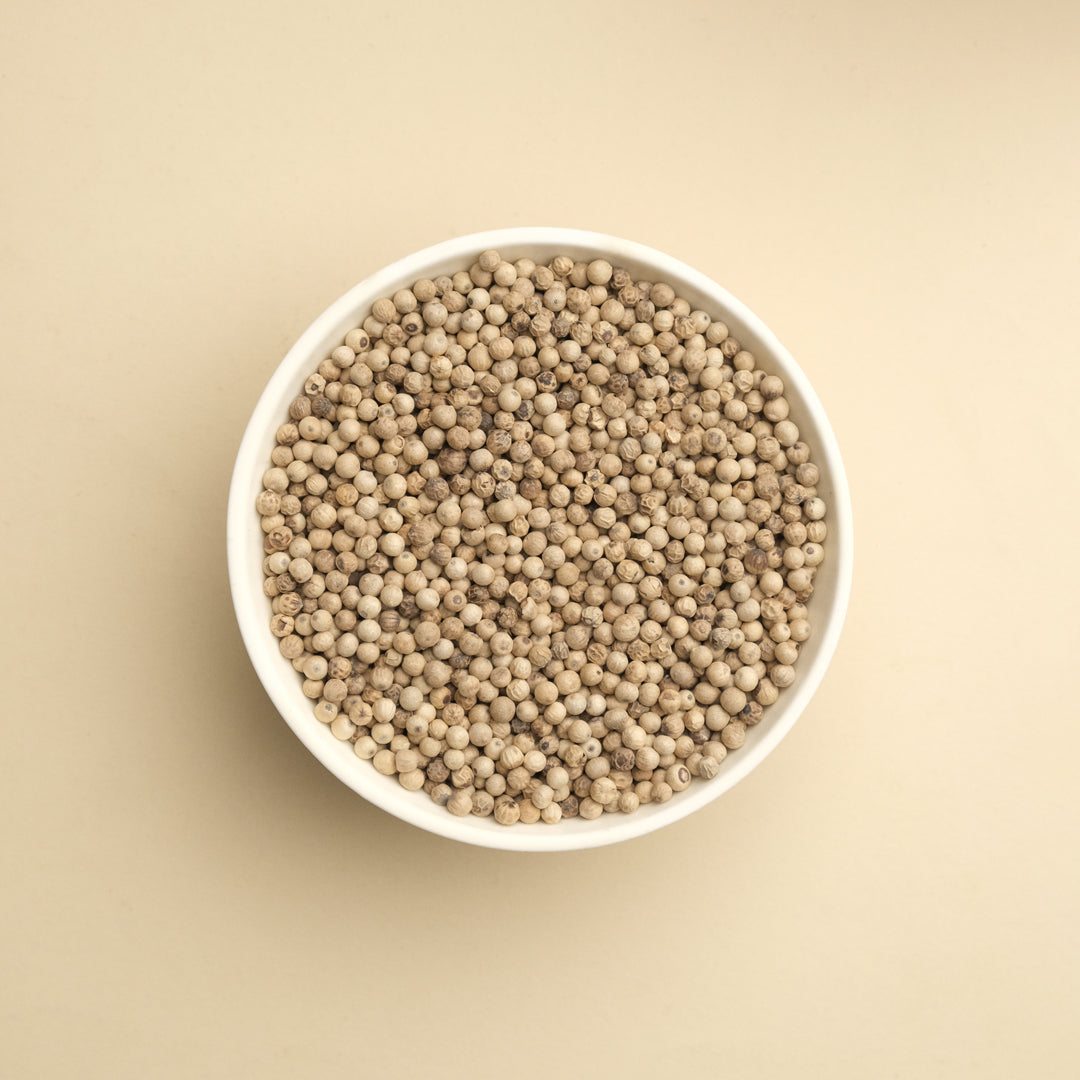
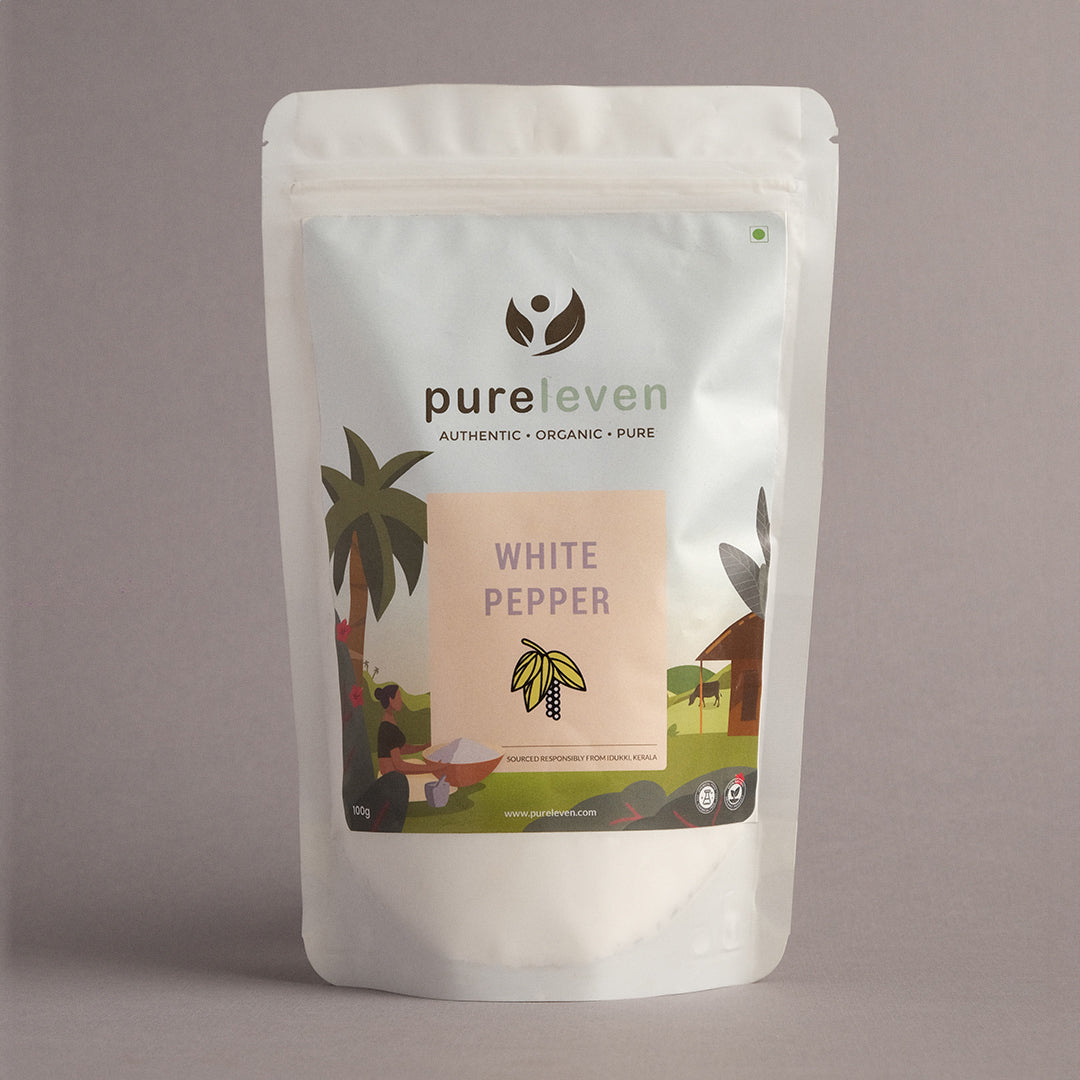
Whole white peppercorns from Idukki. White pepper comes from the same vine as black pepper. The ripe berries are soaked and the outer skin is removed before drying, which leaves a smooth, pale corn with a milder, earthier heat.
Its smell is sharper than black pepper's, so start with a little and add more to taste.
Keep the resealable pouch closed tight, or move the corns to an airtight jar, and grind as you need them. Ground white pepper loses its flavour quickly.
Delivery usually takes 4–5 working days across India. Free shipping on orders above ₹649. Questions before ordering? WhatsApp us on +91 88482 65849.

Our three core Idukki spices in one order: Adimali cloves, black pepper and green...

Whole clove buds from Adimali, a town in Idukki that's long been known for...

True cinnamon (Cinnamomum verum), imported directly from Sri Lanka, where Ceylon cinnamon comes from....

We grow cardamom on our farm in Rajakumari, in Kerala's Idukki district, where we...

We grow black pepper on our farm in Rajakumari, in Kerala's Idukki district, where...

Whole star anise (chakra phool), the eight-pointed pod that gives biryani and garam masala...

Whole cassia cinnamon sticks. This is the thicker, darker bark most Indian kitchens use...
Kitchen dossier
The point of white pepper is smoother heat and a cleaner finish in dishes where black pepper can feel visually or aromatically too blunt.
Best for soups, sauces, noodles, marinades, and lighter-colored dishes.
Flavor logic
This is about smoother warmth and an earthier finish rather than the brighter spike of black pepper.
Kitchen fit
White pepper is useful when you want pepper presence without visible dark specks or a rougher finish.
Regional identity
Kerala and Western Ghats positioning give the product a clearer provenance story than generic white pepper listings.
Pack logic
This works best for buyers who already know where white pepper performs better than black pepper in the kitchen.
Our spices never sit in warehouses. They are handpicked from high-altitude estates and brought straight to your kitchen, preserving every note of aroma.

Flavor comparison
This is less about heat alone and more about finish, use-case precision, and where white pepper performs better than standard pepper listings.
| Attribute | Pureleven | Generic market |
|---|---|---|
| Flavor profile | Smoother heat and a more earthy finish than black pepper. |
White pepper listings often stay generic and underspecified. |
| Best dishes | Soups, sauces, marinades, noodles, and lighter-colored dishes. |
Usually described as a general spice without culinary guidance. |
| Format | Presented as a premium whole-spice ingredient. |
May not clarify whether the pepper is whole or already ground. |
| Origin story | Kerala and Western Ghats positioning add regional context. |
Minimal provenance detail. |
White pepper questions
This section clears up the usual confusion around flavor profile, best dishes, and how white pepper differs from black pepper in practice.
White pepper usually gives smoother heat and a more earthy finish than black pepper. It is often chosen for soups, sauces, marinades, and lighter-colored dishes.
It works especially well in soups, sauces, mashed vegetables, marinades, noodles, and dishes where you want pepper warmth without visible dark specks.
Whole pepper keeps its aroma longer and gives you more control over freshness because you can grind only what you need.
Store it in a sealed container away from humidity and sunlight. Grinding closer to use time keeps the aroma cleaner and more expressive.

Spices, tea and honey from the hills of Idukki, Kerala.
02 / Company
03 / Help
04 / Get in touch
© 2026 Pure Leven Exim · FSSAI licensed · 100% natural
100% secure checkout