



Pureleven journal
Cooking & Spices
From Kerala soil to your kitchen.
Pureleven spice journal
How the Monsoon Shapes Idukki's Spices
Answer-first guidance with a faster path to farm-origin Kerala products you can buy today.
Quick Summary
How Idukki's monsoons shape cardamom and pepper, from summer showers to flowering in the rains, and what too much or too little rain means for buyers.
Jump through the guide
Go straight to the sections that answer the buying, comparison, or sourcing question you came for.
The monsoon decides how good a year Idukki's spices will have. Cardamom and black pepper both flower during the rains, so the timing and strength of the southwest monsoon (June to September) largely sets the size of the harvest months later. Too little rain, and flowers fail. Too much, and flowers wash off, roots rot and slopes slip.
Below is how the rain shapes Idukki spices through the year, season by season, and what it means for you as a buyer.
How many monsoons does Idukki get?
Two, plus a bit extra. The southwest monsoon arrives in early June and brings the heavy, steady rain, roughly two-thirds of the year's total on the Kerala side of the hills. The northeast monsoon follows from about October to December, usually as afternoon thunderstorms.
Then there are the summer showers in April and May. They're small in volume, but for cardamom they matter a great deal.
Rain isn't even across the district either. The western slopes get far more than the eastern edge, which sits partly in the rain shadow towards Tamil Nadu. Two farms an hour apart can have very different years.
What the rain does, season by season
| Season | Months (roughly) | Cardamom | Black pepper |
|---|---|---|---|
| Summer showers | April to May | Wakes plants after the dry spell, new panicles start | Vines recover from summer |
| Southwest monsoon | June to September | Main flowering and pod set, new planting | Flowering and berry set |
| Northeast monsoon | October to December | Pods fill, peak picking | Berries fill out |
| Dry season | January to March | Plants need mulch and water | Harvest and drying |
Why cardamom depends on the rain
Cardamom is a forest plant with shallow roots. It likes damp soil and cool air, and it can't store much water. That's why the summer months are tense on every farm, and why the first showers in April or May feel like a reprieve.
Once the southwest monsoon sets in, flowering picks up. Each pollinated flower takes about three to four months to become a ripe pod, so the rain in June and July is really deciding what gets picked in September and October. Our month-by-month look at an Idukki spice farm lays out that full cycle.
When there's too much rain
Very heavy, continuous rain is also bad. Flowers can rot or drop, bees and other pollinators can't fly, and waterlogged soil encourages root and capsule rot. On steep slopes there's the risk of landslides. The Kerala floods of August 2018 hit Idukki hard, and many farms lost plants and topsoil that year.
When there isn't enough
A long dry summer, or a monsoon that arrives late, is just as damaging. Plants wilt, flowering is delayed, and thrips (small insects that scar the pods) do more harm in hot, dry spells. A long rainless stretch in the hills in 2024 cut the cardamom crop badly enough that the state agriculture department later sanctioned relief funds for affected farmers.
How the monsoon shapes pepper
Pepper (kurumulak) is even more directly tied to the first monsoon showers. The vines flower as the rain starts, and water on the flower spikes is thought to help pollination. A strong, well-timed start usually means well-filled spikes. A patchy start leaves spikes with gaps where berries should be.
Fungal diseases like quick wilt also spread in wet weather, so farmers keep drains clear and trim vines to let air through. There's more on how pepper grows here in our post on Idukki black pepper.
What the monsoon means for you as a buyer
- Prices move with the rain. A poor monsoon usually means less cardamom and higher auction prices a few months later.
- Fresh crop arrives after the rains. New-season cardamom starts coming in from around August, and new pepper from the start of the year.
- Humidity is the enemy at home. During the rainy months, keep spices in airtight jars and use a dry spoon. Whole spices hold up far better than powders. Our guide on how to store spices has the details.
How we handle the wet months
Rain is the reason we don't rely on the sun to dry cardamom. The farms we work with around Rajakumari use a cardamom dryer, a heated drying chamber, so the pods dry evenly even on grey days and keep their green colour. Everything is packed whole with nothing added. If you'd like to try this season's crop, our whole Idukki cardamom is on the shop, and the Idukki spices online guide covers the rest of what we sell.
Frequently asked questions
When is the monsoon in Idukki?
The southwest monsoon usually reaches Idukki in early June and lasts until about September. The northeast monsoon brings more rain from roughly October to December.
Does heavy rain affect cardamom quality?
It mainly affects quantity. Very heavy rain during flowering can reduce pod set and cause rot, so there's less cardamom. Quality depends more on picking at the right stage and drying properly.
Is it a bad idea to buy spices during the monsoon?
Not at all, as long as they're well packed and you store them in airtight jars at home. Whole spices cope with humid weather much better than ground ones.
Sources
- Wikipedia: Cardamom Hills, climate and rainfall
- CABI: Kerala flooding, agricultural impacts (2018)
- Onmanorama: drought relief for Idukki cardamom farmers
If it's pouring where you are, it's probably pouring up here too. Good weather for a cup of cardamom chai.
Ready to buy?
Related products for this article
Move from reading intent to shopping intent with product cards tied to this topic and a direct route into the wider catalog.
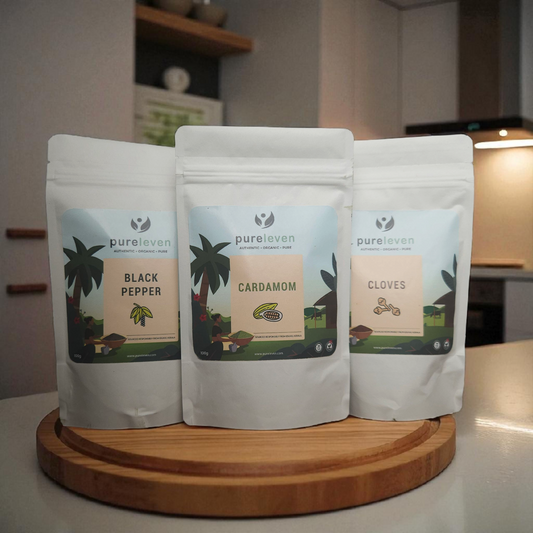 Primary pick3-in-1 Kerala Spice ComboStart with a best-selling Pureleven product picked to match the buying intent behind this article.₹909₹559
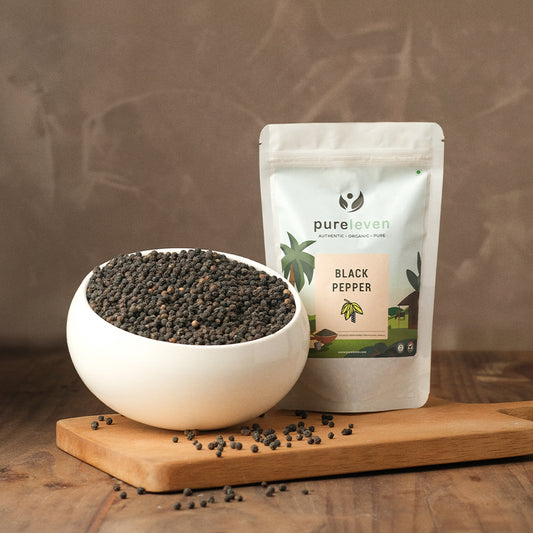 Also considerKerala Black Pepper (Kali Mirch) – Bold Whole Peppercorns from Idukki₹100
 Kitchen add-onExtra Bold Kerala Cardamom (Elaichi) – 8mm Whole Pods from Idukki₹309₹270


