Pureleven journal
Cooking & Spices
From Kerala soil to your kitchen.
Kerala pepper guide
How Much Black Pepper Is Too Much?
Move from comparison content into bold, kitchen-ready Kerala pepper with a cleaner buying path.
Quick Summary
How much black pepper is fine in food, signs you've overdone it, who should be careful, and why supplements are different.
Jump through the guide
Go straight to the sections that answer the buying, comparison, or sourcing question you came for.
For most healthy adults, black pepper in the amounts used in normal cooking, including pepper-heavy Kerala dishes, is considered likely safe. The concerns start with much larger medicinal amounts and concentrated piperine supplements, and with certain people: those with reflux or ulcers, people on some medicines, pregnant women and young children.
This is general information, not medical advice. If you have a health condition or take regular medicines, ask your doctor.
Is there a set daily limit?
There's no simple number of teaspoons that applies to everyone. Safety references treat pepper eaten in food as likely safe, and say there isn't enough reliable information about the safety of large amounts taken as a medicine.
In practice, "too much" is usually something your body tells you about quickly, and it depends more on your stomach than on a fixed amount.
Signs you've overdone it
- Burning in the mouth or throat
- Heartburn or acid reflux
- Stomach discomfort
- Watery eyes and a runny nose
These usually pass. If they keep happening, eat less pepper and speak to a doctor if symptoms continue.
Who should be more careful?
- People with acid reflux, gastritis or ulcers. Pepper can make symptoms worse for some people.
- People on regular medicines. Piperine, the compound behind pepper's heat, can change how the body absorbs and breaks down some drugs. Listed concerns include blood thinners, diabetes medicines and lithium. This mainly matters with supplements or medicinal amounts, but ask your doctor.
- Anyone having surgery. Piperine might slow blood clotting. Stop pepper supplements or medicinal amounts at least 2 weeks before an operation, or as your doctor advises.
- Pregnant women. Food amounts are fine, but large medicinal amounts are considered likely unsafe.
- Young children. Food amounts are fine. Keep whole peppercorns and pepper powder out of reach, as breathing in large amounts of pepper can be dangerous.
Food vs supplements
Many turmeric and "absorption" supplements add concentrated piperine. That's a very different dose from what's in your rasam. If you take these, read the label, check the piperine amount and ask your doctor, especially if you take other medicines. Our post on black pepper and turmeric explains why they're paired.
Getting more flavour from less pepper
If you love pepper but it bothers your stomach:
- Buy whole and crush it fresh. Fresh pepper has more aroma, so a smaller amount tastes of more. Our comparison of freshly ground vs pre-ground pepper explains why.
- Crush it coarsely. Coarse pieces give bursts of flavour rather than a constant burn.
- Add it near the end of cooking, when its aroma is strongest.
- Pair it with coconut milk or curd, which soften the heat.
- Try white pepper in soups and light dishes. It's less aromatic but many people find it gentler in flavour.
Common mistakes
- Treating food and supplements as the same. They aren't. Supplements concentrate piperine.
- Using pepper as a medicine without advice. Traditional home uses are fine in food amounts, but large doses are a different matter.
- Ignoring regular heartburn. See a doctor instead of just cutting spices.
Our Kerala black pepper is sold whole, so you can crush just what you need.
Sources
Ready to buy?
Related products for this article
Move from reading intent to shopping intent with product cards tied to this topic and a direct route into the wider catalog.
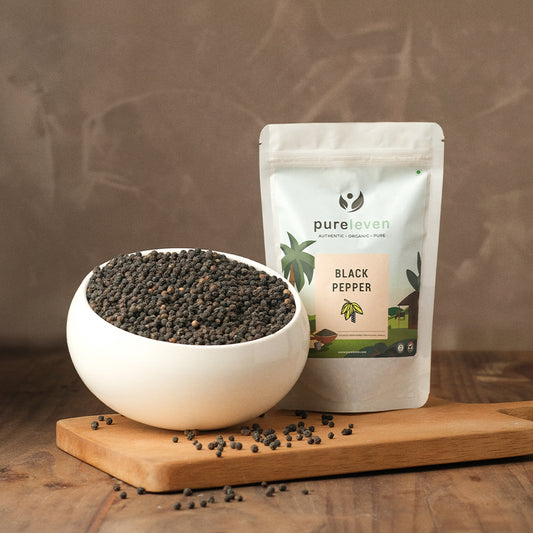 Primary pickKerala Black Pepper (Kali Mirch) – Bold Whole Peppercorns from IdukkiWhole Kerala peppercorns with high aroma and a straightforward upgrade from generic supermarket stock.Rs. 100.00
Also considerKerala Black Pepper (Kali Mirch) – Bold Whole Peppercorns from IdukkiRs. 100.00
 Kitchen add-onKerala White Pepper Whole PeppercornsRs. 184.50Rs. 150.00