Pureleven journal
Cooking & Spices
From Kerala soil to your kitchen.
Kerala pepper guide
Freshly Ground vs Pre-Ground Pepper: Is It Worth It?
Move from comparison content into bold, kitchen-ready Kerala pepper with a cleaner buying path.
Quick Summary
Why freshly ground pepper tastes different from pre-ground, plus how to choose peppercorns and set a grinder so it doesn't jam.
Jump through the guide
Go straight to the sections that answer the buying, comparison, or sourcing question you came for.
Freshly ground pepper is worth it for most dishes. It's brighter and a little citrusy and piney, where pre-ground pepper is mostly heat with the smell gone. If you're going to grind your own, the peppercorns you start with and how you set the grinder matter almost as much as grinding fresh at all.
Why fresh tastes different
Black pepper carries two separate things. Heat comes from piperine, which is fairly stable and doesn't fade much with age. Aroma comes from volatile oils, and those start escaping into the air the moment a corn is broken. So pre-ground pepper is never really "gone", it's just lost most of what made it smell like pepper rather than just taste hot.
A simple test
- Put a pinch of your pepper powder on one side of a plate.
- Crush three or four whole peppercorns on the other side.
- Smell each one.
Most people are surprised by the gap.
When fresh matters most
- Finishing dishes: eggs, salads, soups, pasta, buttered toast.
- Pepper-forward dishes: pepper chicken, pepper rasam, beef roast, pepper fry.
- Anything where the pepper goes in right at the end of cooking.
When pre-ground is fine
- Long-cooked curries and marinades, where pepper is one of several spices.
- Spice blends you'll use up within a few weeks anyway.
- Recipes that need a very fine, even powder, like some baking.
Choosing peppercorns for a grinder
Not every peppercorn feeds through a mill or a mixie the same way. A few things worth checking before you fill one.
Size
Very large, uneven berries can jam a small pepper mill, especially the kind with a plastic grinding mechanism. Fairly even, medium-sized peppercorns feed through more evenly and jam less.
Dryness
Pepper that's even slightly damp clumps inside a mill instead of falling through the grinding burrs, and it can also start to mould in the reservoir. Peppercorns should feel properly dry and rattle loosely in the jar, not feel tacky or soft.
Density
Heavy, solid peppercorns grind into proper flakes with visible dark specks. Light, hollow "light berries" (immature corns that never filled out) grind into a pale, dusty powder with far less bite and smell. If you drop a spoonful in water and a lot of it floats, that lot has more of these light berries than a good one should.
Mixed peppercorns
Blends with pink, green or white peppercorns look nice in a glass mill, but they don't all behave the same. Pink and green peppercorns are softer and can turn gummy in a burr grinder, sometimes gumming up the mechanism over time. If you want a mill that keeps working smoothly for years, plain black peppercorns are the safer daily choice. Save a soft mixed blend for a mill you don't mind cleaning out occasionally.
Grinder settings
Most mills have a coarseness dial at the top or bottom. A few starting points:
- Coarse, for pepper chicken, steak, beef roast and salads, where you want visible flecks and bursts of heat.
- Medium, for rasam, soups and everyday table use.
- Fine, for baking or smooth sauces, though a fine setting is also where a mill is most likely to jam if the peppercorns are damp or oversized.
If a mill keeps jamming, it's more often the pepper than the mill. Dry, evenly sized, dense peppercorns solve most jamming problems on their own.
Making fresh grinding less of a chore
- Keep a small pepper mill or a mortar near the stove, not in a cupboard.
- Or crush a few days' worth at a time into a tiny airtight jar. It's a fair compromise between fresh and convenient.
- Buy whole peppercorns in amounts you'll actually use in a few months.
Common mistakes
- Buying a large tin of pre-ground pepper "to save trips". It's stale well before you finish it.
- Overfilling a small pepper mill. It's harder to turn and more likely to jam.
- Storing peppercorns near the stove. Heat speeds up the same aroma loss that grinding does.
Heavy, dark, evenly sized peppercorns give the best result whichever way you crush them. For grades and varieties, see our Kerala black pepper varieties guide. Our own Kerala black pepper is sold whole, from Idukki, ready for a mill or a mortar.
Ready to buy?
Related products for this article
Move from reading intent to shopping intent with product cards tied to this topic and a direct route into the wider catalog.
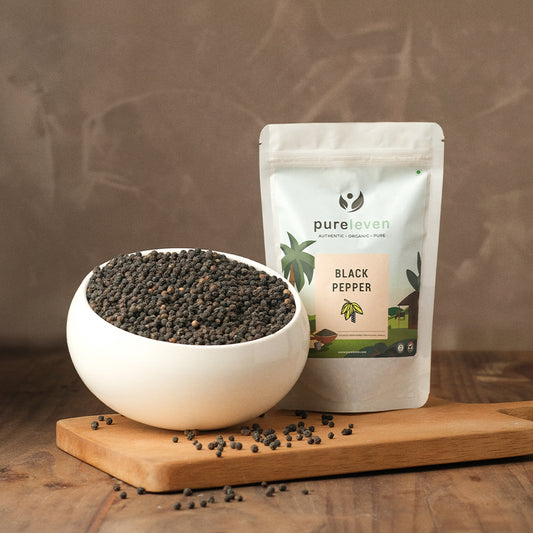 Primary pickKerala Black Pepper (Kali Mirch) – Bold Whole Peppercorns from IdukkiWhole Kerala peppercorns with high aroma and a straightforward upgrade from generic supermarket stock.Rs. 100.00
Also considerKerala Black Pepper (Kali Mirch) – Bold Whole Peppercorns from IdukkiRs. 100.00
 Kitchen add-onKerala White Pepper Whole PeppercornsRs. 184.50Rs. 150.00