



Pureleven journal
Cooking & Spices
From Kerala soil to your kitchen.
Pureleven spice journal
Artificial Colour in Spices: What to Watch For
Answer-first guidance with a faster path to farm-origin Kerala products you can buy today.
Quick Summary
Which spices get artificially coloured, the real cases behind the worry, and simple water and tissue checks you can do at home.
Jump through the guide
Go straight to the sections that answer the buying, comparison, or sourcing question you came for.
Artificial colour in spices is added to make dull, old or low-grade spice look fresh, and it turns up most in chilli powder, turmeric and sometimes green cardamom. Indian food standards (FSSAI) require spices to be free from added colouring matter, so any dye is adulteration. At home, the best clues are colour that's too bright and too even, colour that bleeds into water in streaks, and pods that stain a damp white tissue.
Why would anyone colour a spice?
Because colour sells. People judge chilli by its red, turmeric by its yellow and cardamom by its green. When a crop is rain-damaged, old or a lower grade, adding colour hides that and lifts the price.
The trouble is that the dyes used are rarely food colours. They're often industrial dyes that were never meant to be eaten.
Which spices are most likely to have artificial colour?
| Spice | What's been found | Quick home check |
|---|---|---|
| Chilli powder | Red industrial dyes such as Sudan I | Sprinkle on water and watch for coloured streaks |
| Turmeric (powder and whole) | Yellow pigments, including lead chromate in some markets | Drop whole turmeric in water and see if colour leaches out fast |
| Green cardamom | Pods coloured to look greener and fresher | Rub pods on a damp white tissue |
| Saffron | Artificial colour added to threads | Hard to judge at home, so buy from a trusted source |
How big a problem is this, really?
It's real, though it's not in every pack. A few well-documented cases:
- Sudan I in chilli. Sudan I is an industrial red dye that isn't permitted in food. In 2005, the UK's Food Standards Agency withdrew hundreds of food products after chilli powder containing it got into a Worcester sauce ingredient used across the industry.
- Lead chromate in turmeric. Stanford researchers reported in 2019 that some turmeric processors in Bangladesh were adding lead chromate, an industrial yellow pigment, to make turmeric brighter. The practice reportedly began after floods left crops dull.
- Dyes in the trade generally. The American Spice Trade Association lists undeclared colours, like Sudan dyes in chillies and artificial colour in saffron, as known forms of spice adulteration. Food safety labs routinely screen red spices for dyes including the Sudan group and metanil yellow.
Some surveys come back clean, which is good news. Canada's food inspection agency tested 63 red spice samples in 2019 to 2020 and found no non-permitted colours. The point isn't that every pack is dyed. It's that you should know the signs.
How to check for artificial colour at home
These checks come mostly from FSSAI's DART guide (Detect Adulteration with Rapid Test) and simple kitchen sense.
- Chilli powder in water. Sprinkle a pinch on a glass of water without stirring. Artificial colour tends to run down through the water in coloured streaks. Pure chilli powder settles without leaving those streaks.
- Whole turmeric in water. Drop a piece of whole turmeric into water. According to FSSAI's guide, pure turmeric doesn't leave colour straight away, while coloured turmeric does.
- Turmeric powder in water. Natural turmeric gives a light yellow colour that settles. A strong, bright yellow that stays suspended is a warning.
- Cardamom on a damp tissue. Rub a few pods firmly on a wet white tissue. Natural green cardamom leaves little or no colour. A clear green stain suggests dye.
- Trust your eyes. Natural spices vary a little in shade. A pack where every piece is the same glowing colour deserves suspicion.
What these checks can't tell you
Home checks catch heavy-handed dyeing, not everything. Lead chromate, for example, needs a lab test. If a spice fails any of the checks above, stop using it and buy from a source you trust.
Whole spices are easier to trust than powders, because there's less room to hide things. We explain that idea, and the other two parts of authenticity, in our guide to what makes a spice authentic. For cardamom specifically, colour is often used to cover up spent pods, which we covered in how to spot exhausted cardamom.
What about turmeric from us?
We don't sell turmeric yet, though we plan to add it. In the meantime, our post on how turmeric is graded explains what good turmeric should look like.
How we keep colour natural
Our cardamom comes from farms around Idukki and is dried in a cardamom dryer, a heated chamber that dries the pods evenly so they keep their natural green. Nothing is sprayed or coated on afterwards. Everything we sell is packed whole with nothing added, so you can run the tissue test on our Kerala cardamom yourself.
Frequently asked questions
How can I tell if chilli powder has artificial colour?
Sprinkle a little on the surface of a glass of water and don't stir. Artificial colour tends to trail down through the water in streaks. Pure chilli powder settles without leaving coloured trails.
Why is my cardamom leaving green colour on my fingers?
A faint trace can come from dust or handling, but a clear green stain on a damp tissue is a warning sign of added colour. Natural cardamom keeps its green inside the pod skin and doesn't bleed much.
Is bright yellow turmeric a bad sign?
Not always, since good turmeric is naturally deep yellow. But an unusually bright, uniform yellow that colours water strongly and quickly is worth checking. Some turmeric sold abroad has been found with lead chromate, which only a lab can detect.
Try the water test on your chilli powder this week. If it streaks, it's time to change where you buy.
Sources
Ready to buy?
Related products for this article
Move from reading intent to shopping intent with product cards tied to this topic and a direct route into the wider catalog.
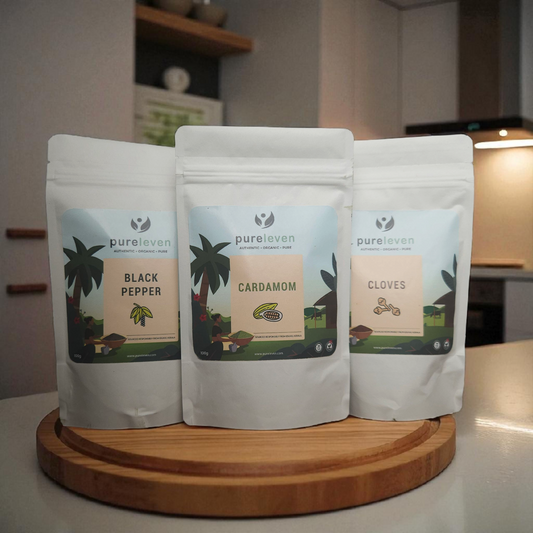 Primary pick3-in-1 Kerala Spice ComboStart with a best-selling Pureleven product picked to match the buying intent behind this article.Rs. 909.00Rs. 559.00
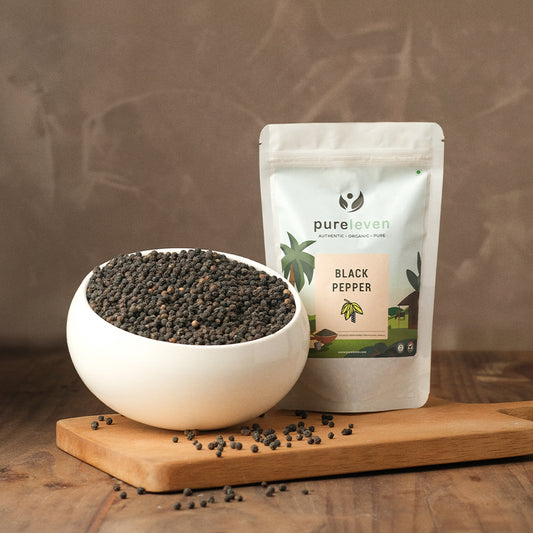 Also considerKerala Black Pepper (Kali Mirch) – Bold Whole Peppercorns from IdukkiRs. 100.00
 Kitchen add-onExtra Bold Kerala Cardamom (Elaichi) – 8mm Whole Pods from IdukkiRs. 309.00Rs. 270.00


