



Pureleven journal
Cooking & Spices
From Kerala soil to your kitchen.
Pureleven spice journal
Authentic Spices Online: How to Tell You're Getting the Real Thing
Answer-first guidance with a faster path to farm-origin Kerala products you can buy today.
Quick Summary
Authentic spices are the right species, from the place the label names, with nothing added or taken out. How to check each, plus a checklist for ordering online.
Jump through the guide
Go straight to the sections that answer the buying, comparison, or sourcing question you came for.
Authentic spices pass three tests: the right plant species, from the place the label names, with nothing added or taken out on the way to you. Most problems with spices sold in India, from dyed powders to cardamom with its oil already removed, fail one of those three. When you buy authentic spices online you can't smell the pack first, so knowing what each test looks like helps you judge the seller as well as the spice.
What does "authentic" actually mean for a spice?
A pack can say "pure" and "premium" and still be the wrong plant, from somewhere else, with half its flavour gone. It helps to split authenticity into three parts.
| Test | What can go wrong | What you can check |
|---|---|---|
| Species | A cheaper or unsafe relative sold under the same common name (cassia as "cinnamon", Japanese star anise mixed with Chinese) | Does the seller name the botanical species? Does the spice look and smell right for it? |
| Origin | "Kerala" or "Malabar" written on a pack of spice grown and traded elsewhere | Can the seller name a district or town? Is there a real packer address? |
| Processing | Oil extracted before sale, artificial colour added, mineral oil coating, fillers in powders | Smell after crushing, colour on a damp cloth, whole rather than ground |
Is it the right species?
Several spices have cheaper look-alike cousins sold under the same everyday name.
Cinnamon and cassia
Most "dalchini" sold in India is cassia, a related tree with thicker, harder bark. Cassia isn't fake, and plenty of Indian cooking uses it on purpose. But it isn't the same as Ceylon cinnamon, and it has more coumarin, which matters if you eat a lot of it every day. We explain the difference in our post on Ceylon vs cassia cinnamon.
Chinese and Japanese star anise
Culinary star anise is Illicium verum, often called Chinese star anise. Japanese star anise (Illicium anisatum) is toxic. In 2003 the US FDA warned consumers about star anise teas after around 40 people, including infants, fell ill, and noted that the two species can't be told apart by eye once dried. So with star anise, the seller's sourcing matters more than how the pods look.
Green and black cardamom
These are two different plants, not two grades of one. Black cardamom is a real spice with a smoky flavour, but it shouldn't be sold as a cheaper "type" of elakka. Our post on green vs black cardamom has the details.
Is it really from where the label says?
Some names are protected. India registers Geographical Indications (GI) for spices, and both Alleppey Green Cardamom and Malabar pepper were registered around 2007 to 2008 with the Spices Board as the applicant. Even then, the names can surprise you. Alleppey cardamom is named after the old trading port, not where it's grown. The growing area covers the Western Ghats of southern Kerala and parts of Tamil Nadu.
Most packs don't carry a GI mark at all. For those, your best clues are practical ones:
- The packer's address. Indian packaging rules require the name and address of the manufacturer or packer on the pack. A town in the growing area is a better sign than a warehouse far from any farm.
- A district, not a state. "Idukki" or "Adimali" tells you more than "South India" or "Kerala".
- A seller who can answer questions about harvest months, drying and grading without having to go and check.
If you want to know what grows in our district and why it matters, we wrote about Idukki spices separately.
Has anything been added or taken out?
This is where most real-world problems happen, and it's the part you can check best at home.
Taken out: exhausted or "spent" spice
Spice oils and oleoresins are valuable. The leftover material after extraction still looks like the spice, so it sometimes finds its way back into the market. The American Spice Trade Association lists spent material, such as spent pepper in ground black pepper, as a known form of adulteration. With whole spices, exhausted cardamom and cloves tend to look dull and smell weak even after you crush them.
FSSAI standards set a minimum volatile oil content for whole small cardamom (3.5 percent), which is one reason a proper lab can catch this even when your eyes can't.
Added: colour, coatings and fillers
FSSAI standards require spices like cardamom and cloves to be free from added colouring matter, and cardamom must not be coated with mineral oil. Dyes still turn up. In 2005, the UK's Food Standards Agency withdrew hundreds of food products after chilli powder containing the banned dye Sudan I got into a Worcester sauce ingredient used across the industry. Researchers at Stanford found lead chromate pigment being added to turmeric in Bangladesh to brighten its colour.
Powders are where most fillers hide, because brick powder, starch or husk mix into a powder far more easily than into whole pods.
Why whole spices are easier to trust
A whole pod, peppercorn or clove shows you its size, colour and weight, and you can break it open and smell it. A powder hides all of that. Whole spices also keep their smell far longer, so grinding small amounts at home gives you better flavour and more certainty. Our spice quality checklist goes through what to look for spice by spice.
Checking a pack once it's in your hands
- Does the seller name the species where it matters (cinnamon, star anise)?
- Is a district or town named, with a real packer address?
- Does it smell strong once crushed, or only faintly when you first open the pack?
- Does a damp white tissue stay clean when you rub a few pods or buds on it?
- Is the colour natural and a little uneven, rather than bright and identical?
- Will the seller answer a direct question about where it came from?
Buying authentic spices online: a quick checklist
Before you pay, a few minutes on the seller's website tells you a lot.
- The seller names a district or town. "Idukki" or "Adimali" is a real answer. "Kerala" alone is weaker, and "India" tells you nothing.
- Whole, not powder. Whole pods, corns and buds show their quality. Powders hide it.
- A real address and contact. A packer address, plus a phone or WhatsApp number and an email that a person actually answers.
- A pack or harvest date, not only an expiry date. Spices lose their smell with time, so you want to know when it was packed.
- Honesty about what's bought in. No small grower produces every spice. A seller who tells you which spices they grow and which they buy from traders is being straight with you.
- Answers before you order. Ask one question, such as when the cardamom was harvested. A quick, specific reply is a good sign.
How we handle it at Pure Leven
We're based in Rajakumari, Idukki, and our family has been farming here for about 30 years. Our cardamom, black pepper and white pepper come from our farm and a small group of farming families around Idukki. Our cloves come from around Adimali, also in Idukki. Cardamom is dried in a cardamom dryer, a heated drying chamber, not in the sun.
Everything is packed whole with nothing added. Some things we sell are bought in, star anise for example, and we'll say so if you ask. We're not organic certified, and we'd rather tell you that than put a vague word on the pack.
If you want to see what we mean, our Kerala cardamom and Adimali cloves are both good places to start.
Frequently asked questions
Where can I buy authentic spices online in India?
Look for a seller who passes the checks above: a named district or town, whole spices, a real address and contact, a pack date, and straight answers about what they grow and what they buy in. Pure Leven sells whole cardamom, black pepper and cloves from Idukki. Our star anise and cinnamon are bought in, and we're happy to tell you that before you order.
Is a GI tag proof that a spice is authentic?
A registered GI tells you the name is legally protected and linked to a defined region and quality. It's a strong sign when a product is properly authorised to use it. It doesn't tell you how fresh the spice is, or that nothing was done to it after harvest, so the other checks still apply.
How can I check a spice seller before buying?
Look for a named district or town and a real packer address. Then ask a direct question, such as when the spice was harvested or how it was dried. A seller close to the farm will answer quickly and specifically.
Got a spice in your cupboard you're not sure about? Send us a message on WhatsApp at +91 88482 65849 and we'll tell you what we'd look for.
Sources
Ready to buy?
Related products for this article
Move from reading intent to shopping intent with product cards tied to this topic and a direct route into the wider catalog.
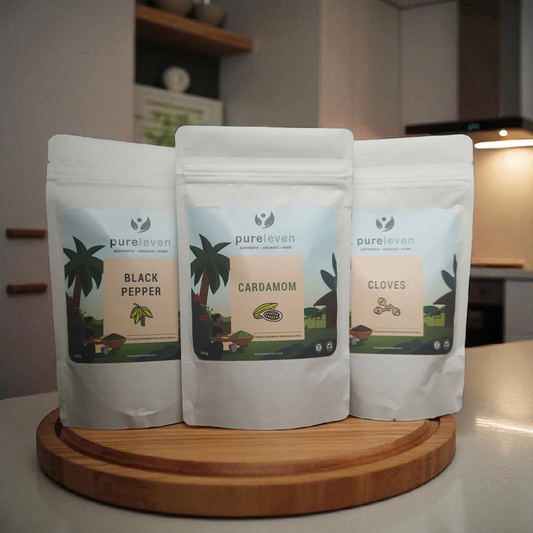 Primary pick3-in-1 Kerala Spice ComboStart with a best-selling Pureleven product picked to match the buying intent behind this article.Rs. 909.00Rs. 559.00
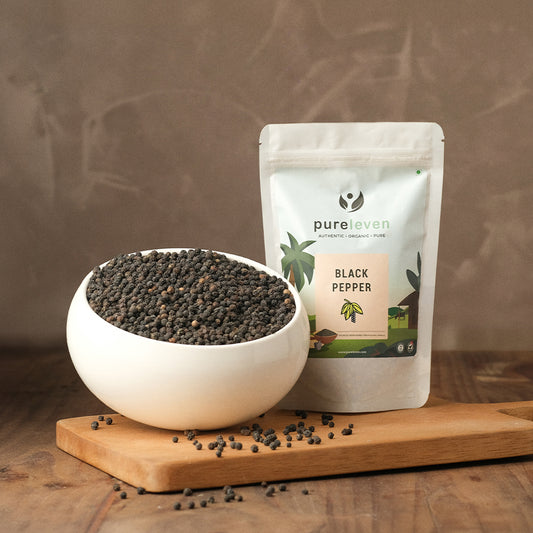 Also considerKerala Black Pepper (Kali Mirch) – Bold Whole Peppercorns from IdukkiRs. 100.00
 Kitchen add-onExtra Bold Kerala Cardamom (Elaichi) – 8mm Whole Pods from IdukkiRs. 309.00Rs. 270.00


