



Pureleven journal
Cooking & Spices
From Kerala soil to your kitchen.
Pureleven spice journal
Whole Spices: Why Cooking With Them Changes the Pot
Answer-first guidance with a faster path to farm-origin Kerala products you can buy today.
Quick Summary
Why whole spices taste better than powder in slow-cooked dishes, which ones to keep at home, and the four simple ways to cook with them.
Jump through the guide
Go straight to the sections that answer the buying, comparison, or sourcing question you came for.
Whole spices change a dish because they give up their flavour slowly. A cardamom pod, a clove or a stick of cinnamon holds its oils inside until heat, fat or liquid draws them out, so the pot smells of the spice through the whole cook, not only the first five minutes. You also get more control: you choose how long they stay in, and lift them out when the dish tastes right.
We pack cardamom, pepper and cloves whole at our farm in Rajakumari, Idukki, and this is the question we hear most. Why bother with whole when powder is right there? The honest answer, plus how to actually use them, is below.
What makes whole spices different from ground?
Most of a spice's smell and taste sits in its volatile oils. In a whole pod or bud, those oils are sealed inside a husk or skin. Once you grind a spice, you break that seal and expose a huge surface to air, light and warmth.
That's why ground spices fade faster on the shelf. It's also why they behave differently in the pot. Powder hits the oil and releases almost everything at once. A whole spice releases in stages, the outer layer first and the inside later, as the dish simmers.
| Point | Whole spices | Ground spices |
|---|---|---|
| Shelf life | Hold their smell much longer when stored well | Lose smell noticeably within months of opening |
| How flavour comes out | Slowly, over the length of cooking | Quickly, mostly at the start |
| Control | Can be removed when the dish tastes right | Can't be taken back out |
| Checking quality | Easy to see, smell and crush a sample | Hard to tell what's in the powder |
| Best for | Rice, biryani, curries, stocks, pickles, syrups, chai | Quick dry rubs, baking, last-minute seasoning |
Why do whole spices taste better in the pot?
It's mostly about time. Think of a mutton curry that cooks for an hour. Ground cinnamon added at the start has given away most of its top notes by the time the meat is tender. A piece of cinnamon bark added at the start is still giving flavour at the end.
Whole spices also play well with fat. When you drop cloves, cardamom and a bay leaf into hot ghee or coconut oil, the oils in the spice move into the fat. That flavoured fat then coats every grain of rice or piece of meat. Indian cooks call this tadka or tempering. It's the first step in most pulaos and curries for a reason.
Which whole spices should you keep at home?
You don't need a big collection. These cover most Indian cooking, and a lot of other cuisines too.
| Spice | Local names | Where it shines |
|---|---|---|
| Green cardamom | Elakka, elaichi | Chai, payasam, biryani, pulao, sweets |
| Black pepper | Kurumulak, kali mirch | Rasam, pepper chicken, soups, stocks, pickles |
| Cloves | Grampoo, laung | Ghee rice, meat curries, masala tea, syrups |
| Cinnamon or cassia | Karuvapatta, dalchini | Biryani, kurma, stews, poached fruit |
| Star anise | Chakra phool, thakkolam | Biryani, stocks, broths |
| Bay leaf | Tej patta | Rice, dal, stocks |
Cardamom, pepper and cloves are the three we grow and pack ourselves in Idukki. The others you'll find in any good Indian kitchen. If you're comparing the two kinds of cinnamon, we've written about Ceylon vs cassia cinnamon and why the choice matters.
How do you cook with whole spices?
There are really only a handful of ways. Most recipes use one or two of them.
Temper them in fat
Heat ghee or oil, add the whole spices, and let them sizzle for 20 to 60 seconds until they smell toasted. Then add onions or rice. This is the base of pulao, biryani and most North Indian curries. Add the hardest spices (cinnamon, cloves) first and the delicate ones (cumin, bay leaf) a few seconds later.
Simmer them in liquid
Drop them straight into water, milk, stock or syrup. This is how chai, payasam, soups and poached fruit get their flavour. Low heat and time do the work.
Tie them in a bag
A muslin potli keeps the spices together so you can pull them all out at once. It's handy for stocks, large batches and anything you'll serve to guests who don't want to bite a clove.
Dry-roast and grind fresh
Toast whole spices in a dry pan, cool them, and grind in a mixie. This gives the freshest possible garam masala. Our post on the spices in garam masala lists what usually goes in.
How do you tell if whole spices are fresh?
This is the nice part about buying whole. You can check them yourself in a few seconds.
Cardamom should be plump and green with black, slightly sticky seeds, crush one and the smell should come fast. Pepper should be dark, wrinkled and heavy, with a hot, faintly citrusy bite when chewed. Press a clove's head with a fingernail and a fresh one leaves a little oil and a strong smell. Snap a piece of cinnamon and it should smell sweet and warm right away.
Our spice quality checklist goes into more detail. Store them in airtight jars away from the stove and sunlight, and they'll stay good for a long time. Grinding only what you need for the week keeps the rest whole and strong.
A note on safety
Whole spices are ordinary kitchen ingredients, but a couple of points are worth knowing. Cassia cinnamon is high in coumarin, so use it in normal cooking amounts rather than in large daily doses. Buy star anise from a seller you trust, because the similar-looking Japanese star anise is toxic and must not be eaten. And fish out hard pieces like bay leaves and cinnamon before serving small children.
How we pack ours
At Pure Leven we pack everything whole with nothing added. Our cardamom is dried in a cardamom dryer on Idukki farms, and the pepper grows up shade trees right next to it. If you want to start with the three spices we know best, the Kerala spice combo pack has cloves, pepper and cardamom together, or pick up whole Kerala cardamom on its own. Delivery is usually 4 to 5 working days across India.
Sources
Frequently asked questions
Are whole spices better than ground spices?
For most slow-cooked dishes, yes. Whole spices keep their aroma longer in storage and release it gradually while cooking, which gives a rounder flavour. Ground spices are still useful for quick dishes, rubs and baking where you want the flavour spread evenly and fast.
How long do whole spices last?
Stored in an airtight jar away from heat and light, whole spices generally keep their flavour well for a couple of years, clearly longer than ground spices. The best test is your nose: crush one, and if the smell is weak, it's time to replace it.
Do you have to remove whole spices before eating?
Not always. Cardamom pods, peppercorns and cumin are fine to leave in, though biting a clove or pepper can be strong. Bay leaves and large pieces of cinnamon bark are best removed, as they stay hard and can be a choking risk.
Start with one dish this week: swap the garam masala powder in your pulao for a few whole pods and cloves, and taste the difference yourself.
Ready to buy?
Related products for this article
Move from reading intent to shopping intent with product cards tied to this topic and a direct route into the wider catalog.
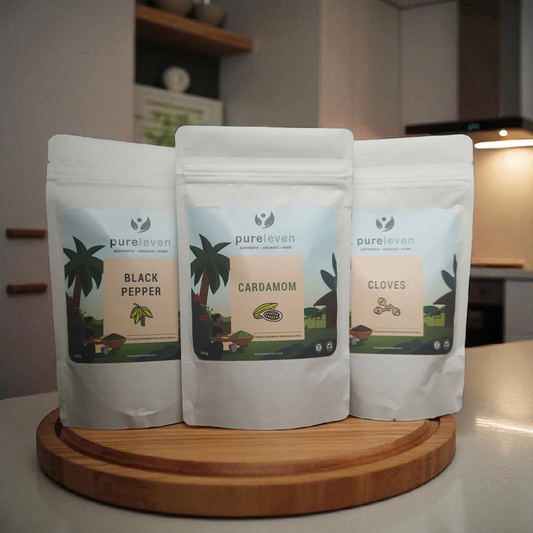 Primary pick3-in-1 Kerala Spice ComboStart with a best-selling Pureleven product picked to match the buying intent behind this article.Rs. 909.00Rs. 559.00
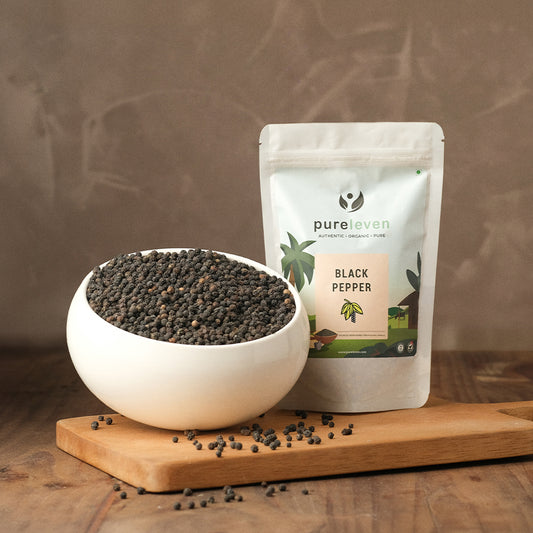 Also considerKerala Black Pepper (Kali Mirch) – Bold Whole Peppercorns from IdukkiRs. 100.00
 Kitchen add-onExtra Bold Kerala Cardamom (Elaichi) – 8mm Whole Pods from IdukkiRs. 309.00Rs. 270.00


