



Pureleven journal
Cooking & Spices
From Kerala soil to your kitchen.
Pureleven spice journal
Spices Online vs Your Local Kirana: Honest Pros and Cons
Answer-first guidance with a faster path to farm-origin Kerala products you can buy today.
Quick Summary
Should you buy spices online or at your local kirana? An honest comparison of price, freshness and origin, and which spices to buy where.
Jump through the guide
Go straight to the sections that answer the buying, comparison, or sourcing question you came for.
Should you buy spices online or from your local shop? For everyday spices you use by the handful, like jeera, mustard and red chilli, a busy kirana is usually fine and often cheaper. For spices where origin and freshness make a big difference, like cardamom, black pepper and cloves, buying online from a seller close to the farm tends to give you better quality for the money.
That's the short answer. The longer one depends on where you live, how much you cook, and what your kirana actually stocks.
What does a local kirana do better?
Quite a lot. It's worth being fair here.
You can see, smell and touch before paying
This is the big one. At the shop you can pick up a packet, check the colour, and in many places ask for loose spice and smell it. Online, you're relying on photos and the seller's word.
No waiting, no shipping
Run out of jeera halfway through a tadka and the kirana is five minutes away. No online order can beat that.
Tiny quantities
Many shops will sell you 25g or 50g loose, which is good for a spice you use twice a year.
A relationship
A shopkeeper who knows you will often tell you which lot is fresh and which has been sitting. That's worth something.
Where does buying spices online win?
Origin you can trace
Most kirana stock comes through wholesale markets, mixed from many sources. The shopkeeper usually can't tell you which district it came from. A grower-run online shop can name the area, sometimes the village.
Fewer hands, less time on the road
Each trader in a chain holds stock for a while. Cardamom and cloves lose aroma slowly over those months. Buying close to the source cuts out some of that waiting.
Grade and size information
Online listings for cardamom often state size in mm, and pepper listings may say "bold". At a small shop, you usually get whatever grade the wholesaler sent.
Regional spices you just can't find locally
If you live far from Kerala, good whole cardamom or fresh Adimali cloves may simply not be on your kirana's shelf. We've written about why Idukki spices are worth seeking out.
Spices online vs local shop: side by side
| Factor | Local kirana | Buying spices online |
|---|---|---|
| Check before paying | Yes, look and often smell | No, only photos and reviews |
| Speed | Immediate | A few working days |
| Origin information | Usually unknown | Often named, if bought near source |
| Price for common spices | Usually lower | Similar or higher once shipping is added |
| Price for premium spices | Varies, grade often unclear | Easier to compare by grade and size |
| Small quantities | Easy, often sold loose | Usually 50g minimum |
| Returns and complaints | Face to face | Depends on the seller's policy |
Which spices should you buy where?
This split works for most Indian kitchens:
- Buy locally: jeera, mustard seeds, methi, whole dried chilli, dhania seeds, hing. These sell fast at most shops, so stock turns over and stays reasonably fresh.
- Buy online, close to the source: green cardamom, black pepper, white pepper, cloves, and cinnamon where you want to know whether it's cassia or Ceylon.
- Either, depending on the shop: star anise, bay leaf, kalonji. If your kirana moves a lot of it, it's probably fine.
The logic is simple. Where quality varies a lot and origin matters, go to the source. Where a spice is cheap and sells quickly everywhere, the local shop is hard to beat.
What about loose spices at the market?
Loose spices look lovely in open sacks. But open sacks are exposed to air, dust and humidity all day. They also make it easy to mix in older stock. If you buy loose, smell carefully, buy small, and avoid powders from open containers.
Whole loose spices from a busy stall can be excellent. Loose powders are where we'd be most careful.
How to test your own kirana against an online order
- Buy the same spice from both, in whole form. Cardamom is a good choice.
- Crush one pod from each between your fingers and smell them side by side.
- Split a pod open. Seeds should be dark and a little sticky, not pale and dry.
- Make two cups of chai, one with each, using the same amount.
- Work out the price per 100g for each, including any shipping.
You'll know within a day which is better value for your kitchen. Our guide to buying spices online in India covers the other things to check.
How we fit in
We're a small grower-run shop in Rajakumari, Idukki, so we only sell the spices where buying from source makes sense: things like whole Kerala cardamom and whole black pepper from Idukki, packed whole with nothing added. For your jeera and mustard, keep going to your kirana.
Frequently asked questions
Is it cheaper to buy spices online or at a local shop?
For common spices like jeera and mustard, the local shop is usually cheaper. For premium spices like cardamom and pepper, online sellers near the source can offer better quality for a similar price. Always compare price per 100g including shipping.
Are kirana spices fresh?
They can be, especially at busy shops where stock sells quickly. The problem is that most shopkeepers can't tell you where or when the spice was harvested. Smelling a crushed sample is the best quick test.
Should I buy loose or packed spices?
Whole loose spices from a busy stall are fine if they smell strong. Avoid loose powders from open containers, since they fade fast and are easier to adulterate. Packed whole spices in sealed pouches are the safest choice for storing longer.
Use both. Your kirana for the daily basics, and a trusted source for the few spices that really need it.
Ready to buy?
Related products for this article
Move from reading intent to shopping intent with product cards tied to this topic and a direct route into the wider catalog.
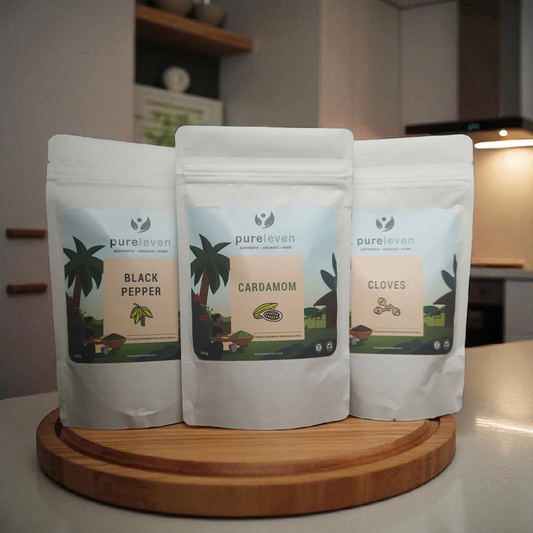 Primary pick3-in-1 Kerala Spice ComboStart with a best-selling Pureleven product picked to match the buying intent behind this article.Rs. 909.00Rs. 559.00
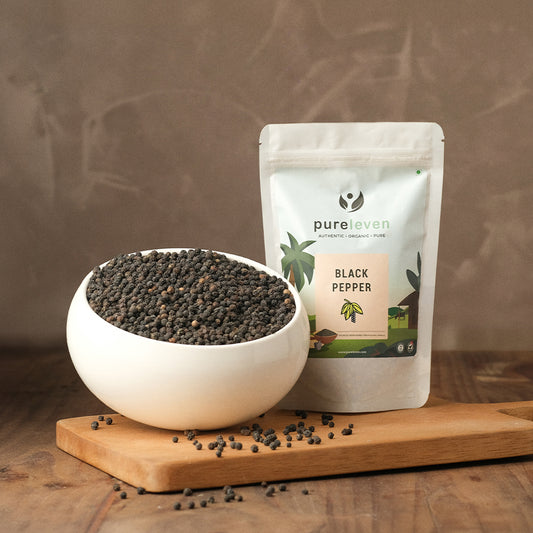 Also considerKerala Black Pepper (Kali Mirch) – Bold Whole Peppercorns from IdukkiRs. 100.00
 Kitchen add-onExtra Bold Kerala Cardamom (Elaichi) – 8mm Whole Pods from IdukkiRs. 309.00Rs. 270.00


