Kerala cardamom guide
Farm-Direct Cardamom Online vs Retail: Price, Quality & Market Data
Compare pod size, aroma strength, and practical pack sizes before you buy.
Quick Summary
Why farm-direct cardamom (elaichi) beats middlemen: verified market data shows 8.5mm grade commands a 35% premium and prices have risen 46% in two years. Here's how to buy smart.
Jump through the guide
Go straight to the sections that answer the buying, comparison, or sourcing question you came for.
The Market Reality: Cardamom Prices Have Risen 46% in 2 Years
Here’s what’s happening in the global cardamom market: average export prices moved from roughly ₹16.78/kg in 2024 to ₹23.27/kg in 2025 to ₹24.55/kg in 2026 — a 46% increase in just two years.
Why? Robust demand from functional beverage makers, premium confectioners, and herbal supplement brands is colliding with erratic harvests in Guatemala and India. Asia-Pacific holds roughly 38.3% of the global cardamom market, and India plays a dual role as both a major producer and consumer.
For buyers: this means prices tend to keep climbing over time. Buying at August peak-season pricing is smarter than waiting for the January off-season, when the same grade can cost 40% more.
The Grade Premium: Why 8.5mm Costs 35% More
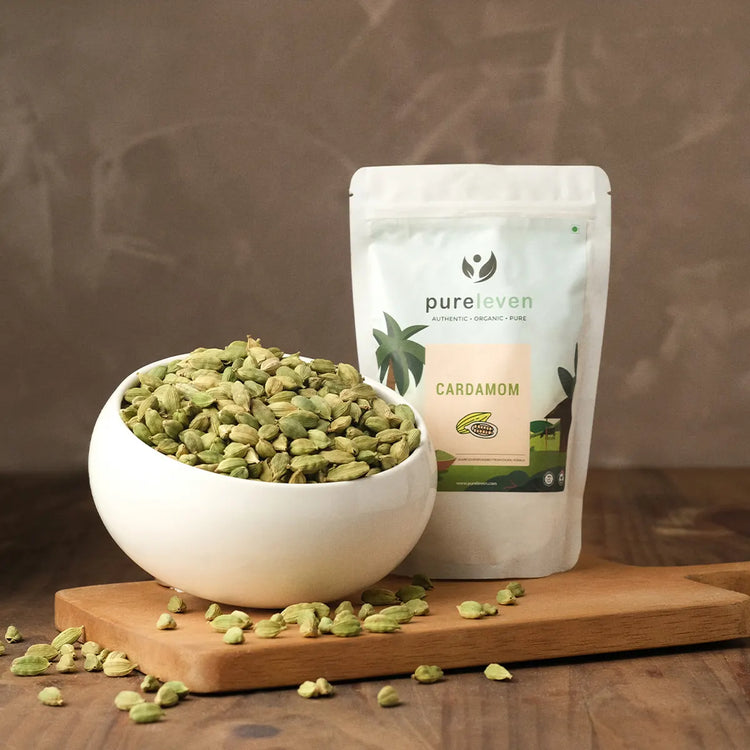
Mandi data from Kattappana (Idukki’s primary trading hub) shows 5–6mm grade cardamom trading around ₹2,600/kg, while 8.5mm+ grade commands roughly ₹3,500/kg — a 35% premium for pod size alone.
Retailers and resellers typically buy at these mandi prices, then add a 40–50% markup, store it for weeks or months (fading aroma along the way), and package it generically with little transparency. Buying farm-direct means paying closer to mandi-adjacent pricing, getting cardamom shipped within days of sorting, and knowing the harvest date and grade up front.
AGEB vs. Organic: The Grade Breakdown
AGEB (All Grade Extra Bold): roughly ₹3,000–3,600/kg, 7.5–8.5mm pods, 75–85% seed fill. Common in peak season and the best value for most home cooks.
AGS (All Grade Standard): roughly ₹2,400–2,750/kg, 6–7mm pods, 60–75% seed fill. Suited to bulk blending and budget use — AGEB is only modestly more expensive and noticeably better.
Organic cardamom typically commands a 20–30% premium over conventional, though certified organic farms remain a minority of the market. PureLeven isn’t certified organic, but uses traditional, low-chemical farming methods — ask us directly if certification matters for your use case.
The Demand Side: Who's Buying Cardamom
Functional beverage makers, premium confectioners, herbal supplement brands, restaurant chefs, home cooks, and gift/premium markets all compete for the same harvest. When supply drops due to weather or pests, prices spike; when supply peaks in August, prices dip even as competition for the best-grade pods intensifies. Online direct-to-consumer sales let farms reach these buyers without middleman markups — better freshness and price for customers, a fairer margin for farms.
The Seasonal Price Cycle
August peak: harvest volume is highest, mandi prices are at their lowest, and quality (fruit-seed grade share) is at its best — the best time to buy in bulk and store for the year.
October plateau: harvest is declining, prices are rising slowly, quality remains excellent.
December–February: harvest has largely ended, prices are at their yearly high, and much of what's available is older stored stock with fading aroma.
March–July (off-season): supply is sporadic, prices stay elevated, and stock can be 6–12 months old with noticeably faded aroma. Best reserved for emergency purchases only.
Why Middlemen Exist (And Why You Should Skip Them)
A typical middleman chain runs: farmer sells to trader at mandi price, trader marks up and sells to a distributor, distributor marks up again selling to a retailer, and the retailer marks up once more selling to you. Layered together, this commonly adds up to roughly a 95–130% markup from farm-gate price to shelf price.
A farm-direct model collapses that chain: the farmer harvests, sorts, and handpicks, sells directly online at a fair margin over production cost, and ships with modest packaging costs added. The result is typically meaningfully cheaper for the buyer while paying the farmer more than they'd get at the mandi — a better outcome on both ends.
Why Online Farm-Direct Works Now
Transparency demand: buyers increasingly want to know where their spices come from, how fresh they are, what grade they're buying, and whether the price is fair. Farm-direct sellers can answer all four; anonymous retail generally can't.
Rising prices make middlemen harder to justify: as cardamom prices climb industry-wide, cutting out middleman margins is one of the few ways to keep premium cardamom affordable for regular buyers.
Subscription and repeat models work: unlike one-off spice purchases, farm-direct selling builds repeat customers who return harvest after harvest, subscription boxes, and wholesale relationships with restaurants and tea blenders — all of which create more stable income for farms and better service for buyers.
The Market Outlook: Prices Expected to Keep Rising
Rising demand from functional beverages and supplements, increasingly erratic harvests due to weather variability, fierce competition between India, Guatemala, and Vietnam for volume, and growing premiums for organic, GI-tagged, and handpicked cardamom all point toward continued price increases. The practical takeaway: buying at peak-season pricing now tends to beat waiting.
How to Spot Honest Farm-Direct Sellers
Good signs: a specific harvest date, guaranteed pod size, stated seed-fill percentage, a named grade (AGEB, fruit-seed, etc.), pricing reasonably close to mandi rates, a genuine farm story, and a clear quality or return policy. Warning signs: vague “premium” claims with no specifics, no harvest date, pricing that's suspiciously cheap for the stated grade, pricing that looks like pure retail markup, or no transparency about where the cardamom actually comes from.
Why We Went Online
We built Rajakumary on reputation — years of offline sales, local buyers, handshake deals. As export markets grew more disrupted and middlemen margins got squeezed, we realized our customers never actually knew us, and middlemen were taking a growing share of the value we created. So we built direct online sales. Now customers know the farm, see harvest updates, ask questions, and come back season after season.
Your Next Move: Buy Like a Farmer
You now know why 8.5mm cardamom commands a real premium, why August is the best time to buy, how much farm-direct can save versus retail, why prices are trending upward industry-wide, and how to tell an honest farm-direct seller from a middleman in disguise.
👉 Shop Rajakumary's Cardamom — 8.5mm fruit-seed, hand-sorted for high seed fill
👉 Subscribe for Seasonal Harvest Alerts — June, August, October drops
👉 Ask About Wholesale — 5kg+ orders
Questions about farm-direct pricing? Email hello@pureleven.com — we're farmers who went online, and we answer our own emails.
Next read: How to Buy Cardamom Online: Complete Guide
Ready to buy?
Related products for this article
Move from reading intent to shopping intent with product cards tied to this topic and a direct route into the wider catalog.

Suggested reads
Keep exploring this topic
Move from this guide into adjacent reads from the same journal, then jump back into the catalog when you are ready to buy.

Cardamom Cultivation Guide: How to Grow Premium...
A complete cardamom (elaichi) farming guide: elevation requirements, water and shade balance, soil prep, natural pest control, and the real economics of growing cardamom.
Cardamom Cultivation Guide: How to Grow Premium...
A complete cardamom (elaichi) farming guide: elevation requirements, water and shade balance, soil prep, natural pest control, and the real economics of growing cardamom.

Cardamom Harvest & Handpicking: From Plant to Y...
The 8-phase journey from flower to harvest: why handpicking removes most pods to keep only the best cardamom (elaichi), and how to spot full-seed pods versus hollow ones.
Cardamom Harvest & Handpicking: From Plant to Y...
The 8-phase journey from flower to harvest: why handpicking removes most pods to keep only the best cardamom (elaichi), and how to spot full-seed pods versus hollow ones.

From Black Pepper to Cardamom: How a Rajakumary...
Our farm story: why we switched from black pepper (1 harvest/year) to cardamom/elaichi (3-4 harvests), and how that changed income stability at our Rajakumary farm in Munnar.
From Black Pepper to Cardamom: How a Rajakumary...
Our farm story: why we switched from black pepper (1 harvest/year) to cardamom/elaichi (3-4 harvests), and how that changed income stability at our Rajakumary farm in Munnar.