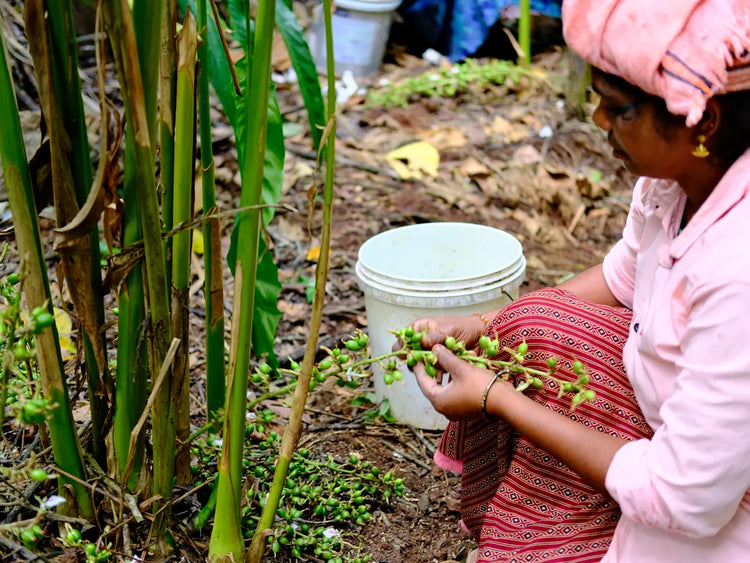
Hand-picking cardamom pods directly from the plant

Kerala cardamom guide

August Cardamom Harvest: Why Peak Season = Peak Quality + Lowest Prices

5 min read

Compare pod size, aroma strength, and practical pack sizes before you buy.

Quick Summary

Why August is the best month to buy Kerala cardamom (elaichi): 3-4 harvests a year, peak-season pricing versus January highs, and how to stock up for the whole year.

1 30 years of farming experience in Kerala
2 Farm-origin sourcing with stronger aroma retention
3 Small-batch packs designed for repeat kitchen use

The August Mystery: Why Cardamom Farmers Get Excited (And Buyers Should Too)

Every year, Kerala cardamom farmers watch the calendar from June. By mid-August, something shifts.

The monsoon is peaking. The plants are heavy with ripening green pods. The smell in the cardamom plantations of Munnar, Idukki, and Rajakumary is so thick with spice fragrance that locals say “the air itself is profitable.”

For buyers? August is THE month to buy cardamom. Here’s why—and exactly how to take advantage.


The Cardamom Harvest Timeline: 3 Harvests Per Year (August Peak)

Cardamom is unusual among spices. Unlike black pepper (which harvests once per year), cardamom flowers and matures 3–4 times annually. This is why cardamom farming changed our life—and can change how you buy, too.

First Harvest: June–July (25–30% of annual yield) — triggered by pre-monsoon rains; most pods immature (rushed ripening during monsoon); farmers harvest early to avoid fungal rot.

Second Harvest: August–September (40–45% of annual yield) ← PEAK — triggered by late monsoon + early dry conditions; most pods at optimal ripeness; best grade distribution (50%+ AGEB, 25%+ fruit-seed). Price: LOWEST of the year. Quality: HIGHEST of the year.

Third Harvest: October–November (25–30% of annual yield) — post-monsoon clear skies, excellent quality continuing from August, prices stable or slightly rising as supply tightens.

Off-season: December–June (remaining yield) — sporadic flowering, low supply, old stored cardamom dominates the market, prices highest of the year, aroma fading from age.


Why August Is the Price & Quality Sweet Spot

When August comes, cardamom harvest volume jumps dramatically — from roughly 10–20 tons/week in June–July to 45–60 tons/week at the August peak, before declining again by October. High supply means competition among farmers, which means prices drop.

Second harvest (August) also naturally produces the best cardamom: optimal ripeness window, high natural seed fill (75–95% average), lower fungal pressure, and easier handpicking. Result: cardamom price per kg is lowest in August, but paradoxically, quality is highest.

Real example: February cardamom might run ₹700/100g (old stock, weaker aroma) versus ₹450/100g in August (fresh, peak quality, same grade).


The Auction Dynamics: Why Prices Swing So Dramatically

The Spice Board of India runs auctions in Idukki district (Munnar/Rajakumary region). Every week, farmers, traders, and exporters gather to bid on fresh harvest.

August auction reality: Volume 300–500 tons/week (peak), prices ₹2,200–2,600/kg (lowest year-round) — supply is higher than demand, so prices collapse.

February auction reality: Volume 20–50 tons/week (scarcity), prices ₹4,000–5,500/kg (highest year-round) — supply is low relative to demand, so prices spike.

What drives the swing: monsoon cycles, storage costs (August abundance means farmers must sell or store), export demand timed to the August peak, and trader speculation (buy August low, store, sell high later).


Period Price/kg (bulk) Price/100g (retail) Notes
January ₹5,200–5,500 ₹850–950 Off-season peak, storage costs added
February ₹4,800–5,000 ₹800–900 Still high, farmers stockpiling
March–June ₹4,200–4,600 ₹700–800 Slow decline, summer storage risk
July ₹3,200–3,600 ₹550–650 First harvest begins, prices crack
August ↓ ₹2,200–2,600 ₹400–500 Peak harvest, lowest prices
September ₹2,600–3,000 ₹450–550 Supply still high, prices stable
October–Nov ₹3,200–3,600 ₹550–650 Harvest ends, prices climb slowly
December ₹4,000–4,200 ₹700–750 Holiday demand, storage + scarcity

Key insight: August gives you roughly a 50% price discount versus January, with better quality — the only time of year that happens.


Why Black Pepper Farmers Switched to Cardamom

Black pepper reality: 1 harvest per year (December–January), income concentrated in a 2-month window, then zero income and ongoing storage/maintenance costs the rest of the year. Price per kg: roughly ₹3,500–4,500, a low-yield commodity with one planting cycle a year — risky, lumpy income.

Cardamom reality (why we switched at Rajakumary): 3–4 harvests per year (June, August, October, sporadic Dec–May), income spread across multiple months, cash flow year-round. Price per kg: ₹2,500–5,500 depending on season.

The game-changer: even though cardamom's price per kg drops in August versus January, harvesting 3–4 times a year instead of once means annual revenue can end up higher and far more predictable than a single once-a-year pepper harvest.


How to Leverage August Peak: Buying Strategies

Strategy 1 — The August Stockpile (best for regular users): Buy 1kg of premium cardamom in August, store it in an airtight glass container in a cool dark place, and use it through Sept–April (peak aroma for 6–8 months). Buying the full kilo at August pricing works out meaningfully cheaper than buying smaller amounts across the year at regular retail prices.

Strategy 2 — Seasonal Subscribe (best for monthly users): Subscribe to a seasonal cardamom delivery service, order fresh at the August drop, repeat again in October, and skip the Dec–July off-season except for small emergency top-ups.

Strategy 3 — Wholesale Bulk (best for restaurants, tea blenders, resellers): Contact farms directly in August, order 5–50kg at wholesale auction-adjacent pricing, and store or resell through the year.


Timing Your August Purchase: When Exactly to Buy

Early August (1–15): Peak volume on the auction floor and year-low pricing, but supply chains can be backlogged and shipping slower.

Mid-August (15–25): Sweet spot. Prices still low, supply flowing smoothly, shipping normal, quality consistent. This is generally the best window to order.

Late August (25–31): Last chance for peak-season pricing before prices start creeping up as supply tightens into September.

September onward: Prices climb back steadily. Buying a few weeks later than August can cost 15–20% more for the same grade.


August vs. Year-Round: Is August Cardamom Better?

Factor August Harvest Off-Season (Jan–July)
Ripeness Optimal (natural timing) Varies (forced/rushed/old)
Seed fill 75–95% average 60–80% average
Aroma Peak (freshly dried) Fading (stored months)
Price ₹400–500/100g ₹700–1,000/100g

Practical August Cardamom Buying Checklist

Before August: Decide your quantity (500g/1kg/5kg), choose your grade (AGEB or fruit-seed), find 2–3 sellers you trust, and have a clean airtight container ready.

During August: Order before Aug 25 for peak timing, verify this season's harvest is what you're getting, and crack open a pod or two on arrival to check fullness and aroma.

After August: Use through Sept–April for peak aroma, and check every couple of months — if aroma is fading by May, buy a small fresh top-up.


Ready to Buy August Cardamom?

You now understand why August means the best price and best quality together, why cardamom farmers prefer multiple harvests over a single once-a-year crop, how auction pricing drives the swings, and how to stock up for the whole year with one well-timed purchase.

👉 Shop PureLeven's Cardamom — 8mm AGEB or fruit-seed, fresh-sorted
👉 Get Seasonal Harvest Updates — know when the next drop lands
👉 Ask About Bulk/Wholesale — 5kg+ orders


Questions about seasonal pricing? Email hello@pureleven.com — we track Idukki auctions weekly and can help you time your purchase.

Next read: Our Farm Story: Black Pepper to Cardamom

Ready to buy?

Related products for this article

Move from reading intent to shopping intent with product cards tied to this topic and a direct route into the wider catalog.

Kerala Cardamom Whole Pods Primary pickKerala Cardamom Whole PodsExport-grade Kerala cardamom with strong aroma for chai, desserts, and everyday cooking.Rs. 299.00Rs. 260.00 Shop this cardamom Kerala Cardamom Whole Pods Also considerKerala Cardamom Whole PodsRs. 299.00Rs. 260.00 View product Kerala Cardamom Whole Pods Kitchen add-onKerala Cardamom Whole PodsRs. 299.00Rs. 260.00 View product
Shop Kerala cardamom See all products

Suggested reads

Keep exploring this topic

Move from this guide into adjacent reads from the same journal, then jump back into the catalog when you are ready to buy.

PureLeven cardamom product pack, farm-direct

Farm-Direct Cardamom Online vs Retail: Price, Q...

Why farm-direct cardamom (elaichi) beats middlemen: verified market data shows 8.5mm grade commands a 35% premium and prices have risen 46% in two years. Here's how to buy smart.

Farm-Direct Cardamom Online vs Retail: Price, Q...

Why farm-direct cardamom (elaichi) beats middlemen: verified market data shows 8.5mm grade commands a 35% premium and prices have risen 46% in two years. Here's how to buy smart.

Cardamom plant with growing pods in Kerala

Cardamom Cultivation Guide: How to Grow Premium...

A complete cardamom (elaichi) farming guide: elevation requirements, water and shade balance, soil prep, natural pest control, and the real economics of growing cardamom.

Cardamom Cultivation Guide: How to Grow Premium...

A complete cardamom (elaichi) farming guide: elevation requirements, water and shade balance, soil prep, natural pest control, and the real economics of growing cardamom.

Hand holding freshly picked green cardamom pods

Cardamom Harvest & Handpicking: From Plant to Y...

The 8-phase journey from flower to harvest: why handpicking removes most pods to keep only the best cardamom (elaichi), and how to spot full-seed pods versus hollow ones.

Cardamom Harvest & Handpicking: From Plant to Y...

The 8-phase journey from flower to harvest: why handpicking removes most pods to keep only the best cardamom (elaichi), and how to spot full-seed pods versus hollow ones.

Shop Kerala cardamom See all Cooking & Spices
Back to blog

Shop the article product

Kerala Cardamom Whole Pods
Shop this cardamom

Explore Pureleven Kerala spices

1 of 4
  • 30 years farming experience

    Kerala-rooted farming knowledge shapes the sourcing, grading, and packing decisions behind every Pureleven product.

  • Sustainable cultivation

    Farm-origin sourcing and long-term cultivation practices help protect soil health, flavor quality, and future harvests.

  • Aroma-first small batches

    Small-batch processing and cleaner packaging keep more aroma in the pouch and more flavor in the kitchen.

  • Kerala-origin quality

    Readers move from educational content into traceable Kerala staples rather than anonymous marketplace inventory.

From Kerala soil to your kitchen.

Ready to move from reading to buying?

Use the guide as a decision surface, then move directly into collections, bundles, and the wider Pureleven catalog without losing shopping momentum.