



Pureleven journal
Cooking & Spices
From Kerala soil to your kitchen.
Pureleven spice journal
Munnar Tea vs Assam Tea: Taste, Strength and Use
Answer-first guidance with a faster path to farm-origin Kerala products you can buy today.
Quick Summary
How Munnar tea from Kerala's high ranges compares with Assam tea on growing conditions, body, flavour and colour, and which suits strong milk chai or black tea.
Jump through the guide
Go straight to the sections that answer the buying, comparison, or sourcing question you came for.
Assam tea is grown on low, hot plains and gives a heavy, malty, deep-amber cup that stands up to plenty of milk. Munnar tea comes from high, cool hills in Kerala's Idukki district and tends to be brisker and brighter, with a hint of fruit and sweetness. Choose Assam for strong milk chai, and Munnar if you also drink tea black.
Where do Munnar and Assam tea grow?
Assam tea grows in the Brahmaputra valley in north-east India, close to sea level. The Tea Board of India describes Assam as the single largest tea-growing region in the world. The climate is hot and very wet, and the plants are mostly the native Assam variety of the tea plant.
Munnar sits in the Western Ghats in Idukki, Kerala, with the town itself at around 1,600 metres. Its estates spread across the Kannan Devan Hills, and the Tea Board lists Munnar's tea gardens at roughly 950 to 2,600 metres, among the highest in the world. It's cooler and misty, with heavy monsoon rain.
That difference in altitude and temperature is the main reason the two taste different. Tea grown high and cool generally grows more slowly and develops a lighter, livelier character.
How do they taste?
| Assam | Munnar | |
|---|---|---|
| Body | Full and heavy | Medium to strong |
| Flavour | Malty, bold | Brisk and lively, a touch of fruit, lingering sweetness |
| Colour in the cup | Rich, deep amber | Golden yellow with orange depth |
| With lots of milk | Excellent | Good, lighter and more refreshing |
| Without milk | Can feel heavy | Often very pleasant |
These are general tendencies. The estate, season, grade and whether the tea is CTC or orthodox matter as much as the region. A strong Munnar CTC can make excellent milk tea, and a fine orthodox Assam is lovely on its own.
Which one should you choose?
- Strong milk tea or masala chai: Assam CTC, or a strong South Indian CTC. Both hold up to milk, sugar and spices.
- Black tea, lemon tea or sulaimani: Munnar and other high-grown teas usually taste cleaner without milk. Our sulaimani tea recipe is a good way to try this.
- Kerala-style chayakada chai: most tea shops in Kerala use strong South Indian CTC, often blended for consistency.
- If you only buy one: go by how you drink it. Mostly milky chai points to Assam or a strong CTC. Mostly black points to Munnar.
Does CTC or orthodox matter more than region?
Often, yes. CTC granules brew fast, dark and strong, which is why they dominate Indian milk tea. Orthodox leaf gives a lighter, more aromatic cup. The same garden can produce both. Our post on CTC vs orthodox tea explains the difference.
Are blends worse than single-region tea?
No. Many everyday teas are blends from several regions, made to taste the same all year. A blend is built for consistency. Single-region tea has more character but can vary from season to season.
Common mistakes when comparing teas
- Tasting both with lots of milk. Milk hides Munnar's brightness. Taste each black first, then with milk.
- Using the same amount and time for every tea. Orthodox leaf needs more tea and a longer steep than CTC. Our guide on how much tea powder per cup has the amounts.
- Judging by colour alone. A darker cup isn't always stronger in flavour.
Visiting Munnar?
Estate tea outlets in Munnar let you taste different grades side by side. Ask to try a black tea without milk first, then the same tea with milk.
For strong milk tea at home, try our black tea granules. If you want to compare styles, our orange pekoe tea is the other one to try.
Sources
Ready to buy?
Related products for this article
Move from reading intent to shopping intent with product cards tied to this topic and a direct route into the wider catalog.
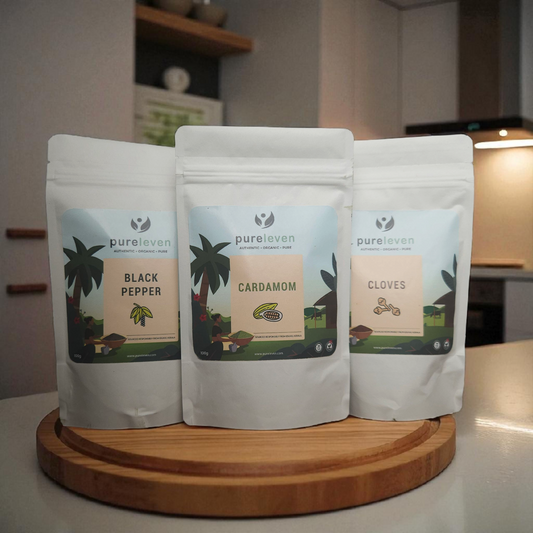 Primary pick3-in-1 Kerala Spice ComboStart with a best-selling Pureleven product picked to match the buying intent behind this article.Rs. 909.00Rs. 559.00
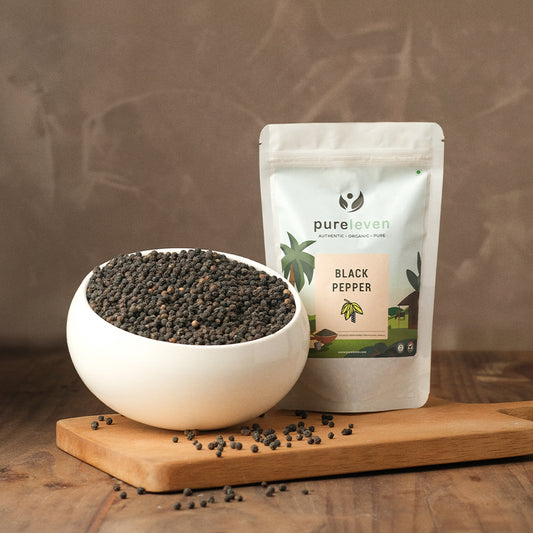 Also considerKerala Black Pepper (Kali Mirch) – Bold Whole Peppercorns from IdukkiRs. 100.00
 Kitchen add-onExtra Bold Kerala Cardamom (Elaichi) – 8mm Whole Pods from IdukkiRs. 309.00Rs. 270.00


