



Pureleven journal
Cooking & Spices
From Kerala soil to your kitchen.
Cinnamon buying guide
Ceylon Cinnamon and Coumarin: A Plain Explanation
Compare daily-use cinnamon options and move directly into a product shortlist without leaving the article cold.
Quick Summary
Ceylon cinnamon has only traces of coumarin, cassia much more. What EFSA's 0.1 mg/kg daily limit means in grams, and who should pay attention.
Jump through the guide
Go straight to the sections that answer the buying, comparison, or sourcing question you came for.
Ceylon cinnamon contains only traces of coumarin, usually well under a tenth of a milligram per gram, while cassia cinnamon averages around 3 mg per gram and can go higher. The European Food Safety Authority (EFSA) sets a tolerable daily intake of 0.1 mg of coumarin per kg of body weight, so a 60 kg adult can reach that limit with about 2 g of average cassia a day, but would need many times more Ceylon cinnamon than anyone cooks with.
That's the whole story in two sentences. The rest of this post explains the numbers so you can judge your own kitchen.
What is coumarin?
Coumarin is a natural flavour compound found in several plants, including cassia bark, tonka beans and sweet clover. It has a sweet, hay-like smell. It is not an additive, and it is not a sign that a spice is fake or spoiled.
The concern is simply quantity. In animal studies and in a small number of sensitive people, high intakes over time have been linked to liver effects. That is why food safety bodies set a daily limit and why they talk about cassia specifically.
What is the safe limit for coumarin?
EFSA's tolerable daily intake (TDI) is 0.1 mg of coumarin per kg of body weight per day. EFSA reconfirmed this figure in 2008, and Germany's Federal Institute for Risk Assessment (BfR) uses the same number.
A TDI is an amount you could take every day for life without appreciable risk. It is not a cliff edge. The BfR notes that going slightly over it for a week or two is not considered a health concern.
What that means in grams
The table below uses the BfR's working average of about 3 mg of coumarin per gram of cassia, and the upper end of published Ceylon figures (around 0.09 mg per gram) to be cautious. Real samples vary, so treat these as rough guides.
| Body weight | Daily coumarin limit | Average cassia to reach it | Ceylon to reach it (cautious estimate) |
|---|---|---|---|
| 15 kg (small child) | 1.5 mg | About 0.5 g | About 15 g or more |
| 30 kg | 3 mg | About 1 g | About 30 g or more |
| 60 kg | 6 mg | About 2 g | About 65 g or more |
| 80 kg | 8 mg | About 2.5 g | About 90 g or more |
For scale, a level teaspoon of ground cinnamon weighs roughly 2 to 3 g. So a child eating cassia-heavy porridge every morning can go past the limit, while nobody realistically eats 60 g of Ceylon cinnamon a day.
How much coumarin is in Ceylon cinnamon versus cassia?
Studies give a range rather than one number, because bark age, variety and region all make a difference.
- Cassia (Cinnamomum cassia and related species): the BfR puts the average at around 3,000 mg per kg (3 mg per gram), with some samples up to about 10,000 mg per kg. Published studies on Chinese cassia commonly report roughly 1.7 to 7.7 mg per gram.
- Ceylon (Cinnamomum verum): published measurements are commonly in the range of about 0.005 to 0.09 mg per gram. Some sources report even lower. In practice that is often a hundred times less than cassia, or more.
The exact figures move around between studies, which is why we keep them approximate. The direction never changes: cassia is high, Ceylon is low.
Who should pay attention to coumarin?
- Children who eat cinnamon every day. Their lower body weight means a smaller limit. Cinnamon sprinkled on daily porridge or toast adds up fastest here.
- People who take cinnamon supplements or large spoonfuls of powder. The BfR specifically warns that cinnamon-based supplements can contain high coumarin levels.
- Anyone with a liver condition, or anyone on regular medication. Please ask your doctor before using cinnamon in larger amounts.
For most families who use a stick of cinnamon in biryani on Sunday and a pinch in chai, none of this is a worry, even with cassia. Our Ceylon vs cassia guide covers when each one makes more sense in the kitchen.
Do cooking or grade change the coumarin?
Don't count on cooking to remove coumarin. It's safer to think of the amount in the spice as the amount you eat, no matter if you simmer a stick in milk or sprinkle powder on top.
Grade itself is about thickness and appearance, not chemistry. Alba, C5, M5 and H1 are all true Ceylon cinnamon. You can read what those grade names mean in our post on Ceylon cinnamon grades.
What this means for how you buy
If you use cinnamon daily, or feed it to small children regularly, it makes sense to choose Ceylon and to make sure it really is Ceylon. That's harder with powder, which is why we suggest whole quills. Our guide to buying Ceylon cinnamon online walks through the checks.
We sell True Ceylon Cinnamon sticks (Cinnamomum verum), whole and with nothing added. We don't print a coumarin figure on it, because we'd rather not quote a number for one pack that we haven't measured ourselves. The general point holds: true cinnamon is a low-coumarin spice.
Frequently asked questions
Is it safe to drink cinnamon water every day?
With Ceylon cinnamon in normal amounts, most healthy adults stay well under the coumarin limit. With cassia, daily use in larger amounts can add up, especially for children. If you are drinking it for a health reason, check with your doctor first.
Is cassia cinnamon dangerous?
No, not in ordinary cooking amounts. Food safety bodies simply advise eating cassia in moderation and choosing Ceylon if you use a lot of cinnamon regularly.
If you'd like to talk through how much cinnamon your family uses, message us on WhatsApp at +91 88482 65849. We're happy to help you think it through, and we'll point you to a doctor for anything medical.
Sources
Ready to buy?
Related products for this article
Move from reading intent to shopping intent with product cards tied to this topic and a direct route into the wider catalog.
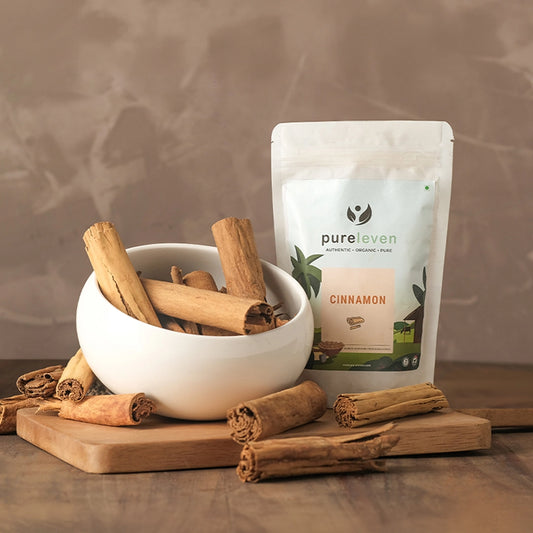 Primary pickTrue Ceylon Cinnamon (Dalchini) – Whole Quills from Sri LankaChoose between lighter Ceylon character and fuller cassia warmth with a cleaner conversion path.Rs. 250.00Rs. 190.00
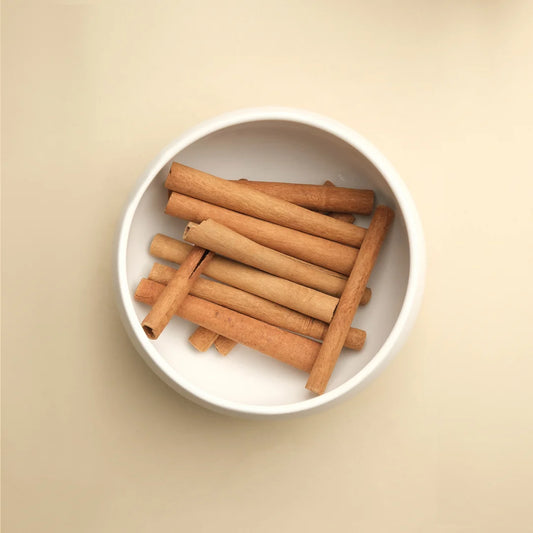 Also considerPremium Cassia Cinnamon Whole SticksRs. 159.50Rs. 120.00
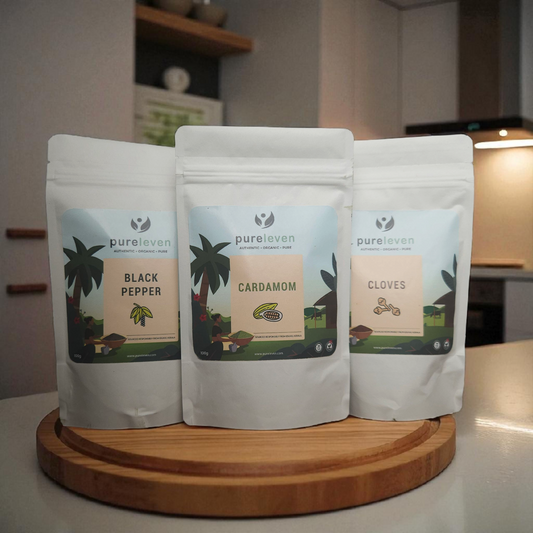 Kitchen add-on3-in-1 Kerala Spice ComboRs. 909.00Rs. 559.00


