Pureleven journal
Cooking & Spices
From Kerala soil to your kitchen.
Cassia cinnamon guide
Cassia Bark Pieces vs Rolled Sticks
The fuller, warmer cinnamon used in chai, masala and meat curries.
Quick Summary
Cassia bark pieces and rolled sticks are the same spice in different shapes. How they differ in cooking, grinding and checking quality.
Jump through the guide
Go straight to the sections that answer the buying, comparison, or sourcing question you came for.
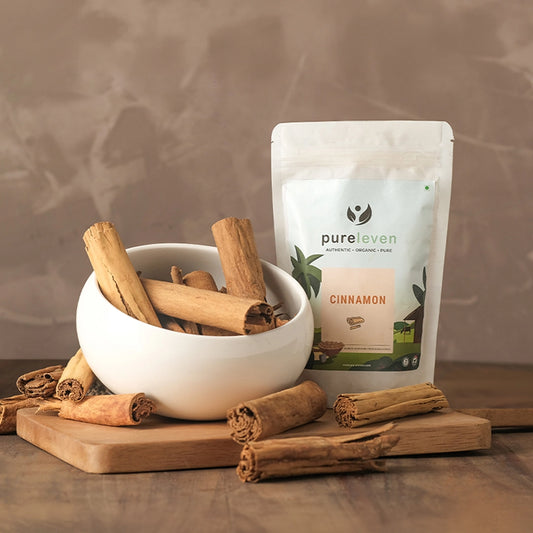
Cassia bark pieces and rolled cassia sticks are the same spice in two shapes. Sticks are bark that curled into a tube as it dried, then cut to length. Pieces are flatter, thicker or broken bark. Flavour depends far more on freshness than on shape, but sticks are easier to judge and portion, and pieces are often cheaper and quicker to grind.
If you've stood in a shop wondering if the rough brown chips or the neat tubes are better, this is for you.
Why cassia comes in different shapes
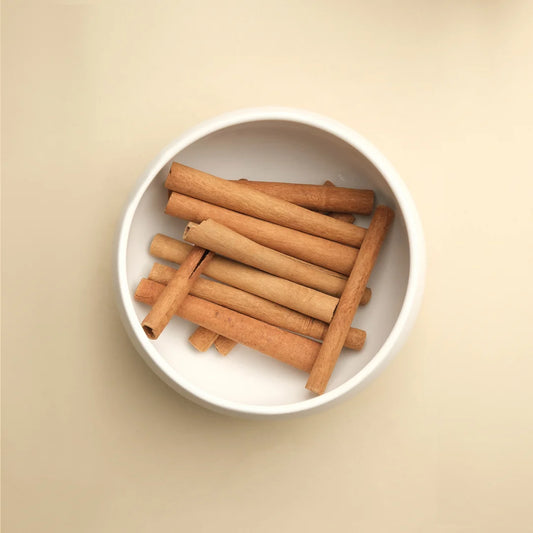
Cassia is tree bark. It's stripped and dried, and as it dries, thinner bark tends to curl inwards into a tube. That's the familiar stick, a single thick layer curled around itself, unlike the many papery layers in Ceylon cinnamon.
Thicker bark, and bark that breaks in handling, stays flat or only slightly curved. It's sold as bark pieces, chips or "broken" cassia. Some of what's in a bag of pieces is sticks that snapped in transit. For the wider picture, see our cassia cinnamon guide.
Bark pieces and sticks compared
| Bark pieces | Rolled sticks | |
|---|---|---|
| Looks like | Flat or curved chips, uneven sizes, rough outer side | Hollow tubes, fairly even length and thickness |
| Easy to judge quality? | Harder, since pieces can hide dust and old bark | Easier, you can see colour, thickness and cut ends |
| Portioning | Guesswork, pieces vary | Simple, "one 5 cm stick" is repeatable |
| Grinding | Quick, already broken up | Needs breaking first |
| Price | Often lower | Often a bit higher |
| Best for | Grinding into masala, stocks, big pots | Whole-spice tempering, biryani, chai |
Does shape change the taste?
Not by itself. Fresh bark tastes much the same as a fresh stick from similar bark. What does change it:
- Age. The oils fade slowly after drying. Old bark smells dull in any shape.
- Type of cassia. Chinese, Indonesian and Vietnamese cassia differ in strength and sweetness, as types of cassia explains.
- How much outer bark is left. The rough grey-brown outer layer has less flavour than the reddish inner bark, and some pieces carry a lot of it.
- Storage. Damp or light-exposed bark loses smell faster.
Shape does matter for surface area. Broken pieces have more exposed edges, so they may lose aroma slightly faster than tight sticks if both sit for a long time.
Checking cassia before you buy
This works for pieces and sticks alike.
- Inside colour is warm reddish-brown, not grey or faded
- Scratching the inner side with a fingernail gives a sweet, hot smell at once
- Bark is hard and dry, with no soft spots
- No musty smell and no white or green spots in the pack
- Not much dust or powder at the bottom of the bag
- For pieces, not mostly rough outer bark
A seller who offers only ready-made powder takes all these checks away from you.
Which one should you buy?
Sticks, if
You mostly use cassia whole, dropped into ghee for biryani, pulao or curry, or simmered in chai. Sticks give the same amount every time and are easy to fish out before serving.
Bark pieces, if
You grind your own garam masala or meat masala, cook in large batches, or make stocks. Pieces break down faster in a mixie and are often better value in quantity.
Both
Many home cooks keep a few sticks for whole-spice cooking and buy pieces for grinding.
How long does cassia bark keep?
Whole cassia keeps well in either shape. Store it airtight, away from the stove, sunlight and damp, in a glass jar or sealed pouch in a dark cupboard. Our guide to storing spices has more. Scratch and smell it now and then, and replace it once the smell has mostly gone.
How much bark equals one stick?
There's no exact rule because pieces vary in thickness. Use a piece about the size of the stick your recipe names, then taste and adjust. Cassia is strong, so it's easier to add than to take out.
We sell cassia cinnamon as whole sticks, packed with nothing added. You can use one whole in a pot, or break a few in a mortar for your own masala.
Buy whichever shape suits how you cook, and trust your nose over the label.
Ready to buy?
Related products for this article
Move from reading intent to shopping intent with product cards tied to this topic and a direct route into the wider catalog.